Altitude Sickness in Tibet: Prevention Tips for Lhasa & the Plateau (2026)
Short answer: Altitude sickness is the single biggest risk on a Tibet trip, and it is not about fitness — marathon runners get it, and being unfit does not protect you. Lhasa sits at 3,650 m, where the air holds roughly 40% less oxygen than at sea level, and mild altitude sickness affects 30–50% of visitors at that height, per TravelHubChina's 2026 Lhasa guide, with the share rising above 4,000 m. United States Centers for Disease Control and Prevention (CDC) figures cited by Healigogo put the rate near 50% for rapid air ascent above about 3,400 m.
The prevention that actually works is boring and slow: ascend gradually, rest completely on your first day, skip alcohol for 48 hours, and do not climb higher while you feel unwell. Most mild symptoms ease within 24 to 48 hours if you stop ascending. Severe symptoms — confusion, inability to walk straight, vomiting that will not stop, breathlessness at rest — mean descend immediately and get medical help.
All figures and prices below are as of November 2026.
TL;DR: Fly in and you jump 3,100 m in two hours; drive in along the G318 and you climb 300–600 m a day. Either way, day one is for lying down, not sightseeing. Pack Diamox (with a doctor's say-so), ibuprofen, a clip-on blood-oxygen meter and portable oxygen — and know the descent rule before you need it.
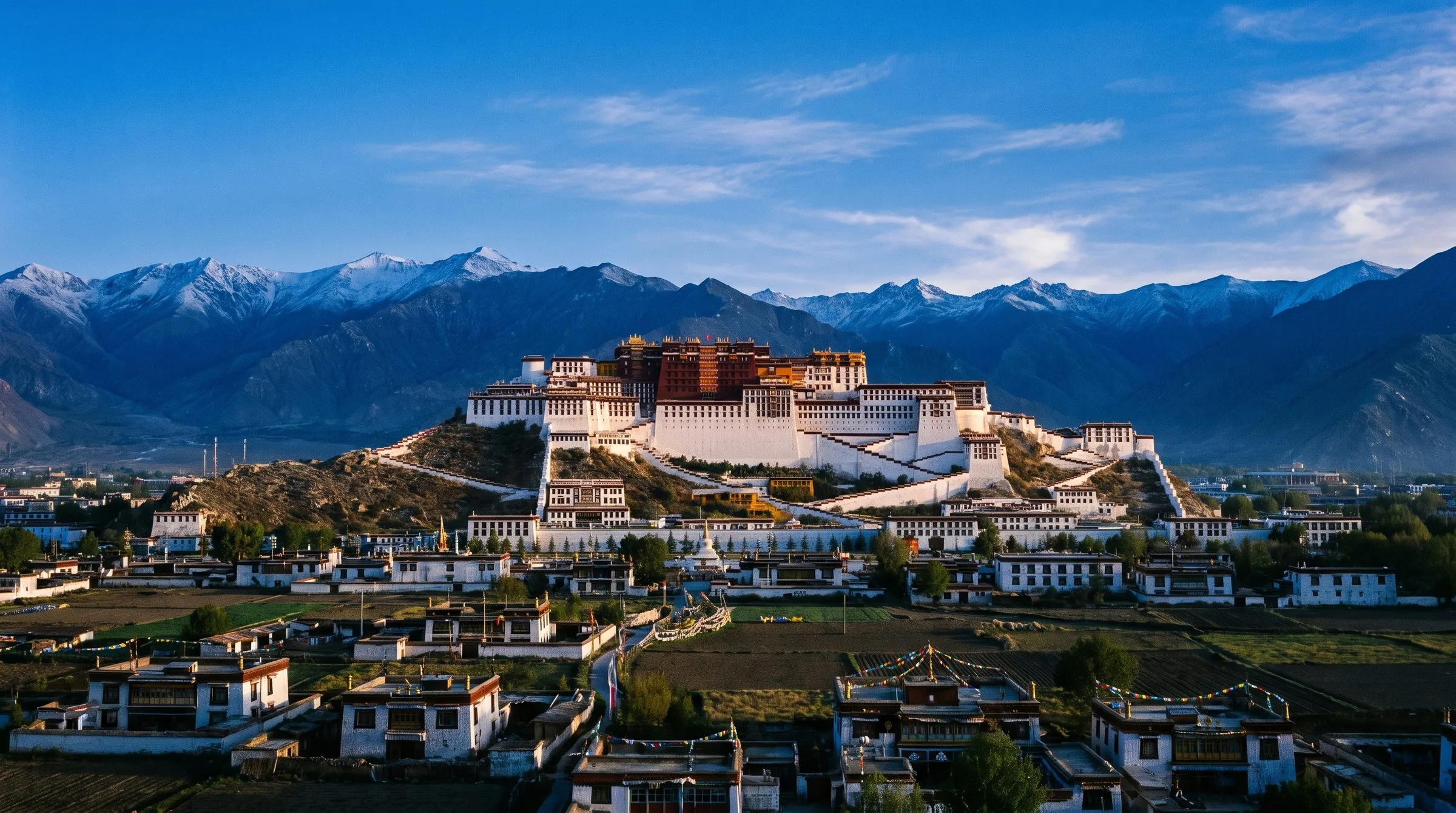
Key takeaways for altitude sickness in Tibet
- Lhasa is 3,650 m, and 30–50% of visitors feel it. Mild altitude sickness (headache, fatigue, shortness of breath, insomnia, nausea) affects 30–50% of visitors at 3,650 m, and the share rises above 4,000 m, per TravelHubChina (August 2026).
- Flying in is the riskiest way to arrive. CDC figures cited by Healigogo put the rate near 50% for rapid air ascent above about 3,400 m, and about 25% for anyone sleeping above 2,450 m.
- Go up slowly — it is the main prevention that works. Above 3,000 m, raise your sleeping altitude by no more than about 500 m per day and add rest days, per Wilderness Medical Society (WMS) and CDC guidance summarised by Healigogo (May 2026). Avoid sleeping at or above about 2,750 m in a single day straight from low altitude.
- Rest completely on day one. Spend the first 24–48 hours in Lhasa doing nothing more than short walks. Do not climb the Potala Palace stairs, do not take a day trip to Yamdrok or Namtso, and do not drink alcohol, per TravelHubChina. The 6–12 hours after arrival are the peak window for symptoms.
- Diamox works; rhodiola does not, as far as the evidence goes. Acetazolamide (Diamox) carries a strong WMS recommendation as first-line prevention for moderate- and high-risk trips — but it is prescription-only, so ask your doctor 2–4 weeks ahead. Rhodiola, by contrast, showed no benefit over placebo in a Cochrane review (risk ratio 1.00), and WMS does not recommend it, per Healigogo.
- Descent is the treatment. If symptoms worsen despite rest, go down: they often improve after a drop of 300–1,000 m, per WMS. Chengdu, at 500 m, is the closest low-altitude city to Lhasa. Severe signs — confusion, loss of coordination, breathlessness at rest, pink frothy cough — are a medical emergency, not a wait-and-see.
Why does Tibet hit so hard? The numbers
The problem is pressure, not the percentage of oxygen in the air — that stays at 21%. What falls with altitude is the pressure pushing oxygen into your blood. At about 2,500 m, the oxygen pressure you breathe in is roughly a quarter lower than at sea level, per CDC figures cited by Healigogo (May 2026); at 4,000 m it is around 40% lower.
Your body needs 24 to 72 hours to adapt, a process called acclimatisation — and it cannot be rushed, however fit you are.
The elevation ladder
The elevation ladder of a standard Tibet trip shows why the first day matters so much:
| Place | Elevation | What it means |
|---|---|---|
| Chengdu | 500 m | Usual gateway; the flight to Lhasa jumps 3,100 m in about 2.5 hours |
| Xining | 2,200 m | Start of the 22-hour Qinghai-Tibet Railway; one night here helps |
| Lhasa | 3,650 m | Base for the whole trip; 24–48 hours of rest before any climb |
| Yamdrok Lake | 4,400 m | Day trip from Lhasa — day 3 or later, never day 1 |
| Namtso Lake | 4,718 m | Long day trip — day 4 or later, only in clear weather |
| Nagen La Pass (Namtso road) | 5,190 m | Short stop only; do not walk far at this height |
| Tanggula Pass (railway) | 5,231 m | Crossed by train, not a stop; oxygen-supplied sleeper cars |
| Everest Base Camp (Tibet side) | 5,150 m | Needs extra permits and several acclimatised days first |
Sources: elevations and timing per TravelHubChina, Lhasa Tibet Travel Guide (updated 16 August 2026); oxygen-pressure figures per Healigogo citing CDC (May 2026).
Notice the pattern: every place worth visiting from Lhasa is higher than Lhasa itself. That is why the practical rule from TravelHubChina is one rest day per 1,000 m above 3,000 m — Lhasa is a two-night stop before Yamdrok, and Namtso is a fourth-day trip, not a second-day one.
"Your first day at altitude is for resting. Nothing else."
— Lena Wei, Healigogo, Altitude Sickness in China (May 2026)
What does altitude sickness feel like?
Mild altitude sickness — common, and usually passes
Mild acute mountain sickness (AMS) feels like a hangover: a headache, tiredness for no reason, trouble sleeping, no appetite, slight dizziness and nausea. It is not true that almost everyone above 3,000 m feels this — but at Lhasa's altitude, roughly a third to a half of visitors do. The good news is that mild AMS often eases in 1 to 2 days if you rest and do not go higher, per Healigogo.
Do not dismiss every headache as "normal" — calling every headache normal can delay noticing a worsening illness. If a headache is getting worse rather than better after a day of rest, take it seriously.
Severe altitude illness — rare, and an emergency
Severe altitude illness comes in two forms, both dangerous: high-altitude cerebral oedema (HACE), where fluid builds in the brain, and high-altitude pulmonary oedema (HAPE), where fluid builds in the lungs. Watch for these signs:
- Cannot walk in a straight line, as if drunk
- Confusion, or not knowing where you are
- Vomiting that will not stop
- Shortness of breath even when resting
- Coughing up pink or white froth
If you see any of these, go down immediately. Do not wait, and do not send someone down alone, per Healigogo. Lhasa People's Hospital and the Tibet Military Region Hospital have high-altitude emergency departments, and Lhasa's main hospitals run 24-hour emergency care, per TravelHubChina and Sohu (2 November 2026).
How to prevent altitude sickness in Tibet
Five rules cover almost all of it:
- Ascend gradually — gain no more than about 500 m of sleeping altitude a day above 3,000 m.
- Rest on day one — no sightseeing, no stairs, no shower, no alcohol.
- Drink steadily — enough to stay hydrated, without forcing litres.
- Skip alcohol for 48 hours — and avoid starting a new sleeping pill at altitude.
- Eat light and sleep low — small meals, and return to lower ground to sleep when you can.
1. Ascend gradually — the one rule that matters most
Speed of ascent is the core factor. Flying directly from Chengdu (500 m) to Lhasa (3,650 m) means climbing 3,100 m in about two hours — your body cannot adapt that fast, and you will feel it stepping off the plane.
The gentler entries are the Qinghai-Tibet Railway from Xining (2,200 m), a 22-hour climb to Lhasa in oxygen-supplied sleeper cars, or driving in overland along the G318 Sichuan-Tibet Highway, where daily altitude gain stays around 300–600 m over several days. Our G318 Chengdu to Lhasa guide covers that road in full — the same gradual climb that makes the drive itself part of the acclimatisation.
Another useful pattern, per Healigogo: spend a night near 2,500 m before sleeping at 3,500 m. In practice that can mean a night or two in Nyingchi (about 2,900 m) before Lhasa, or simply two slow days in Lhasa before going higher.
2. Rest completely on arrival day
Plan to spend the first 24–48 hours in Lhasa doing nothing more than short walks. Do not climb the Potala Palace stairs — the palace sits on a hill at 3,700 m with 200-plus steps to the entrance. Skip any day trip to Yamdrok or Namtso on day one, and do not drink alcohol.
Do not shower or wash your hair on arrival day either: Chinese travel guidance widely advises skipping the first shower, because a hot shower speeds up blood circulation and can trigger headaches and a racing heart at altitude, and catching a cold up high can worsen altitude symptoms, per Sohu (14 October 2026) and Tibet Kangtai Travel (2 November 2026).
Keep the first day's activity to half your normal level or less. A slow 10 to 15 minute walk on flat ground near the hotel is enough, per Sohu. If you can, fly into Lhasa in the morning and reach your hotel by noon — that gives you the afternoon to rest and a full second day to acclimatise, per TravelHubChina.
3. Drink enough — but do not force litres
The dry plateau air dehydrates you faster than you expect, and many guides suggest 3–4 litres a day for the first three days. But forced extra water is not a proven altitude-sickness preventive, per WMS 2024 guidance cited by Healigogo: avoid dehydration, but do not chase a 3–4 litre rule, since over-hydration has not been shown to prevent AMS and can risk low blood sodium. Drink steadily, keep your urine pale yellow, and carry a reusable bottle.
4. Skip alcohol for the first 48 hours
Alcohol is a respiratory depressant and makes AMS harder to manage, per CDC guidance cited by Healigogo. Avoid it for at least the first 48 hours, and limit it for the first week. The same caution applies to sedatives and sleeping pills: do not start a new sleep medicine at altitude without medical advice.
5. Eat light, and sleep low when you can
Eat light meals for the first 48 hours — tsampa (roasted barley flour), yak butter tea, momos (dumplings) and soups rather than heavy, greasy food. Digestion slows at altitude, and overeating presses against the diaphragm and makes breathing harder. And follow the mountaineer's rule: climb high, sleep low. If you visit a higher area outside Lhasa, return to a lower elevation to sleep whenever possible, per Tibet-Lhasa-Potala (August 2026).
What should you pack for the altitude?
The altitude kit
Your altitude kit is small, cheap and worth packing before you leave home — Lhasa pharmacies stock common non-prescription medicines, but brands and doses may differ, and English-language products are limited, per Sohu and Tibet-Lhasa-Potala.
| Item | What it does | Notes |
|---|---|---|
| Acetazolamide (Diamox) | Best-proven prevention; stimulates breathing | Prescription only. Typical preventive dose 125 mg twice daily, starting 24 hours before ascent, for 2–3 days at altitude. Tingling fingers and extra urination are normal side effects. Ask your doctor 2–4 weeks ahead. |
| Ibuprofen / paracetamol | Headache and fever relief | Ibuprofen 400 mg as needed is effective for altitude headaches. Bring enough for the whole trip. |
| Clip-on blood-oxygen meter | Tracks your oxygen saturation | Under Chinese yuan (CNY) 100 in China. Measure morning and evening at rest; below 85% with discomfort means use oxygen or see a doctor, per Sohu (2 Nov 2026). |
| Portable oxygen canisters | Brief relief at viewpoints and passes | About CNY 20–30 each in Lhasa pharmacies and hotels. Cans usually hold 5 litres or less — fine for a short pause, not a treatment for real AMS. Do not rely on them, per Healigogo and Sohu. |
| Oral rehydration salts | Replaces fluids if you get diarrhoea | At altitude, diarrhoea dehydrates fast; rehydration salts matter more than anti-diarrhoea pills, per Sohu. |
| Sun protection | Sun protection factor (SPF) 50+ sunscreen, lip balm, sunglasses | Ultraviolet index at 3,700 m can exceed 12 in summer. Category 3–4 sunglasses; the glare off white palace walls is intense. |
| Warm layers | Down or synthetic jacket, thermals, gloves | Even in summer, mornings are cold and day-night temperature gaps can reach 20°C. Layers beat one thick coat. |
Sources: medication doses and side effects per TravelHubChina (Aug 2026) and Tibet-Lhasa-Potala (Aug 2026); oxygen-can limits and WMS guidance per Healigogo (May 2026); oximeter and pharmacy prices per Sohu (2 Nov 2026).
A note on rhodiola
One honest note on rhodiola: it is the most commonly recommended "altitude herb" in Chinese tourism, and many travellers swear by it. But a Cochrane review found Rhodiola crenulata did not reduce altitude sickness compared with placebo, and the Wilderness Medical Society does not recommend it, per Healigogo.
If you take it, start 7 to 10 days before travel — but do not treat it as a substitute for Diamox or for a slow itinerary, per Sohu.
Many Lhasa hotels have in-room oxygen machines — request one when booking, per TravelHubChina. Sleeping with the hotel window cracked for fresh air also helps.
A day-by-day acclimatisation plan for Lhasa
Use this as a template, then stretch it if you feel unwell — never compress it.
| Day | Where | What to do |
|---|---|---|
| Day 1 | Lhasa (3,650 m) | Arrive, rest, lie down. No sightseeing, no stairs, no shower. Short flat walk of 10–15 minutes near the hotel. Light meals, no alcohol, early night. |
| Day 2 | Lhasa (3,650 m) | If blood oxygen is 90% or above and there is no clear headache, a slow walk around Barkhor Street is fine — no more than 1 hour of continuous walking, sitting down every 20 minutes, per Sohu (2 Nov 2026). Potala Palace in the morning if you feel well; climb 10 minutes, rest 5. |
| Day 3 | Lhasa + Ganden (4,300 m) or Yamdrok (4,400 m) | First higher day trip. Over the Kamba La Pass (4,794 m) to Yamdrok, walk slowly and limit time at the lakeside. Do not run or jump at the pass viewpoints. |
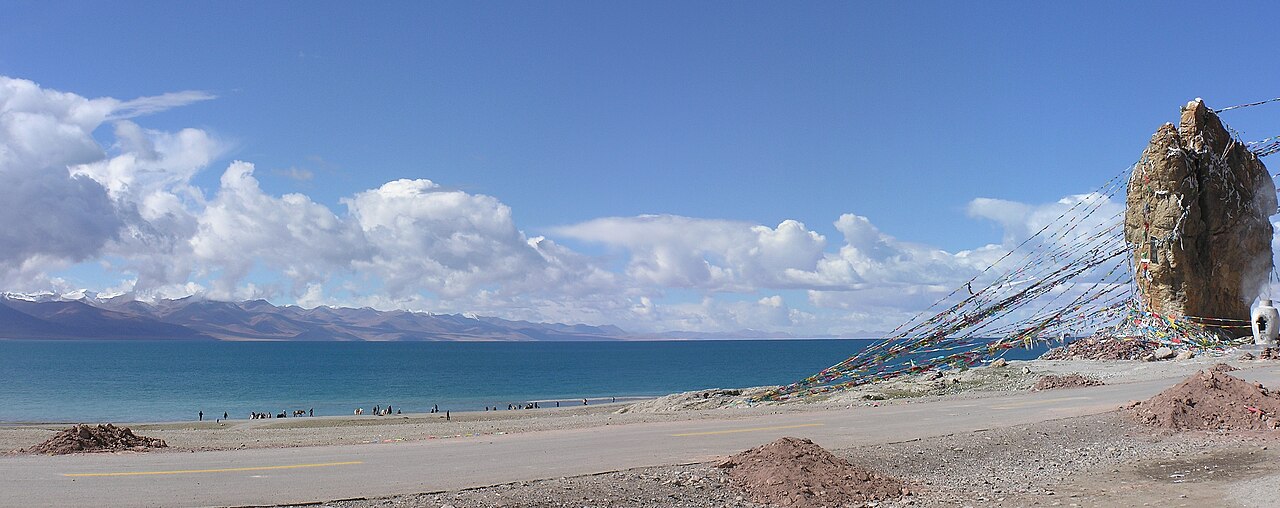
| Day 4+ | Namtso (4,718 m) or Shigatse | Namtso only after 4 days of acclimatisation. The road crosses the Nagen La Pass (5,190 m) — keep the stop short, usually under 15 minutes, and do not get out and run around. Round trip is 10–12 hours. |
Sources: day-by-day activity limits per Sohu (2 Nov 2026); elevation ladder and day-trip timing per TravelHubChina (Aug 2026).
Who should talk to a doctor before going to Tibet?
Most healthy adults can visit Lhasa with a slow plan, but some travellers should see a doctor about a month before departure and explain the exact altitudes of the trip — Lhasa at about 3,650 m, Namtso at about 4,718 m, a swing of more than 1,000 m within one trip, per Sohu (2 November 2026). See a doctor first if you are:
- Over 60, pregnant, or travelling with a child under 6
- Living with high blood pressure, diabetes, or a heart or lung condition
- Someone who has had a heart stent or bypass, or surgery, angina or fainting in the last 3 months
- Taking blood-pressure, blood-sugar or blood-thinning medicine — bring your prescription and a written medicine list in English or Chinese, plus 3 extra days' supply split between bags
Children get altitude sickness too, and young children cannot tell you they have a headache — they may get fussy, cry, refuse food, or change their sleep and activity, per Healigogo. Vomiting plus inability to walk straight is an emergency descent for a child, as it is for an adult. Talk to your paediatrician before going.
And do not travel with a cold. A cold does not turn into altitude sickness — they are different illnesses — but a recent chest infection may raise the risk of pulmonary oedema, and travelling while unwell at 3,650 m wastes days, per Healigogo. If you catch a cold just before departure, consider postponing: a cold at altitude can easily develop into pulmonary oedema, per Sohu (14 October 2026).
When should you descend — and what about insurance?
The rule is simple: do not go higher while you feel bad, and go down if you get worse. Descent is the definitive treatment for severe AMS, HACE and HAPE, and symptoms often improve after a drop of 300–1,000 m, per WMS guidance cited by Healigogo. You will often feel better within hours of a real descent. Chengdu, at 500 m, is the closest low-altitude city — which is one reason many travellers build a recovery night in Chengdu into the end of a Tibet trip.
Before you travel, read the fine print of your travel insurance. Standard policies often exclude coverage above 2,500–3,000 m, and helicopter evacuation from remote parts of Tibet can cost United States dollars (USD) 15,000–50,000, per Tibet-Lhasa-Potala (August 2026). Make sure your policy explicitly covers travel above 3,700 m, emergency medical evacuation, and trip cancellation — including permit denial, which is rare but possible. This is not optional for Tibet.
Bottom line: Tibet rewards the slow traveller. Rest on day one, climb no more than 500 m of sleeping altitude a day above 3,000 m, skip alcohol for 48 hours, and carry Diamox, ibuprofen, a blood-oxygen meter and oxygen canisters. Mild symptoms usually pass in a day or two — but confusion, loss of coordination or breathlessness at rest means descend now, not tomorrow.
In summary: Lhasa 3,650 m, 30–50% of visitors feel mild altitude sickness, acclimatisation takes 24–72 hours. Day 1 rest, day 2 gentle Lhasa sightseeing, day 3 Yamdrok (4,400 m), day 4 or later Namtso (4,718 m). Diamox 125 mg twice daily from 24 hours before ascent (doctor-prescribed); rhodiola has no proven benefit. Descend 300–1,000 m if symptoms worsen; check insurance covers above 3,000 m and evacuation.
Want the gentlest way into Tibet?
Western China Private Car Tours runs the Chengdu to Lhasa road trip by private car along the G318 Sichuan-Tibet Highway — about 2,142 km over 9 to 10 days via Kangding, Xinduqiao, Litang and the high passes, climbing 300–600 m a day instead of 3,100 m in a single flight. That slow climb is the best altitude prevention there is, and our drivers communicate with guests via translation apps, so pickup times, overnight towns and extra rest stops are easy to agree on the road. We carry portable oxygen in the vehicle and build rest days into the route.
Pair this with our G318 Chengdu to Lhasa guide and our Tibet travel permit guide before you book, or our Daocheng Yading guide if you are heading for the 4,000–4,700 m trails in southern Sichuan first.
Get a Private Car Quote on WhatsAppFrequently Asked Questions About Altitude Sickness in Tibet
How bad is altitude sickness in Lhasa?
At 3,650 m, altitude affects most visitors to some degree. Mild altitude sickness — headache, fatigue, shortness of breath, nausea and disturbed sleep — affects 30 to 50 percent of visitors at Lhasa's altitude, and the share rises above 4,000 m. Most people adapt within 24 to 48 hours. The key rules are to ascend gradually, rest completely on day one, stay hydrated, and avoid alcohol for the first 48 hours.
How can I prevent altitude sickness in Tibet?
Go up slowly — that is the single most effective prevention. Above 3,000 m, raise your sleeping altitude by no more than about 500 m per day and add rest days. Rest completely on your first day in Lhasa, skip alcohol for 48 hours, eat light meals, and ask your doctor about Diamox (acetazolamide), starting 125 mg twice daily 24 hours before ascent. Driving in overland along the G318 highway, gaining 300 to 600 m a day, is far gentler than flying straight from Chengdu to Lhasa.
What are the symptoms of altitude sickness?
Mild altitude sickness brings a hangover-like headache, tiredness for no reason, trouble sleeping, loss of appetite, slight dizziness and nausea, and usually eases in 1 to 2 days if you rest and do not go higher. Severe altitude illness is different: confusion, inability to walk in a straight line, vomiting that will not stop, breathlessness at rest, or coughing up pink or white froth. Those are emergencies — descend immediately and seek medical help.
Should I take Diamox or rhodiola for Tibet?
Diamox (acetazolamide) is the best-proven prevention for moderate- and high-risk trips and is strongly recommended by the Wilderness Medical Society, but it is a prescription medicine — talk to your doctor 2 to 4 weeks before travel. The typical preventive dose is 125 mg twice daily, starting 24 hours before ascent. Rhodiola, by contrast, has no solid evidence behind it: a Cochrane review found it did not reduce altitude sickness compared with placebo, and the Wilderness Medical Society does not recommend it.
When should I descend, and where do I get help in Lhasa?
Descend if symptoms worsen despite a day of rest, or immediately if severe signs appear — confusion, loss of coordination, persistent vomiting or breathlessness at rest. Descent is the definitive treatment: symptoms often improve after dropping 300 to 1,000 m. In Lhasa, the People's Hospital and the Tibet Military Region Hospital have high-altitude emergency departments with 24-hour emergency care. Check that your travel insurance covers altitudes above 3,000 m and emergency evacuation before you travel.
Sources: TravelHubChina — Lhasa Tibet Travel Guide 2026: Permits & Altitude (updated 16 Aug 2026; 30–50% AMS at 3,650 m, elevation ladder, 24–48 hour rule, Diamox 125 mg, train and flight details, Potala Palace ticket prices) / Healigogo — Altitude Sickness in China: A Family Guide to Staying Safe, by Lena Wei (22 May 2026; CDC/WMS guidance, 500 m per day rule, descent 300–1,000 m, rhodiola Cochrane review, oxygen-can limits, children and colds) / Sohu — Self-check guide for travellers entering Tibet via border ports, by Tibet Kangtai Travel (2 Nov 2026; who should see a doctor first, Nagen La Pass 5,190 m, day-by-day activity limits, oximeter 85% rule, oxygen cans CNY 20–30, Lhasa hospitals 24-hour emergency care) / Tibet-Lhasa-Potala — Tibet Travel Tips 2026 (updated 6 Aug 2026; 40% less oxygen at 3,650 m, 24–72 hour acclimatisation, Diamox and ibuprofen doses, UV index 12+, insurance exclusions above 2,500–3,000 m, helicopter evacuation USD 15,000–50,000). Images: Potala Palace aerial photo via TravelHubChina; yaks on the plateau via Tibet-Lhasa-Potala; Namtso Lake photo via Wikimedia Commons (CC).