Best Time to Visit Tibet & Qinghai (2026): Month-by-Month Guide
Short answer: The best time to visit Tibet is April to October, with August and September the golden months — warm days, the rains ending, and the clearest views of the year. The best time for Qinghai is May to October, peaking in July and August, when Xining hits 24–25°C by day and rapeseed flowers turn the shores of Qinghai Lake yellow.
If you want the cheapest trip, go in winter: for the 2026–2027 season, Tibet's A-level scenic spots are free, tourist transport is half price, and hotels are half price or lower.
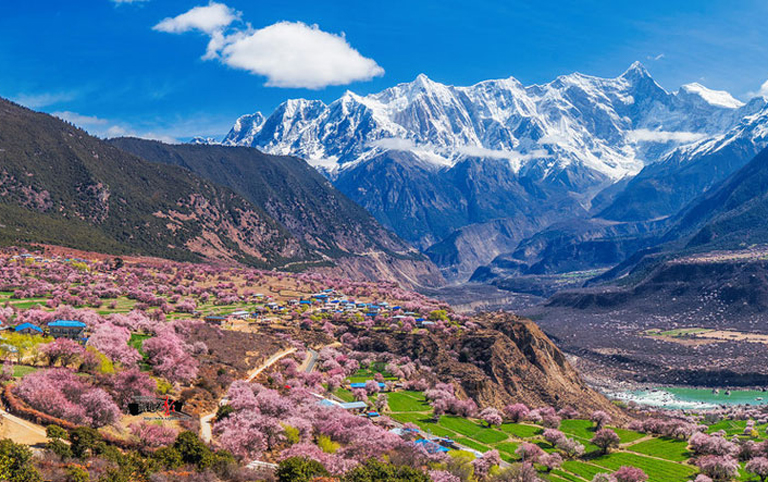
There is no single best month, though — it depends on what you want to see. Peach blossom in Nyingchi means late March to April. Rapeseed flowers in Menyuan mean 10–20 July, no later. Namtso Lake is frozen until May. And the Xining to Lhasa overland road is only a sensible drive from May to October. Pick your target first, then pick your month.
All figures and prices below are as of November 2026.
TL;DR: April–October for Tibet, May–October for Qinghai, August–September the sweet spot for both. June and September are the value months — good weather, fewer crowds, easier bookings. Winter is cold but nearly free in Tibet, and the only season when Mogao Caves cost half price and show more caves. Avoid the first week of October (National Day crowds) and the deep-winter high passes.
Key takeaways for the best time to visit Tibet and Qinghai
- April to October is the Tibet window; May to October is the Qinghai window. Lhasa and its surroundings — Gyantse, Shigatse, Nyingchi and Shannan — can be visited year-round, but the high lakes and passes cannot, per Tibet Discovery (2026/2027 guide).
- August and September are the golden months. Tibet Discovery calls August and September the golden time for Tibet, and China Discovery puts Qinghai's most comfortable weather in June to August, with September to mid-October still comfortable.
- Two dates matter more than any month. Menyuan's rapeseed flowers peak from 5 to 25 July, best 10 to 20 July, per Sohu (25 October 2026). Nyingchi's peach blossom festival runs late March to April, per Tibet Discovery.
- Rain falls mostly at night — but it still matters. Tibet gets 80 to 90 percent of its annual rain from May to September, with August the wettest month at over 130 mm in Lhasa, per China Tibet Train. In Qinghai, about 70 percent of annual rain falls in summer, per China Discovery.
- Winter 2026–2027 is the bargain season. Tibet's A-level scenic spots are free (temple sites excluded), licensed tourist transport is 50 percent off, and three-star-plus hotels are half price or lower, per Tibet Discovery. On the Qinghai-Gansu side, Mogao Caves run at half price in winter and usually show more caves, per Sohu.
- June and September are the smart compromise. Both months dodge the July–August crowds and the one-month-ahead Mogao ticket scramble, while keeping most of the scenery — a point Sohu's October 2026 analysis makes explicitly for the Qinghai-Gansu loop.
Month-by-month weather: Lhasa and Xining
Tibet and Qinghai sit on the same plateau, but they are not the same climate. Tibet is colder at the same latitude because it is higher — Lhasa averages 7.4°C across the year at 3,658 m, Shigatse 6.3°C at 3,836 m, and Nagqu a freezing minus 1.9°C at 4,507 m, per Tibet Discovery. Nyingchi, lower at 3,000 m, is the mildest Tibetan city at 8.6°C. Qinghai's provincial average runs from minus 5.1°C to 9.0°C, with January the coldest month at minus 17.4°C to minus 4.7°C and July the warmest at 5.8°C to 20.2°C, per China Discovery.
How cold does Xining get in winter?
Xining, Qinghai's gateway city at 2,200 m, is the practical reference point for the Qinghai-Gansu loop. Its monthly range, per China Discovery's Qinghai weather guide:
| Month | Xining day / night | Lhasa feel | Verdict |
|---|---|---|---|
| January | 1°C / −14°C | −2°C / −10°C, dry and sunny | Winter deals; high lakes frozen |
| February | 4°C / −10°C | 0°C / −8°C, still cold | Winter deals; roads icy |
| March | 9°C / −4°C | 5°C / −2°C, late cold snap | Peach blossom starts in Nyingchi |
| April | 16°C / 2°C | 10°C / 2°C, little rain | Good: blossom, mild, few crowds |
| May | 20°C / 6°C | 15°C / 5°C, warming fast | Good: lakes thaw, birds at Qinghai Lake |
| June | 23°C / 10°C | 20°C / 8°C, rains begin | Great: value month, green grasslands |
| July | 25°C / 12°C | 22°C / 10°C, wettest season | Peak: rapeseed flowers, but crowded |
| August | 24°C / 11°C | 22°C / 10°C, 130 mm+ rain | Peak: golden month, Shoton Festival |
| September | 19°C / 8°C | 18°C / 7°C, rains ending | Best: clear skies, autumn colours |
| October | 14°C / 2°C | 12°C / 0°C, dry and crisp | Good — except National Day week |
| November | 8°C / −6°C | 5°C / −5°C, cold nights | Shoulder: few tourists, early snow |
| December | 3°C / −12°C | 0°C / −9°C, frozen lakes | Winter deals; Qinghai Lake ices over |
Sources: Xining monthly temperatures per China Discovery, Qinghai Weather 2026; Lhasa figures are indicative seasonal ranges per Tibet Discovery and China Tibet Train (August rainfall over 130 mm); Tibet city averages per Tibet Discovery.
Two patterns jump out. First, the day-to-night swing is bigger than the month-to-month swing: even in July, Qinghai nights drop below 10°C, and on the Gansu side of the loop daytime temperatures can pass 30°C while Qinghai nights fall under 10°C, per Sohu. Pack layers in every month.
Second, sunshine is the plateau's constant — Qinghai gets 2,336 to 3,341 hours of sun a year, second only to Tibet itself, per China Discovery — so sun protection matters in January as much as in July.
Tibet by season
Is spring a good time to visit Tibet?
Spring on the plateau arrives late. March is still freezing in the high country, and Namtso Lake (4,718 m) and Manasarovar (4,441 m) stay frozen until May, per Tibet Discovery. But April and May are, in Tibet Discovery's words, one of the best times to visit Tibet: comfortable days, little rain, and the Nyingchi peach blossom festival from late March to April, when thousands of peach trees bloom along river banks, villages and valleys.
Spring is also the kindest season for altitude. May is the best spring month, with lows around 5°C and highs over 25°C, per China Tibet Train — and the crowds have not arrived yet. The one big spring festival is Saga Dawa, which in 2026 begins on 31 May, per China Tibet Train.
What is summer like in Tibet?
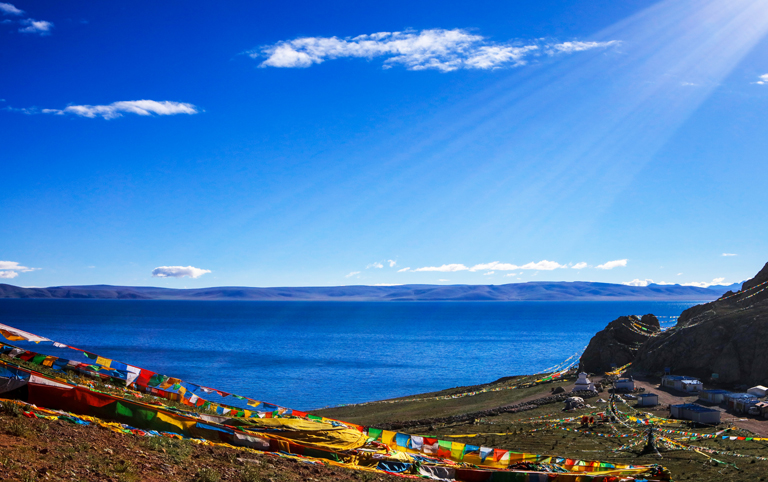
Summer is Tibet's warmest season and its busiest. Days in Lhasa reach 20–25°C, and the frozen lakes finally melt — Namtso is at its bluest, and Everest Base Camp is reachable. But July and August are the rainy months: August alone brings over 130 mm of rain to Lhasa, per China Tibet Train, and most of it falls at night, so days usually stay usable. The risk is on remote roads, where heavy rain can trigger landslides and debris flows, per Tibet Discovery.
Summer is also festival season. The Shoton Festival, Tibet's biggest, falls in July or August — usually mid-August — with a yoghurt banquet, Tibetan opera at Norbulingka, and a giant Buddha thangka unveiled at Drepung Monastery, per Tibet Discovery and China Tibet Train. The Nagchu Horse Racing Festival runs in the same window. If you travel in July or August, book trains, flights and hotels weeks ahead — and expect the Potala Palace to sell out.
Why is autumn the clearest season in Tibet?
When the rains end, Tibet turns into what Tibet Discovery calls a fairy-tale world: cool days, yellow leaves, monasteries and snow mountains against a hard blue sky. September and October are the months when Everest is most likely to be seen clearly from Rongbuk Monastery, per Tibet Discovery, and Nyingchi's forests turn yellow and orange — a second photography season after spring.
Autumn is the best season for the overland road, too. TibetTour.org rates September to October as the top window for the Xining to Lhasa drive: clear and dry, best visibility, autumn colours along the way. The one exception is the first week of October, when China's National Day holiday packs every train, flight and hotel — Tibet Discovery advises avoiding it if you can.
Is winter worth it in Tibet?
Winter on the plateau is cold and dry, with bitter nights in the north and at high altitude — but Lhasa itself stays sunny in the daytime, often warmer than inland Chinese cities at the same hour, per Tibet Discovery. Lhasa, Gyantse, Shigatse and Shannan are all visitable year-round.
"Winter here means clear skies, fewer crowds, and unbeatable views of snow-capped peaks."
— Tibet Discovery, Best Time to Visit Tibet 2026/2027
And for the 2026–2027 winter, the deal is hard to ignore: all A-level scenic spots are free (temple sites excluded), licensed tourist transport runs at half the peak-season price, and three-star-plus hotels are half price or lower, with many offering free in-room oxygen, per Tibet Discovery's 2026/2027 guide.
The trade-off is real, though: Namtso, Ngari and Medog are not suitable in winter, lakes freeze solid, and roads to natural scenic spots can be blocked by heavy snow. Winter suits a traveller with a single clear goal — the Potala Palace without queues, a photography trip, a budget run — not a first-timer who wants to see everything.
Qinghai by season
When is Qinghai at its best?
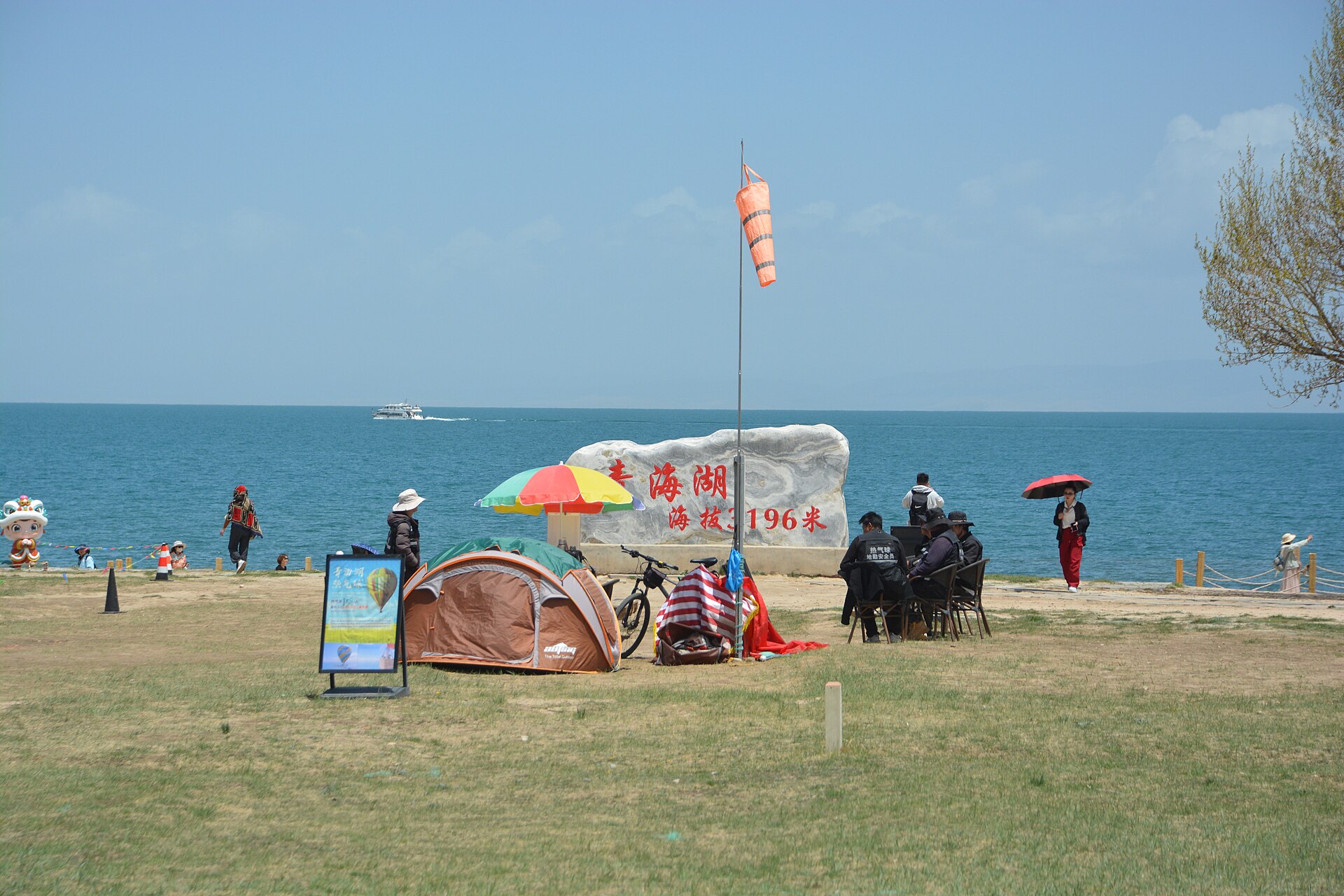
When most of China is sweltering, Qinghai is at its most comfortable. June to August is the best season, per China Discovery, with cool wind, green grass and rapeseed flowers across the mountains. Xining is the usual first stop, and Qinghai Lake is best from May to October, with July and August the pick for the rapeseed sea, per China Discovery. Bird-watchers should come from May to July, when the lake's birds are most numerous.
But do not treat "July" as a single window. Menyuan's rapeseed has an official peak of 5 to 25 July, with the best viewing from 10 to 20 July, per Sohu (25 October 2026) — arrive after 25 July and you may find the flowers already setting seed. Qinghai Lake's own rapeseed runs slightly earlier and longer, roughly late June to late July. And July to August is also when crowds peak, so families travelling in the school holidays should expect busy viewpoints.
Are spring and autumn good value in Qinghai?
Late spring (March) and early autumn (September to October) are also good seasons for Qinghai, per China Discovery — and Sohu's October 2026 analysis of the Qinghai-Gansu loop makes the case that June and September are the real value months. The reason is not that the scenery is slightly worse; it is that the constraints loosen by a notch. Mogao Caves A-class tickets need a month's advance booking in July and August, and Dunhuang hotels book out weeks ahead, per Sohu — in June and September, planning is far more forgiving, and the grasslands and Danxia landforms have barely faded.
Autumn is short in Qinghai. Early autumn, from September to mid-October, is still comfortable, with cool days and cold nights, and it is the most recommended season for autumn leaves — Laoye Mountain, Laji Mountain and Kanbula National Forest Park are at their best, per China Discovery. From mid-October the temperature drops fast.
What is Qinghai like in winter?
Winter in Qinghai is long and very cold — the average winter low is around minus 20°C, per China Discovery — and it is not recommended for long outdoor stays. But winter has its own logic. Qinghai Lake freezes from mid-December to mid-February, when the "blue ice" draws photographers, per Sohu; Chaka Salt Lake, Emerald Lake and Zhangye Danxia switch to off-season prices with some experiences suspended; and Mogao Caves run at half price in winter and usually open more caves than in peak season, per Sohu. The catch is access: after snow, roads around Qilian are often controlled or closed, and parts of the loop can only be viewed from a distance. Winter works for a traveller with one clear target, not for a first loop.
Which month fits you? A quick decision guide
Pick your priority first, then your month — that is the approach Sohu's October 2026 analysis recommends, and it fits Tibet and Qinghai both:
- Best scenery, and you can book ahead — July and August. Lock Mogao Caves tickets a month out, book Dunhuang hotels weeks ahead, and aim rapeseed viewing at 10–20 July. Accept the crowds as the price of the peak.
- Comfort and flexibility, travelling with parents or children — mid-June or September. Resources are looser, nights are not yet punishing, and the scenery has barely faded. September adds the clearest skies of the year.
- Photography — late March to April for Nyingchi peach blossom, September to October for autumn colour and Everest views, mid-December to mid-February for Qinghai Lake blue ice.
- Budget — May or October for the shoulder-season balance, or November to March for the winter deals: free Tibet scenic spots, half-price transport and hotels, and half-price Mogao Caves.
- Overland driving — May to October for the Xining to Lhasa road, with September to October the top-rated window for visibility, per TibetTour.org. November to March brings snow, ice and possible road closures.
- Festivals — Saga Dawa from 31 May 2026, Shoton Festival in mid-August, Nyingchi Peach Blossom Festival from late March to April.
Festivals and seasonal events in 2026
| Event | When | Where |
|---|---|---|
| Nyingchi Peach Blossom Festival | Late March – April | Nyingchi, eastern Tibet |
| Saga Dawa | From 31 May 2026 | Lhasa and across Tibet |
| Rapeseed flowers, Menyuan | Peak 5–25 July, best 10–20 July | Menyuan, Qinghai |
| Shoton Festival | Mid-August | Lhasa (Norbulingka, Drepung) |
| Nagchu Horse Racing Festival | July–August | Nagchu, northern Tibet |
| Qinghai Lake blue ice | Mid-December – mid-February | Qinghai Lake |
Sources: festival dates per Tibet Discovery and China Tibet Train; rapeseed and blue-ice windows per Sohu (25 October 2026).
One more timing rule: altitude. Whoever you are, your first day at altitude is for resting, not sightseeing — Lhasa sits at 3,650 m, and roughly a third to a half of visitors feel it, per TravelHubChina's 2026 Lhasa guide (see our altitude sickness guide for the full numbers).
Fly in and you jump 3,100 m in two hours; drive in along the G318 from Chengdu and you climb 300 to 600 m a day. Whichever month you choose, build a rest day into day one, and read our altitude guide before you go.
What should you pack for Tibet and Qinghai?
The plateau punishes the traveller who packs for one temperature. Days can hit 25°C while nights fall below 10°C, even in July, and the sun is fierce at altitude in every season. China Discovery's seasonal advice for Qinghai is a good template for both regions: layers you can add and remove, a windproof jacket, sun protection (sunscreen, sunglasses, sun hat), and warm layers for the night. In winter, add a down jacket, heavy coat, fleece layers, scarf, beanie and winter boots. Bring altitude medicine, motion-sickness pills and your prescriptions, and rest properly on arrival day — China Discovery's own advice for Qinghai visitors.
Bottom line: April to October for Tibet, May to October for Qinghai, August and September the golden months for both. June and September give you nearly the same scenery with far less friction. Winter is the cheapest season in years — free Tibet scenic spots, half-price transport and hotels — if you accept frozen lakes and closed high roads. Whatever month you pick, book Mogao Caves a month ahead in summer, avoid National Day week, and give yourself a rest day at altitude.
In summary: Tibet is best April–October, with August–September golden. Qinghai is best May–October, peaking July–August. Rapeseed is best 10–20 July, peach blossom late March–April, and 80–90% of Tibet's rain falls May–September. Winter 2026–2027 brings free A-level spots and half-price transport and hotels in Tibet, and half-price Mogao Caves. June and September are the value months, and the Xining–Lhasa overland road runs May–October, best September–October.
Want a trip timed to the right month?
Western China Private Car Tours runs private-car trips from Chengdu to Tibet and Qinghai — the G318 overland route to Lhasa, the Qinghai-Gansu loop from Xining, and the Chengdu to Jiuzhaigou road. Our drivers communicate with guests via translation apps, so pickup times, rest stops and extra acclimatisation days are easy to agree on the road, and our vehicles carry portable oxygen for the high passes. Tell us your month and your must-see list, and we will plan the route around the season, not against it.
Start with our G318 Chengdu to Lhasa guide and our Tibet travel permit guide, or our altitude sickness guide if you are worried about the height.
Get a Private Car Quote on WhatsAppFrequently Asked Questions About the Best Time to Visit Tibet and Qinghai
What is the best month to visit Tibet?
August and September are the golden months for Tibet: warm days, the rainy season ending, and the clearest mountain views of the year. April to October is the full travel window, with April and May best for Nyingchi's peach blossom and fewer crowds, and July and August best for Namtso Lake and Everest Base Camp. Avoid the first week of October, when China's National Day holiday fills trains, flights and hotels.
What is the best month to visit Qinghai?
July and August are the best months for Qinghai: Xining reaches 24–25°C by day, the grasslands are green, and rapeseed flowers bloom around Qinghai Lake and in Menyuan, with the official peak from 5 to 25 July and the best viewing from 10 to 20 July. June and September are the value windows — comfortable weather, fewer crowds and lower prices — and May to October covers most of the province.
Can I visit Tibet in winter?
Yes, and winter 2026–2027 is unusually cheap: all A-level scenic spots in Tibet are free (temple sites excluded), licensed tourist transport runs at half the peak-season price, and three-star and better hotels are half price or lower, with many offering free in-room oxygen. Lhasa, Gyantse, Shigatse and Shannan stay open and sunny, but Namtso, Ngari and Medog are not suitable in winter, and high roads can close after snow.
When is the rainy season in Tibet and Qinghai?
Tibet's rainy season runs from May to September and delivers 80 to 90 percent of the year's rain, with August the wettest month at over 130 mm in Lhasa. Rain usually falls at night, so days stay usable, but remote roads can suffer landslides. In Qinghai, about 70 percent of annual rain falls in summer, from June to August. September and October are the driest months with the clearest skies in both regions.
Do I need a permit to visit Tibet, and does the season affect it?
Foreign visitors need a Tibet Travel Permit for the whole region, plus extra permits for Everest Base Camp and Ngari — arrange them through a licensed agency at least 15 to 20 working days ahead. The season does not change the permit rules, but it changes the trip: permits are processed year-round, while the practical window for most routes is April to October, and some high passes and lakes are unreachable in deep winter.
Sources: Tibet Discovery — Best Time to Visit Tibet, Weather & Climate 2026/2027 (April–October window, golden August–September, winter 2026–2027 free entry and half-price transport and hotels, rainy season May–September, Nyingchi peach blossom late March–April, Shoton Festival July–August) / China Discovery — Qinghai Weather & Climate, Best Time to Visit Qinghai 2026 (monthly Xining temperatures, June–August best season, Qinghai Lake May–October, rapeseed July–August, birds May–July, 2,336–3,341 sunshine hours) / Sohu — Which month is best for the Qinghai-Gansu loop? (25 Oct 2026; Menyuan rapeseed peak 5–25 July, best 10–20 July; Mogao Caves A-class tickets one month ahead; Qinghai Lake ice mid-December to mid-February; winter half-price Mogao Caves) / China Tibet Train — Best Time to Take a Tibet Train Tour 2026/2027 (Saga Dawa 2026 from 31 May, August rainfall over 130 mm, Shoton Festival mid-August, spring and autumn temperatures) / TibetTour.org — Xining to Lhasa Overland 2026/2027 (May–October overland window, September–October best visibility and autumn colours, winter road hazards). Images: Nyingchi peach blossom, Namtso Lake and Everest photos via Tibet Discovery; Qinghai Lake photo from our own Qinghai-Gansu guide assets (Wikimedia Commons).