Chengdu Food Tour Guide (2026): Dishes, Streets & Prices
Key takeaway: Chengdu was named a UNESCO (United Nations Educational, Scientific and Cultural Organization) City of Gastronomy in 2010 — the first in Asia — and its food scene splits into three tiers you can mix in a single day: street snacks for ¥30-50 per person, neighborhood hotpot and skewer shops for ¥50-100, and Michelin-listed Sichuan dining up to ¥1,200. Eat where locals eat (Kuixinglou Street, Jianshe Xiang), ask for wei la if you want faintly spicy, and book the 2026 Michelin names ahead. All prices below are as reported in Oct 2026.
The 2026 Michelin Guide Chengdu (5th edition, unveiled Sept 1, 2026) lists 76 restaurants: 13 starred (2 two-star + 11 one-star), 27 Bib Gourmand and 36 Michelin-selected, as reported by China Daily.
The 8 dishes you must try (and what they cost)
Chengdu's flavor code is ma la — the numbing tingle of Sichuan peppercorn (huajiao) stacked on chili heat. Huajiao is not really spicy: it starts citrusy, numbs the lips, and finishes faintly floral. If you can handle the tingle, these eight dishes are the core curriculum:
| Dish | What it is | Typical price |
|---|---|---|
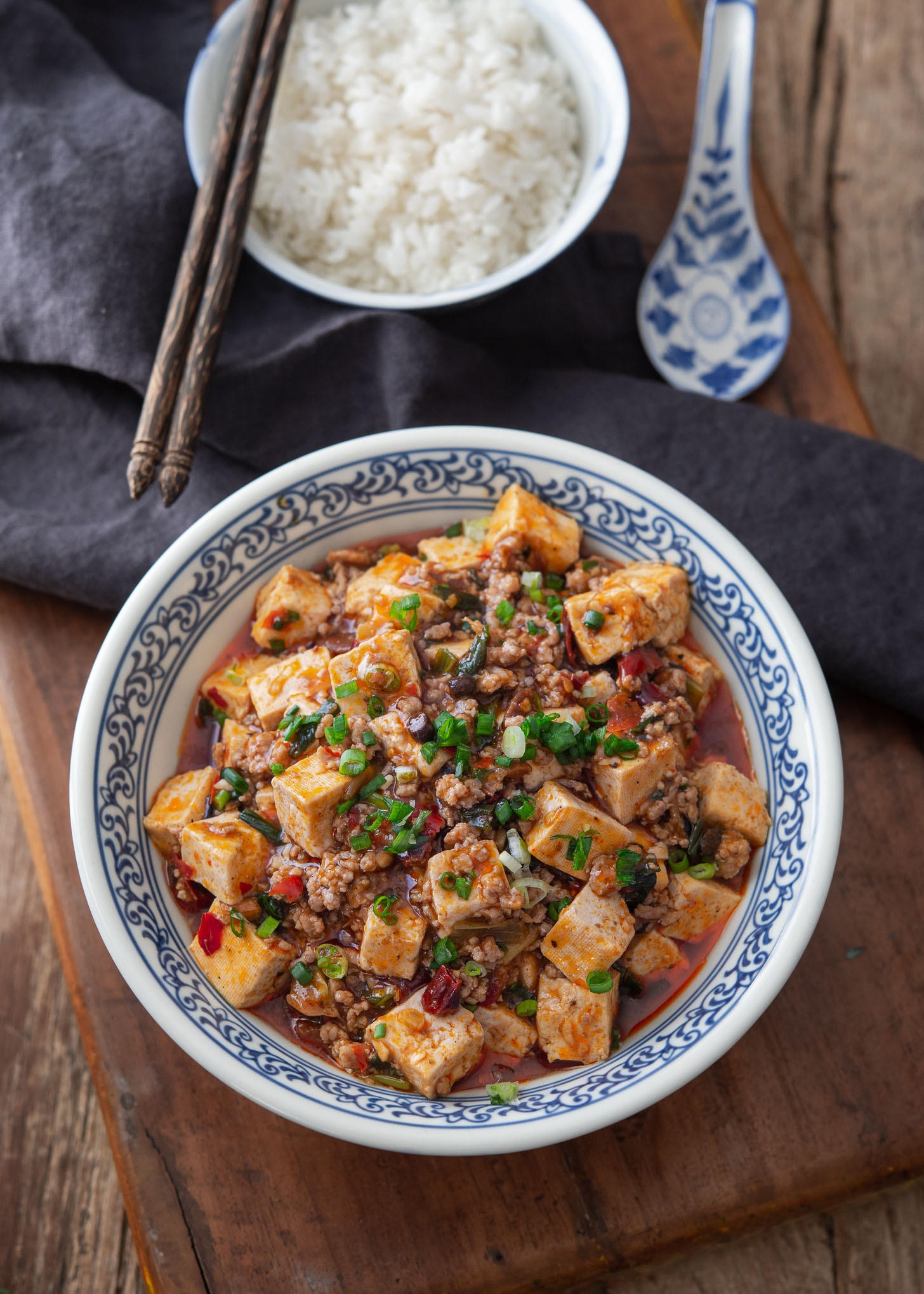
| Mapo tofu (麻婆豆腐) | Silken tofu in chili-bean sauce with minced beef and ground huajiao — the benchmark Sichuan dish | ¥20-40 in a local restaurant |
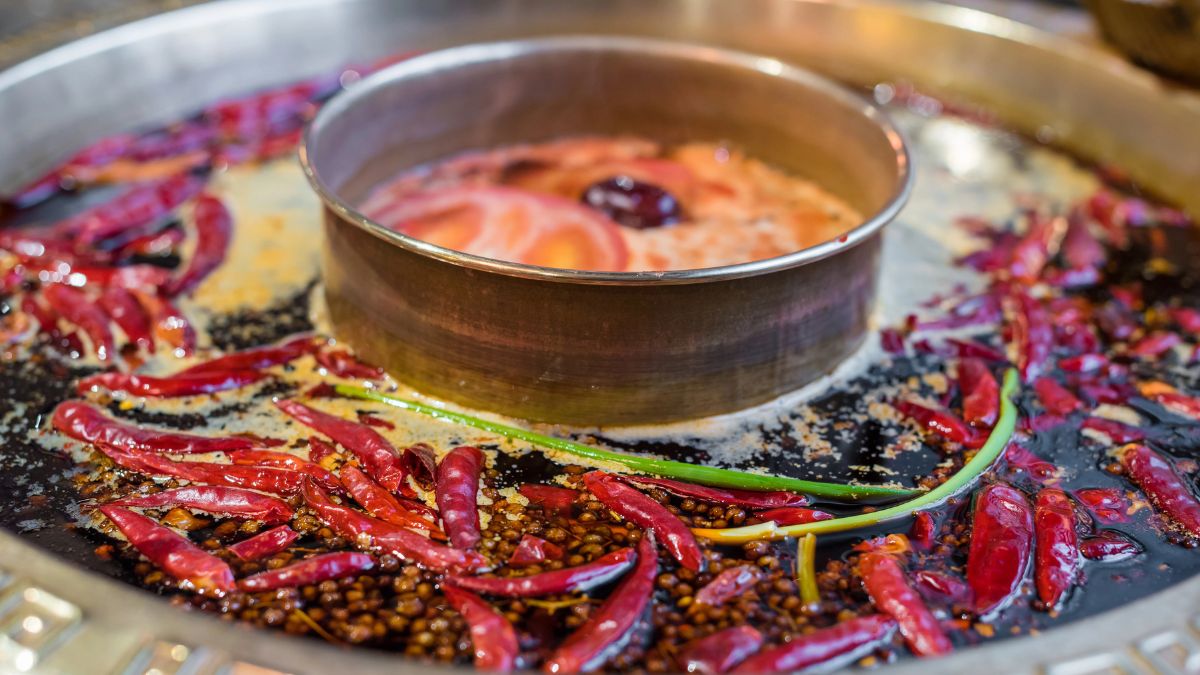
| Beef-tallow hotpot (牛油火锅) | Spicy broth slow-fried with 30+ spices; cook your own tripe, aorta, duck intestine | ¥80-100/person |
| Skewer hotpot (串串香) | Hotpot on skewers — coriander beef, fish-mint beef and chicken gizzard are the must-orders | ¥50-80/person |
| Dan dan noodles (担担面) | Noodles in sesame paste with minced pork and chili oil — mix well before eating | ¥12-20 |
| Twice-cooked pork (回锅肉) | Boiled-then-fried pork belly with fermented broad-bean paste — the Sichuan home-cooking classic | ¥30-50 as a dish |
| Zhong dumplings (钟水饺) | Pork dumplings in sweet-spicy garlic sauce | ¥10-15 |
| Bobo chicken (钵钵鸡) | Cold skewers soaked in red-oil or green-fagara broth — Sichuan's answer to tapas | ¥30-60/person |
| Sweet cold noodles (甜水面) | Thick chewy noodles in sweet-spicy sauce — a street-snack legend | ¥8-12 |
Adventure add-ons if you are brave: spicy rabbit heads (麻辣兔头), sold everywhere as street food, and there is even a rabbit-only restaurant in town at roughly ¥108 per person. For dessert, look for san da pao (三大炮) — glutinous rice balls rolled in soybean powder and brown-sugar syrup — and bing fen (冰粉), a translucent iced jelly that resets your mouth after chili.
How do I survive hotpot like a local?
Bottom line: pick the right spice level (start at wei la), learn the 15-second dip for tripe, and always mix the sesame-oil dipping bowl. The rest is just appetite.
Hotpot is Chengdu's evening religion, and a 25-year-old neighborhood shop near Chunxi Road is still packing queues with its beef-tallow broth — fried for 120 minutes with more than 30 spices, according to Sohu's Oct 2026 report — at ¥80-100 per person. Most serious shops now list four spice levels (extra hot / hot / medium / faintly spicy), so don't perform bravery on day one; wei la still delivers full flavor.
Order like a local: mao du (毛肚, tripe) needs about 15 seconds in the broth — the locals chant "seven up, eight down" (七上八下), dipping it in and out roughly 15 times. Huang hou (黄喉, aorta) and duck intestine want a quick swirl too. Mix your own dipping bowl from sesame oil, crushed garlic and coriander; it cools the chili and is non-negotiable for beef-tallow broth. Tomato or mushroom split pots exist at most shops if someone in your group can't handle heat at all. A broth "museum" hotpot in the city even lets you taste the evolution of Sichuan broth styles — a good rainy-day stop.
Where should I eat in Chengdu?
For locals' prices: Kuixinglou Street (奎星楼街) and Jianshe Xiang (建设巷) are the real snack corridors — an afternoon of sweet cold noodles, egg pancakes (蛋烘糕), sugar-oil fruit (糖油果子) and iced jelly runs ¥30-50 per person. For atmosphere: Jinli Ancient Street (锦里) and Wide and Narrow Alley (宽窄巷子) are beautiful Qing-dynasty lanes with higher prices and more tourists; eat lightly here and save your stomach for the locals' streets. Start the morning with a wet market (菜市场) walk — it shows you the raw ingredients (pickled mustards, fresh tofu, chili mountains) before the snack crawl begins.
For the 2026 Michelin tier: the 5th-edition guide (Sept 1, 2026) kept two-star honors for Xin Rong Ji (新荣记) and Yu Zhi Lan (玉芝兰), gave one star to the young team at Restaurant Co-, and has kept Silver Pot (银锅) at one star for six consecutive years with modern Sichuan cooking. At the value end, 27 Bib Gourmand entries include Chen Mapo Tofu's Qinghua Road branch and four 2026 newcomers — including a 30-year-old hotpot and a steamed-beef-with-rice-flour specialist. The vegetarian Mi Xun Teahouse also retained Michelin's Green Star. Starred rooms book out on weekends; Bib Gourmand spots are usually walk-in friendly with a short queue.
Teahouses, face-changing opera, and the night shift
Chengdu's other great institution is the teahouse. Heming Teahouse in People's Park has served jasmine tea to locals playing mahjong for generations — a slow afternoon here between snack runs is as Chengdu as it gets. In the evening, many visitors pair an old-style hotpot dinner with a Sichuan opera face-changing (变脸) show, a classic one-day combo locals recommend to guests.
Timing matters: autumn (September-November) is widely considered the best season for a food trip — cooler evenings, hotpot season ramping up — and the Chengdu Food and Cultural Festival usually lands in April. Whatever the month, Chengdu eats late; hotpot queues peak after 19:00 and the night snack streets run past midnight.
Want a driver for your food tour?
Wet market in the morning, snack streets in the afternoon, hotpot at night — a driver who waits at every stop and gets you home at midnight. Free fixed quote for your food day.
Get a Free Quote on WhatsAppGetting between food spots (why a driver helps)
The metro reaches the big names, but a real food day is fragmented: a morning market in one district, snack streets in another, a hotpot dinner somewhere else entirely — carrying shopping, in the heat, after three meals. A private car turns that into one loop with a driver who waits: no parking hunts near packed snack streets, no taxi negotiations at midnight after the last hotpot, and room for the vacuum-packed snacks you'll inevitably buy. Tell us your must-eat list; we'll sequence the stops.
"Chengdu's food has three price tiers and they are all worth eating: ¥30 street snacks, ¥80 neighborhood hotpot, and the Michelin rooms. The mistake is only doing one of them — the city rewards travelers who eat across all three."
— Western China Private Car Tours, Chengdu-based private car team (Oct 2026)
Frequently Asked Questions
Is Chengdu food too spicy for foreigners?
It can be, but you are never forced to eat at full heat. Most hotpot and skewer shops offer four spice levels from faintly spicy to extra hot — ask for wei la (faintly spicy) or zhong la (medium). Street snacks like sweet cold noodles, egg pancakes and iced jelly contain no chili at all, and the famous numbing sensation comes from Sichuan peppercorn, which numbs without burning.
How much does a day of food touring cost in Chengdu?
As of Oct 2026: a street-snack crawl on Kuixinglou Street or Jianshe Xiang runs about ¥30-50 per person; skewer hotpot (chuanchuan) about ¥50-80; a proper beef-tallow hotpot ¥80-100. Traditional Sichuan restaurants sit around ¥150 per person, while Michelin-level fine dining starts near ¥1,200 per person.
Where do locals actually eat in Chengdu?
Locals lean toward Kuixinglou Street and Jianshe Xiang — snack-lined lanes where ¥30-50 covers an afternoon of street food. Jinli Ancient Street and Wide and Narrow Alley are atmospheric but tourist-priced. For hotpot, neighborhood chains with decades of history consistently outrank the flashy newcomers.
Do I need to book Michelin restaurants in Chengdu in advance?
For the popular names, yes. The 2026 Michelin Guide Chengdu (5th edition, unveiled Sept 1, 2026) lists 76 restaurants — 13 starred, 27 Bib Gourmand, 36 selected. Bib Gourmand spots usually accept walk-ins with a short wait, but the starred fine-dining rooms and the four new Bib Gourmand entries need reservations, especially on weekends.
What is the best way to get between food spots in Chengdu?
The metro covers the big names, but a food tour means hopping between scattered streets, a morning wet market, an afternoon snack crawl and a late-night hotpot — with tired feet. A private car with a driver who waits at each stop turns a disjointed day into one smooth loop, and solves the midnight problem of getting home after the last hotpot.
Sources: China Daily (The Michelin Guide Chengdu 2026 unveiled, Sep 2026) / Sina News (Chengdu 3-day summer food itinerary, Oct 2026, Chengdu Michelin & Bib Gourmand restaurant guide, Oct 2026) / Sohu (Long-established chuanchuan shop's beef-tallow broth, Oct 2026) / top25restaurants.com (Chengdu — UNESCO City of Gastronomy).