Hailuogou & Kangding Travel Guide (2026): Glacier Park Tickets, Mugecuo Lake & a 3-Day Plan from Chengdu
TL;DR: Hailuogou is the closest big glacier to Chengdu — a river of ice dropping through primeval forest at the foot of 7,556 m Gongga Shan, about 3.5 hours by car to Moxi Town. Entry is ¥90, the bus ¥70, the cable car to Camp 4 ¥135 (¥295 all in, as of November 2026). Pair it with Kangding, the love-song town at 2,560 m: Paoma Mountain ¥80 by cable car, Mugecuo Lake ¥220. Three days from Chengdu covers both properly.
Note the date-sensitive deal: from 1 to 30 November 2026, school pupils (high school and below), their immediate family and teachers enter Hailuogou free — admission only, bus and cable car still charged. It ends 30 November, so check the park's current notices before you count on it.
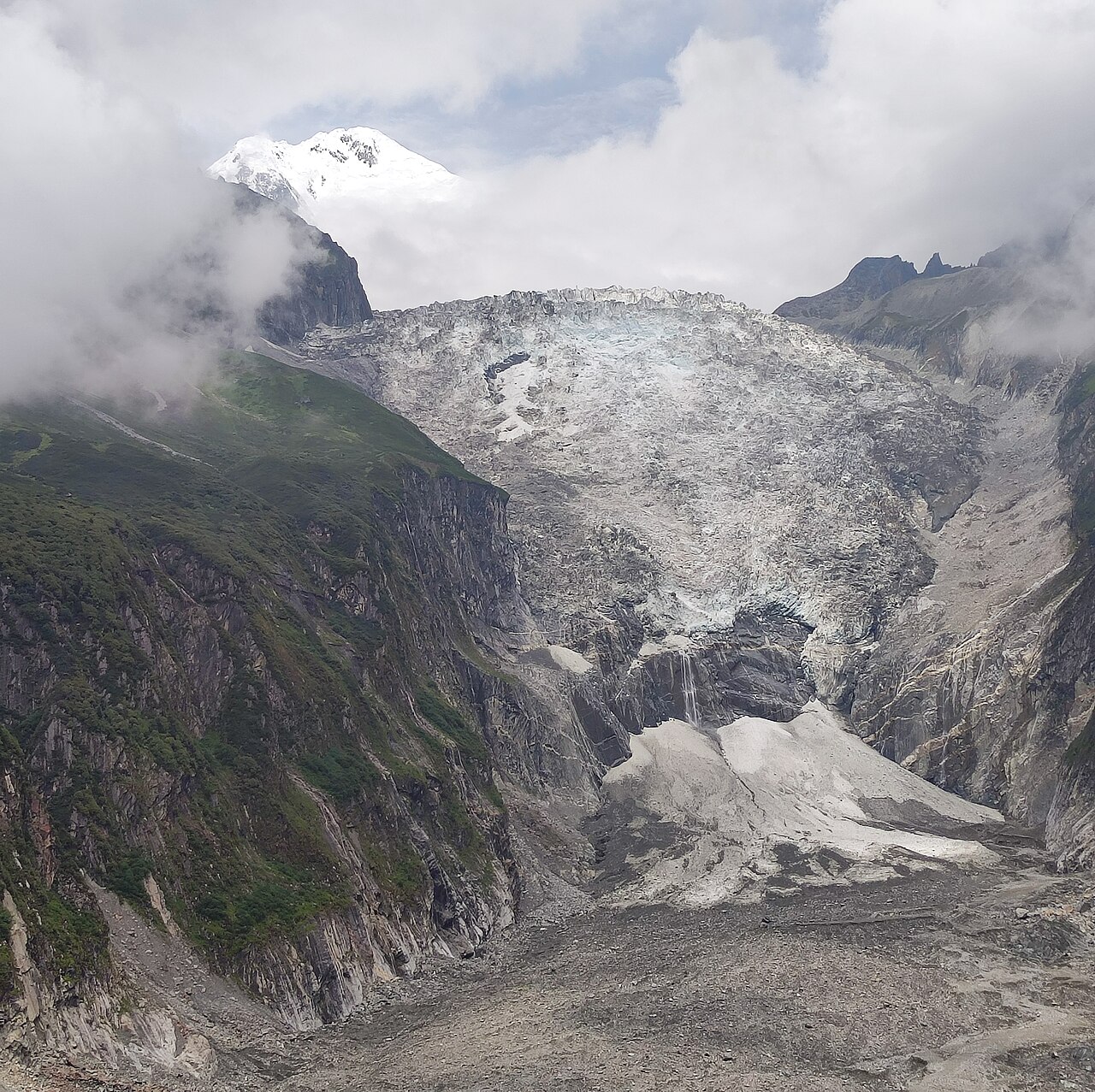
Short answer: Hailuogou Glacier Forest Park, in Moxi Town, Luding County, is the east-slope glacier of Gongga Shan — the lowest-altitude modern marine glacier at this latitude anywhere in Asia, with its ice tongue reaching down into old-growth forest. That contrast, ice against green forest, is the whole point of the place, and it is the easiest glacier in China to reach from a major city.
The visit runs on a fixed chain: sightseeing bus from the Moxi visitor centre up through Camp 1 and Camp 2 (hot springs) to Camp 3, about an hour, then either the cable car or a walkway up to Camp 4 for the glacier viewpoint. Budget ¥160 for entry plus bus, or ¥295 if you ride the cable car — all prices below are as of November 2026.
Kangding, roughly 2 hours further west via Luding, is the natural second half of the trip: a Tibetan trading town at 2,560 m famous for the Kangding Love Song, with Paoma Mountain rising straight behind its streets and Mugecuo Lake, a turquoise alpine lake at about 3,600 m, 17 km out of town. No travel permit is needed anywhere on this route for foreign passport holders.
One timing note matters right now: November has moved the park onto winter-spring hours — ticket sales 08:00–14:00, gates closing at 17:00 — so a late start wastes the day, and the glacier boardwalk can ice over, so bring grippy shoes.
In short: If you want one glacier, one lake and one real Tibetan town without flying to Tibet, this is the trip — closer than Jiuzhaigou, higher than Emei, and the only place in Sichuan where you can soak in a hot spring with snow peaks overhead. If you have five days, fold it into our western Sichuan 5-day loop instead, which runs the same Kangding road onward to Tagong and Xinduqiao.
Key takeaways for Hailuogou and Kangding
- Hailuogou costs ¥160 without the cable car, ¥295 with it. Admission ¥90 (1 April–31 December 2026 full price) + return sightseeing bus ¥70 + return cable car Camp 3 to Camp 4 ¥135, per Baifen Fleet's western Sichuan ticket roundup (November 2026) and Sichuan Youth Travel (November 2026).
- Winter-spring hours apply now: ticket sales 08:00–14:00, park closes 17:00. In the warmer months the park runs 08:00–18:00 with last entry at 14:30. Book by real-name reservation on the park's official WeChat account, and pick a time slot — walk-up entry is not something to count on.
- November–December is the clear-sky season. The winter-spring viewing season brings the highest rate of clear days and the best odds of the "Sunshine Golden Mountain" — Gongga Shan lit gold at sunrise, around 07:20 in winter — per Sichuan Youth Travel (November 2026). May–June is the green alternative.
- Kangding is two sights in one town. Paoma Mountain ¥80 (¥50 entry + ¥30 cable car), 08:00–18:00, and Mugecuo Lake ¥220 with the shuttle or ¥290 with the boat, 07:30–16:30, 17 km from town — per JoyoTour's Kangding guide (updated 10 October 2026).
- No permit needed — but the Gongga reserve is closed to trekkers. Foreign visitors travel freely in Kangding and Garze Prefecture with a passport, per JoyoTour. Since 4 November 2026, unapproved crossings inside the Gongga Shan nature reserve are banned after three recent deaths; the Lengga Cuo and San'en Cuo viewpoints outside the reserve stay open, per Sohu / Upstream News (5 November 2026).
What is Hailuogou?
Hailuogou is a glacier valley on the eastern slope of Gongga Shan, in Moxi Town, Luding County, in the Garze Tibetan Autonomous Prefecture — the name means "Conch Gully" — according to the park's official ticketing information and Baifen Fleet (November 2026). Gongga Shan itself, at 7,556 m, is the highest mountain in Sichuan and the "King of Sichuan's Mountains", ringed by 145 ice peaks above 6,000 m, per JoyoTour's Kangding guide (updated 10 October 2026).
What makes Hailuogou unusual is the altitude at which the ice sits: it is the lowest-altitude modern marine glacier at this latitude, with the glacier tongue descending into primeval forest, so you get ice, forest and hot springs in a single valley — a combination no other Sichuan scenic area offers, per Sichuan Youth Travel (November 2026). The glacier, the forest and the hot springs are the three things the park is built around, and the visit is organised as a chain of numbered camps up the valley.
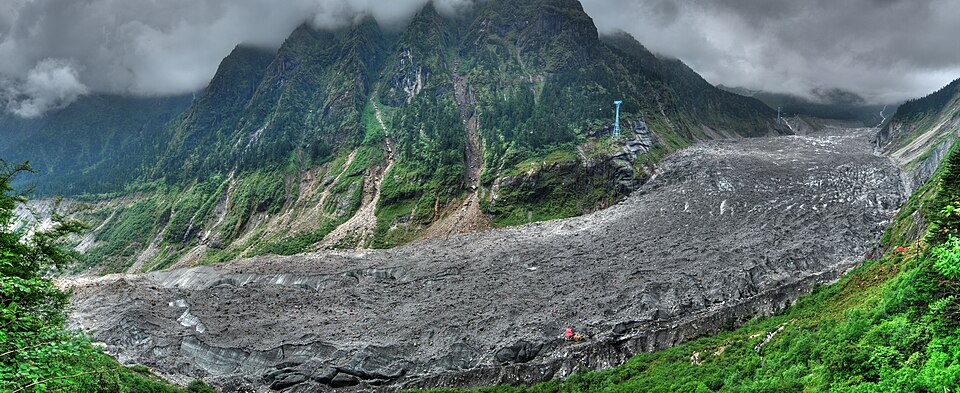
"A massive icefall drops through the forest, and the reward afterwards is a hot spring pool with snow peaks all around you." — JoyoTour, Kangding Travel Guide 2026
How much are Hailuogou tickets, and how do you book them?
Admission, the sightseeing bus and the cable car are three separate purchases — the common budgeting mistake is to stop at the ¥90 entry fee. The table below shows the standard adult prices as of November 2026, per Baifen Fleet (November 2026) and Sichuan Youth Travel (November 2026).
| Item | Price (adult) | Notes |
|---|---|---|
| Admission | ¥90 | Full price 1 April–31 December 2026; real-name reservation required |
| Sightseeing bus (return) | ¥70 | Visitor centre to Camp 3, about 1 hour; mandatory inside the park |
| Cable car Camp 3–Camp 4 (return) | ¥135 | To the glacier viewpoint; check same-day operation before buying |
| Entry + bus | ¥160 | The basic day-visit budget |
| Entry + bus + cable car | ¥295 | The full glacier-viewpoint budget |
Sources: ticket table per Baifen Fleet, Western Sichuan Attraction Tickets (November 2026) and Sichuan Youth Travel, Hailuogou 3-day guide (November 2026). Prices as of November 2026. Older English guides still list ¥85 entry and a ¥150 cable car — those figures are out of date.
Discounts: visitors aged 65 and over enter free with a valid passport or other accepted document, and the rule explicitly covers foreign visitors; ages 60–64 enter free outside China's national statutory holidays and at half price during them. Children aged 6 or under, or 1.2 m or shorter, enter free; minors over 6 through 18, and full-time students at undergraduate level or below, pay half-price admission. Bus and cable-car charges are separate in every case, so confirm the transport category before paying, per Baifen Fleet.
How to book
Book through the official channel: the reservation and ticket menu in the park's WeChat official account (海螺沟旅游), or an online travel platform, with real-name registration for every ticket — passport details for foreign visitors — and a chosen entry time slot, per Sichuan Youth Travel and Baifen Fleet. The park's official site is hailuogou.com, and its ticket-services page lists the official entry points. Do not buy from a third-party site with an official-sounding name; start from the park's own account.
Winter-spring hours from November
In the winter-spring season the park sells tickets 08:00–14:00 and closes at 17:00, per Sichuan Youth Travel (November 2026). In the warmer months the park runs 08:00–18:00 with last entry at 14:30, per Peach Spring Atlas (updated 27 June 2026). Either way, entry stops in the early afternoon — arrive at the visitor centre by mid-morning, and treat 14:00 as the hard cutoff in winter.
The November free-admission window — ending soon
Under a park notice issued 30 October 2026, from 1 to 30 November 2026, pupils in the domestic school system (high school and below), their immediate family members and teachers enter free — admission only, not the bus or cable car — per Sohu (November 2026). Family claims need household-register documents and other checks, and Baifen Fleet notes it is not established that overseas families qualify. The window closes 30 November 2026, six days after this guide was written: check the park's current notices before travelling. The earlier blanket free-admission period, 1 August–31 October 2026, has already ended.
What to see inside Hailuogou: the camps
The park is a single road up the valley with numbered camps. Knowing the chain before you arrive is what turns a rushed day into a good one.
Camp 1 and Camp 2 — forest and hot springs
The sightseeing bus climbs past Camp 1 into the forest belt, then Camp 2, where the park's hot springs sit. The soak is a separate purchase from the park ticket — sharing the name "Hailuogou" does not mean a hotel's hot-spring access comes with the park ticket, per Baifen Fleet — so budget it separately and confirm the price on the day. Most visitors pass through the camps on the way up and save the springs for the way back down, when legs are tired and the light is going.
Camp 3 — the trailhead
Camp 3 is where the bus ends, about an hour from the visitor centre, and where the cable car starts. From here the Caohaizi (Grass Sea) walking route runs about 2–3 hours past Dongga Temple and through high rhododendron forest — the park's best light-hiking option, and suitable for families, per Sichuan Youth Travel. In winter the same area offers snow play around Yueya Lake and Chengmendong, while glacier research and ice-climbing activities run only when the park announces them for the day.
Camp 4 — the glacier viewpoint
The cable car from Camp 3 climbs to Camp 4, the glacier viewpoint, where the icefall and Gongga Shan fill the frame. This is the stop the ¥135 buys, and the one to skip only if the cable car is down for weather or maintenance — a half-price admission offer that ran during cable-car maintenance ended on 26 October 2026, per Baifen Fleet, so there is no discount for a cable-car-free day.
On the viewing platform, the ice is slick and the drop beside the walkway is real: wear boots with proper grip, and do not step off the marked route. The descent from the forest onto the glacier is genuinely rough, per JoyoTour, and a slip can drop you a metre or more into a crevasse.
Sunshine Golden Mountain
The shot every photographer in the park is waiting for is the "Sunshine Golden Mountain": first light turning Gongga Shan gold above the glacier. November into the winter-spring season is when it happens most often — clear-day rates are at their highest and the sun hits the peak at about 07:20 in winter, per Sichuan Youth Travel. That means staying the night before in Moxi or near Camp 3, not driving in from Chengdu at dawn. On a cloudy day there is no golden peak at all, whatever the season, so treat it as a bonus, not a promise.
Kangding: the love-song town at 2,560 m
Kangding is the historic Tibetan trading town of western Sichuan — 260 km and about 6 hours by bus from Chengdu — that sits at 2,560 m and serves as the gateway to Tagong Grassland, Xinduqiao's photographer's road and Gongga Shan, per JoyoTour (updated 10 October 2026). Every Chinese speaker can hum the Kangding Love Song, and the lyric about the "running horse mountain" is not a metaphor: Paoma Shan rises right behind the streets.
The town is small enough to walk in an afternoon, loud, wet and cold in the way high mountain towns are, and it smells of butter tea, diesel and pine smoke, in JoyoTour's words.
Come May to October, and September and October above all, when the golden poplar light at Xinduqiao is at its best, per JoyoTour. The town itself is worth a day of its own — walk the old streets, eat a bowl of Kangding liangfen (cold mung-bean noodles in red oil), sit in a Tibetan bar with highland barley wine — before the bus or the car back to Chengdu.
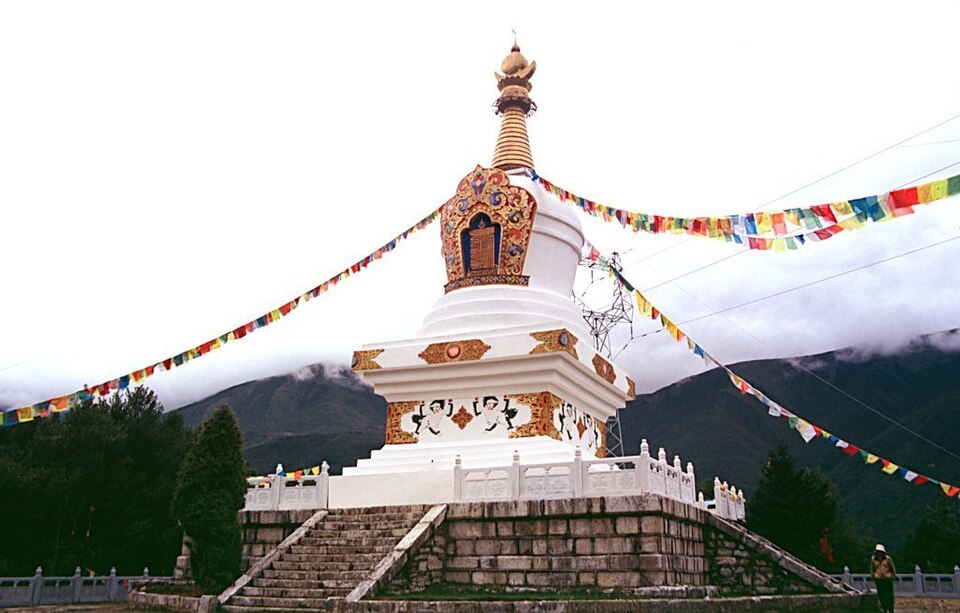
Paoma Mountain — the hill from the song
Paoma Shan ("Horse-Running Mountain", Tibetan name Lamu Ze, "Fairy Mountain") is the hill from the Kangding Love Song, right on the edge of town, per JoyoTour.
Entry is ¥80 (¥50 ticket + ¥30 cable car), open 08:00–18:00, and you should allow about 4 hours. Walk up in about two hours, or take the cable car and be on the summit in about fifteen minutes; from the top you look straight down at the whole of Kangding stacked along its river gorge, with temples, prayer flags and, on clear days, the white pyramid of Gongga Shan to the southeast. Sunset from the top beats midday by a mile, per JoyoTour.
There is no road all the way up, so if you are not a walker, pay the ¥30 for the cable car without guilt.
Mugecuo Lake — the seven-colour sea
Mugecuo sits 17 km out of town at the head of an 8 km gorge of waterfalls, ringed by dozens of smaller lakes — Red Sea, Black Sea, White Sea — per JoyoTour. Entry is ¥220 including the shuttle bus, or ¥290 with the lake cruise, open 07:30–16:30, and you should allow about 5 hours. The lake itself sits at about 3,600 m, so morning fog rolls across the water, noon sun turns it to hammered silver, and the golden beach on the west shore is nicknamed Lovers' Beach. Autumn is when it burns brightest.
Go in the morning: fog sits on the water early and burns off by mid-morning, so you get both the misty and the glittering versions in one visit, per JoyoTour. The Erdaoqiao hot springs on the way back make a natural end to the day.
Zheduo Pass, Xinduqiao and Tagong — the road west
Drive west out of Kangding and within thirty minutes the road crosses Zheduo Pass at 4,298 m, and everything changes: the trees get shorter, the sky gets bigger, and prayer flags start appearing on every ridge, per JoyoTour. Xinduqiao, about 70 km from Kangding, is not a sight so much as ten kilometres of road — golden poplars, a shallow stream beside the highway, Tibetan farmhouses and yaks on painted grassland — free to drive, best in September and October, best photographed in the two hours after sunrise and the two before sunset.
Tagong, 110 km from Kangding past Xinduqiao, is the grassland the Buddha is said to have loved: a monastery at the centre, nomad tents trailing smoke, and horse festivals where herders arrive in festival dress. The grassland itself is free to roam; the monastery charges a small fee. Both are covered in more depth in our western Sichuan 5-day loop guide, which runs this exact road.
When is the best time to visit Hailuogou and Kangding?
| Months | What you get | Watch out for |
|---|---|---|
| May–June | Green forest, full glacier, best classic window | Rain builds toward summer; book ahead on weekends |
| July–August | Warmest days, lush valley | Rainy season; mountain roads can close after heavy rain |
| September–October | Autumn colour at Mugecuo and Xinduqiao; golden poplars | National Day week (1–7 Oct) is several times busier |
| November–December | Clearest skies, best odds of Sunshine Golden Mountain | Winter hours (entry to 14:00, close 17:00); icy boardwalks |
| January–April | Snow peaks, quiet park, photography season | Cold nights; check cable car and road status daily |
Season summary per the Sichuan youth-travel guide (November 2026) and JoyoTour (updated 10 October 2026).
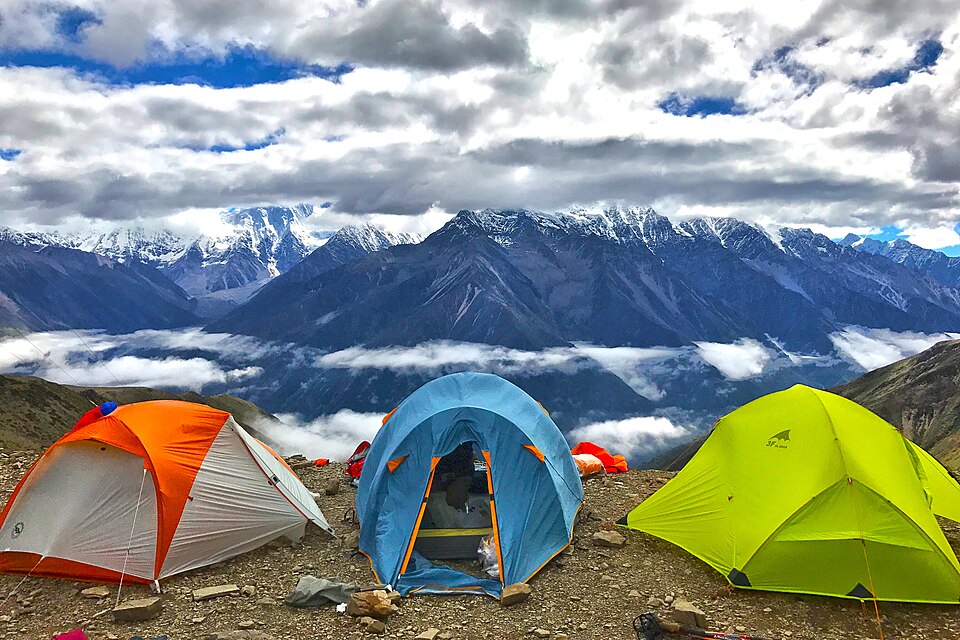
November–December is the clear-sky season. The park's winter-spring viewing season brings the highest rate of clear days, and the glacier against snow-covered forest photographs better than in summer haze, per Sichuan Youth Travel. The trade-off is the shorter day: ticket sales end at 14:00 and the park closes at 17:00, so the glacier day has to start early.
May–June is the green alternative. The classic best season, when the dry season gives way to the rains, keeps the glacier, the forest and the waterfalls all at their fullest, and the Caohaizi rhododendron forest is in flower. September–October belongs to Kangding's side of the trip: Mugecuo's autumn colour and Xinduqiao's golden poplars peak then.
How to get to Hailuogou and Kangding from Chengdu
- Drive to Moxi first, not Kangding. From Chengdu the expressway via Ya'an and the Erlang Mountain tunnel reaches Moxi Town in about 3.5 hours; navigate to the Hailuogou visitor centre or Moxi Ancient Town, per Sichuan Youth Travel.
- Enter the park early. The sightseeing bus from the visitor centre to Camp 3 takes about an hour, and winter ticket sales end at 14:00 — a 10:00 arrival still leaves a full glacier day, a noon arrival does not.
- Move on to Kangding after the glacier day. Moxi to Kangding is roughly a 2-hour drive via Luding, where the historic Luding Bridge (the 1935 Red Army crossing) makes a natural roadside stop on the way.
- Leave Kangding by mid-morning for the return. The drive back to Chengdu is about 4 hours by car; the bus takes 6–7 hours on the G318, so a private car saves most of a day on this route.
The drive is about 260 km from Chengdu to Kangding by bus in 6–7 hours, with fares of ¥107–127 from Xinnanmen, Shiyang or Chengbei stations, per JoyoTour. Direct buses from Chengdu Xinnanmen to Moxi run 5–6 hours for about ¥110–120, per Trip.com's Hailuogou guide. Kangding Airport, at 4,280 m the world's second-highest airport, flies daily from Chengdu Shuangliu (07:15–08:10, return 08:55–09:45), with shared vans into town in about an hour and no airport bus, per ToursChinaTravel.
A private car is the practical way to do both halves in three days: the glacier's 14:00 entry cutoff and the two-hour Moxi–Kangding leg punish a late start, and the red-stone beach at Yajiageng on the Moxi–Kangding road is a driver's bonus that bus passengers usually miss, per JoyoTour. See our Chengdu private car cost guide for what a charter typically costs.
| Day | Plan | Notes |
|---|---|---|
| Day 1 | Chengdu → Moxi Ancient Town (via Luding Bridge) | ~3.5 h driving; sleep in Moxi, early night for a 07:20 sunrise |
| Day 2 | Hailuogou: bus to Camp 3, cable car to Camp 4, hot springs at Camp 2 | Entry ¥90 + bus ¥70 + cable ¥135 = ¥295; enter by 10:00 at the latest |
| Day 3 | Moxi → Kangding: Paoma Mountain, old town, Mugecuo Lake, return to Chengdu | Paoma ¥80; Mugecuo ¥220/¥290; leave Kangding by mid-morning if driving back same day |
Three-day plan structure per JoyoTour's self-drive route (Hailuogou to Mugecuo, 4 days) and Sichuan Youth Travel's 3-day Hailuogou plan (November 2026). Add a fourth day for Tagong Grassland and Xinduqiao west of Kangding.
Where to stay: Moxi and Kangding
Almost everyone visiting the glacier sleeps in Moxi Ancient Town, the village at the park gate, per JoyoTour — stay there the night before the glacier day so you can be at the visitor centre when ticket sales open, and again on the glacier day itself if you want the 07:20 winter sunrise over Gongga Shan. Rooms in Moxi run about ¥120–400 a night for a guesthouse double, per Voykit's Moxi guide.
In Kangding, stay in town along the river road: guesthouses run about ¥80–200 a night at budget level, and the town is small enough to walk everywhere, per JoyoTour and DolphinUnion. Staying near Camp 3 inside the park is the alternative for photographers chasing the sunrise, with thinner food options and higher prices — the same trade-off as at Siguniangshan.
For food, Kangding's signatures are liangfen (cold mung-bean noodles in red oil, a few yuan a bowl at Xiaolan Liangfen), feichang fen (pork-intestine rice noodles, about ¥8 a bowl) and hand-grabbed yak meat, per JoyoTour. Moxi's old town has the usual Sichuan small-eats strip along its main street; eat before the glacier day, not during it — there is little food past the ticket gate until you come back down.
Practical tips for Hailuogou and Kangding
Respect the 14:00 winter entry cutoff
From November, ticket sales end at 14:00 and the park closes at 17:00 — earlier than many older English guides still list (08:00–18:00 is the warm-season pattern). Arrive at the visitor centre by mid-morning; the bus alone takes an hour to Camp 3, and the cable car queue adds more. A noon arrival in winter is a wasted ticket.
Altitude is real but manageable here
Moxi sits at about 1,600 m, Kangding town at 2,560 m, Mugecuo Lake at about 3,600 m and Zheduo Pass at 4,298 m — a steady staircase, not a single jump, per JoyoTour and Voykit. Rest on arrival evening in Kangding, do Paoma Mountain before Mugecuo, and save the pass crossing for day three or four. Headache, nausea and poor sleep are common on the first night at 2,560 m and usually pass with rest and water; descend if symptoms get worse. See our altitude sickness guide for the full checklist.
Do not cross into the Gongga reserve
On 4 November 2026 the Gongga Shan National Nature Reserve announced a ban on unapproved crossings and treks inside the reserve, after several recent incidents in which three people died, per Sohu / Upstream News (5 November 2026).
The ban covers the Gongga big loop, the Le Duo Man Yin and Gexi grassland crossings and other unopened ridges, valleys and glaciers. The Lengga Cuo and San'en Cuo viewpoints outside the reserve are not affected and can still be reached, and the road to Zijia village and Zimei Pass stays open — but anything that cuts into the reserve is a violation, with fines and a rescue bill.
If your trip is a winter one, note that the area generally tightens control from December, when the lakes freeze and the viewing value drops sharply.
Pack for ice, not just cold
November–December brings the clear skies, but the glacier boardwalk ices over — wear grippy hiking shoes, not sneakers, and bring a windproof shell, gloves and a hat: the wind at Camp 4 cuts through a fleece alone. Bring at least 1.5 litres of water and extra food for the glacier day; download offline maps, because signal gets weak past Camp 3. Sunscreen matters even in winter: ultraviolet at altitude is far stronger than in Chengdu.
Book the bus and the cable car as a chain, not separately
The bus is mandatory and the cable car is the only fast way to Camp 4 — budget the full ¥295, not the ¥90 entry fee, and check the cable car's same-day operation before you pay, because weather stops it and there is no discount for a cable-car-free day since 26 October 2026. If the cable car is down, the Caohaizi walk from Camp 3 is the fallback that still earns the day.
Bottom line: Hailuogou earns its place as the closest glacier to Chengdu — ice dropping into forest, a cable car to the viewpoint, hot springs on the way down — and Kangding turns it from a day trip into a real Tibetan-town weekend. Three days from Chengdu, Moxi first, the glacier early, and Kangding's mountain and lake after.
In summary: About 3.5 hours by car from Chengdu to Moxi; Hailuogou ¥90 + ¥70 bus + ¥135 cable car (¥295 all in, as of November 2026); winter hours 08:00–14:00 entry, 17:00 close; Kangding at 2,560 m with Paoma Mountain ¥80 and Mugecuo Lake ¥220; best months May–June and November–December; and no permit needed for foreign visitors — but the Gongga reserve itself is closed to unapproved treks since 4 November 2026.
Want Hailuogou and Kangding without the logistics?
Western China Private Car Tours runs private car trips from Chengdu to Hailuogou and Kangding: pickup at your Chengdu hotel, the 3.5-hour expressway drive to Moxi, an early start that beats the 14:00 winter entry cutoff, the glacier, the hot springs and the red-stone beach on the road to Kangding — then Paoma Mountain and Mugecuo Lake, with stops whenever the light is good. The driver communicates with guests via translation apps, so plans and pickup times are easy to change on the day.
Short on time? Our western Sichuan 5-day loop guide folds Hailuogou's road into a five-day circuit with Danba, Tagong and Xinduqiao, or see our altitude sickness guide before any high-country trip.
Get a Private Car Quote on WhatsAppFrequently Asked Questions About Hailuogou and Kangding
How many days do you need for Hailuogou and Kangding?
Three days is the best balance: day 1 drive from Chengdu to Moxi Ancient Town (about 3.5 hours), day 2 inside Hailuogou Glacier Park, day 3 over to Kangding for Paoma Mountain and Mugecuo Lake, then back to Chengdu. Two days covers Hailuogou plus a quick Kangding stop; four days lets you add Tagong Grassland and Xinduqiao west of Kangding.
How much are Hailuogou tickets in 2026?
As of November 2026, full-price admission is ¥90 (1 April–31 December 2026), the return sightseeing bus is ¥70 and the return cable car from Camp 3 to Camp 4 is ¥135. That makes ¥160 for entry plus bus, or ¥295 with the cable car. Book by real-name reservation through the park's official WeChat account. Visitors aged 65 and over enter free with a passport; children aged 6 or under, or 1.2 m or shorter, also enter free.
What is the best time of year to visit Hailuogou?
May–June is the classic window, when the glacier and the forest are at their greenest, and November–December is the winter-spring season: the clearest skies of the year, the best odds of seeing Gongga Shan lit gold at sunrise (around 07:20 in winter), and the glacier against snow-covered forest. In the winter-spring season ticket sales run 08:00–14:00 and the park closes at 17:00, so start early.
Can foreign visitors travel to Kangding and Hailuogou freely?
Yes. No travel permit is needed for Kangding, Hailuogou or the rest of Garze Prefecture — foreign passport holders travel freely and book tickets by real-name reservation with their passport. What is closed is the Gongga Shan nature reserve itself: since 4 November 2026, unapproved crossings and treks inside the reserve are banned after three recent deaths, so stick to the open scenic areas and the Lengga Cuo and San'en Cuo viewpoints outside the reserve.
How do I get from Chengdu to Hailuogou and Kangding?
By private car it is about 3.5 hours on the expressway from Chengdu to Moxi Town, the gateway to Hailuogou, and roughly 2 more hours from Moxi to Kangding via Luding. By bus, direct services run from Chengdu Xinnanmen station to Moxi in 5–6 hours for about ¥110–120, and to Kangding in 6–7 hours for ¥107–127. Kangding Airport, at 4,280 m, has a daily morning flight from Chengdu Shuangliu.
Sources: Baifen Fleet — Western Sichuan Attraction Tickets (November 2026; Hailuogou ¥90 + ¥70 bus + ¥135 cable car, concessions, official booking route, November student/teacher promotion, cable-car maintenance note) / JoyoTour — Kangding Travel Guide 2026 (updated 10 October 2026; Kangding 2,560 m, Mugecuo ¥220/¥290, Paoma Shan ¥80, Zheduo Pass 4,298 m, Gongga Shan 7,556 m, self-drive route) / Sichuan Youth Travel — Chengdu–Hailuogou 3-day guide (November 2026; 3.5-hour expressway, winter hours 08:00–14:00/17:00, ¥90 ticket, Sunshine Golden Mountain about 07:20, Caohaizi hike) / Sohu — Hailuogou free-admission guide for the autumn break (November 2026; 1–30 November 2026 student, family and teacher free admission, admission only) / Sohu / Upstream News — Gongga Shan reserve bans illegal crossings (5 November 2026; three recent deaths, Lengga Cuo and San'en Cuo viewpoints stay open) / Hailuogou official site — ticket services. Images: Wikimedia Commons (CC).