Sichuan-Tibet Highway G318 Guide (2026): Chengdu to Lhasa by Road
Short answer: The G318 from Chengdu to Lhasa is 2,142 km of China's most celebrated road — 10 days at a sane pace, climbing from 500 m in the Sichuan basin to 3,650 m in Lhasa over 14 passes above 4,000 m. Budget about 10,000 Chinese yuan (CNY) per person by private car, travel May to October (late May or October are best), and arrange a Tibet Travel Permit at least 20 working days ahead if you hold a foreign passport.
The road is mostly good asphalt now, but the Nujiang 72 Turns, the July–August landslide season and the altitude still demand respect — and a driver who has done the route before.
All prices and conditions below are as of November 2026.
In short: Ten days, not four. The G318 rewards the slow version: short first days while your body adjusts, daylight only on the 72 Turns, a night low in Batang after Litang, and buffer days for the weather that hides Namcha Barwa.
Key takeaways for the G318 road trip
- Allow 10 days for 2,142 km. A 4WD can rush it in 3–4 days, but 10 days at 6–7 hours of driving a day is the pace that lets you stop for the passes, lakes and monasteries, according to Joyo Tour's October 2026 guide.
- Go in late May or October. May to October is the main window, but July and August bring mudslides and doubled room rates — most experienced drivers prefer late May or October, per Joyo Tour.
- Permits take 20 working days. Foreign passport holders need a Tibet Travel Permit arranged through an agency well ahead of travel, plus an Aliens' Travel Permit for the Nyingchi area, according to TibetTravel.org.
- Sleep low after Litang. Litang sits at 4,014 m and Bangda at 4,300 m — push on to Batang at about 2,000 m for the night instead, per Joyo Tour.
- Budget roughly CNY 10,000 per traveller. That covers car, fuel, food and lodging for 10 days by private car, per Joyo Tour's October 2026 estimate; fuel alone runs near CNY 1.2 per km for a 4WD, according to a November 2026 Chinese road-condition roundup.
The route in numbers
| Fact | Figure |
|---|---|
| Chengdu to Lhasa, southern route (G318) | 2,142 km |
| Northern route (G317, via Garze and Dege) | About 2,412 km |
| Altitude range | 500 m (Chengdu) to 3,650 m (Lhasa) |
| Passes above 4,000 m | 14 |
| Ideal length | 10 days, 6–7 hours driving per day |
| Best window | May to October; late May and October preferred |
| Private-car budget | About CNY 10,000 per person |
| Speed-limit card cap (Tibet section) | About 42–43 km/h between checkpoints |
Sources: route length, altitude, passes and budget per Joyo Tour (updated 10 October 2026); northern-route length per TibetTravel.org (updated 11 February 2026); speed-limit cards per Joyo Tour. Prices as of November 2026.
Why is the G318 called China's most beautiful road?
National Highway 318 runs more than 5,000 km from Shanghai to the Nepal border, and the Chengdu–Lhasa stretch is its crown jewel, according to Joyo Tour. In a single day's drive you can pass pine forest, alpine meadow, semi-arid gorge and glaciated peak, crossing the Jinsha, Lancang, Nu and Yarlung Tsangpo rivers on the way.
Four of the peaks on National Geographic's list of China's ten most beautiful mountains sit on or beside the road: Namcha Barwa (7,782 m), Gongga, the three sacred peaks of Daocheng Yading, and Meili Snow Mountain near the Yunnan border.
The road also has a second identity that has nothing to do with scenery. For Tibetan pilgrims it is a walking prayer route — some prostrate the whole distance over years — and the old tea-horse caravan towns along it, Kangding and Litang among them, still organise daily life around their monasteries. That mix of engineering, altitude and living culture is why the G318 keeps its reputation while other famous drives fade.
"The danger isn't the surface — it's perfect tarmac. It's that on every hairpin you can't see a thing coming the other way, and what's beyond the bend is anyone's guess."
— kidonly, Sichuan–Tibet Highway journal, quoted in Joyo Tour's G318 guide (October 2026)
What does a 10-day Chengdu to Lhasa itinerary look like?
The classic shape is three blocks: three days climbing out of the basin to Batang, three days across the hard middle section to Nyingchi, then the run into Lhasa with buffer days built in. The day-by-day below follows the southern G318 route that most travellers take, with distances and stops drawn from Joyo Tour's October 2026 guide and TibetTravel.org.
Days 1–3: Chengdu to Batang, climbing to the plateau
Day 1 — Chengdu to Kangding (about 466 km, 5–6 hours). Leave early: the drive only gets interesting after the 4 km Erlang Shan Tunnel, where the plateau suddenly replaces the Sichuan basin. Stop at the Luding Bridge, the iron-chain suspension bridge from 1706, then continue to Kangding, the old tea-horse town at 2,560 m. Walk to Anjue Temple at Jiangjun Bridge (free entry) and try huang liangfen, about CNY 3.5 a bowl. Note that parts of the Ya'an–Kangding expressway are limited to 60 km/h, so download offline maps before you leave Chengdu, per a November 2026 road-condition roundup.
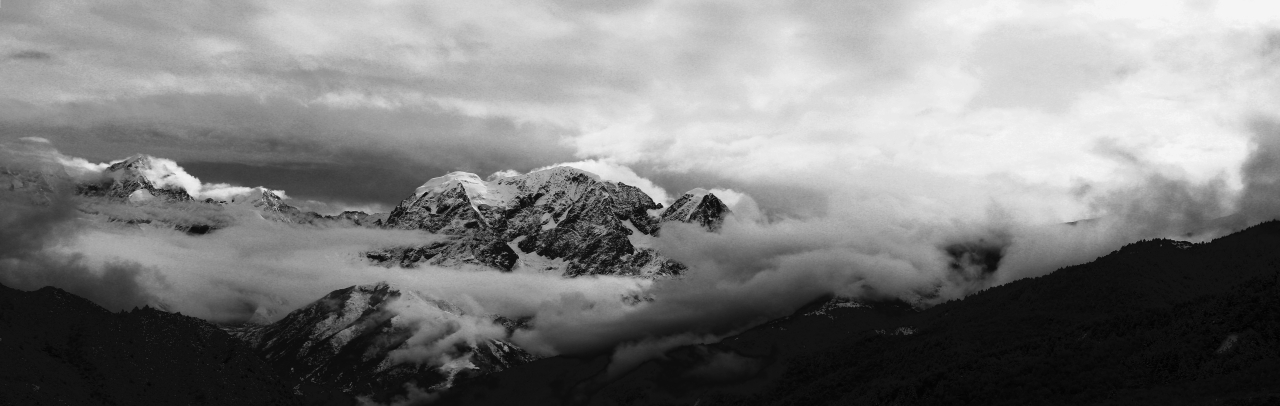
Day 2 — Kangding over Zheduo Pass to Litang. Cross Zheduo Pass at 4,298 m — your first time above 4,000 m, and where altitude sickness tends to introduce itself. Xinduqiao, two hours from Kangding, is the "photographer's paradise": unremarkable in the town itself, extraordinary ten minutes out, where poplars, streams and Tibetan farmhouses catch the light. Continue over the 4,400 m Gaoersi Pass, drop to Yajiang at 2,500 m, then cross the 4,600 m Jianziwan and Kazila passes to Litang, the "world's highest town" at 4,014 m.
Day 3 — Litang to Batang. Before leaving Litang, walk the circuit at Changqingchun Ke'er Monastery — the largest monastery in southern Garze, free to enter and open all day — then drive out past the Maoya grasslands, 30 km west of town, where nomad tents dot the valley. The road crosses Haizi Pass and drops hard: Batang sits at around 2,000 m, warm, green and full of orchards. Guesthouse singles start from about CNY 30, and zhazha noodles run CNY 7–15. A new tunnel on the Batang–Litang section has shortened the drive by 8 km, per the November 2026 roundup.
Days 4–6: Batang to Nyingchi, the hard middle
Day 4 — Batang to Rawok via Markam and Bangda. Cross the Jinsha River bridge out of Batang and you are officially in Tibet — and in the speed-limit card system (see below). Markam is the first Tibetan county town and the junction where the Yunnan–Tibet road splits toward Deqin and Meili Snow Mountain.
From Bangda (4,300 m), climb Yela Pass and start the descent: the 72 Turns drop from about 4,650 m toward the Nujiang bridge in roughly 12 km of blind hairpins, with more than 130 turns and a drop of about 1,500 m, according to Trip.com. Sleep in Rawok if you can; its dawn and dusk are the payoff.
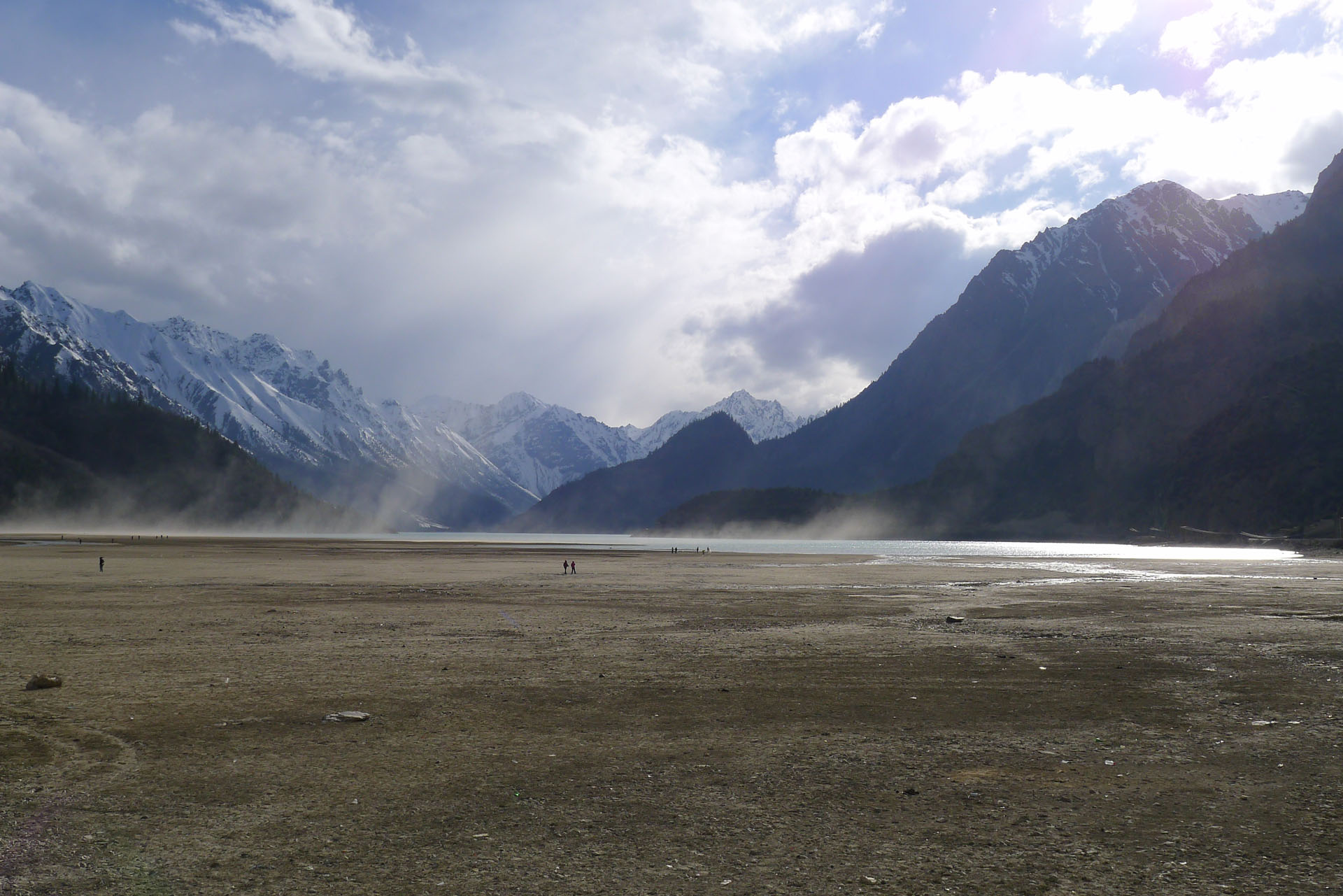
Day 5 — Rawok to Bomi through the Parlung Valley. Drive 8 km up the dirt track at Rawok Bridge for Upper Rawok Lake before breakfast, then continue west through the Parlung Tsangpo valley — snow peaks, forest, glaciers and the river the whole way. The Midui Glacier is a signposted detour but needs a hike in. Bomi is small and cheap, and the trailhead for the six-day Medog trek.
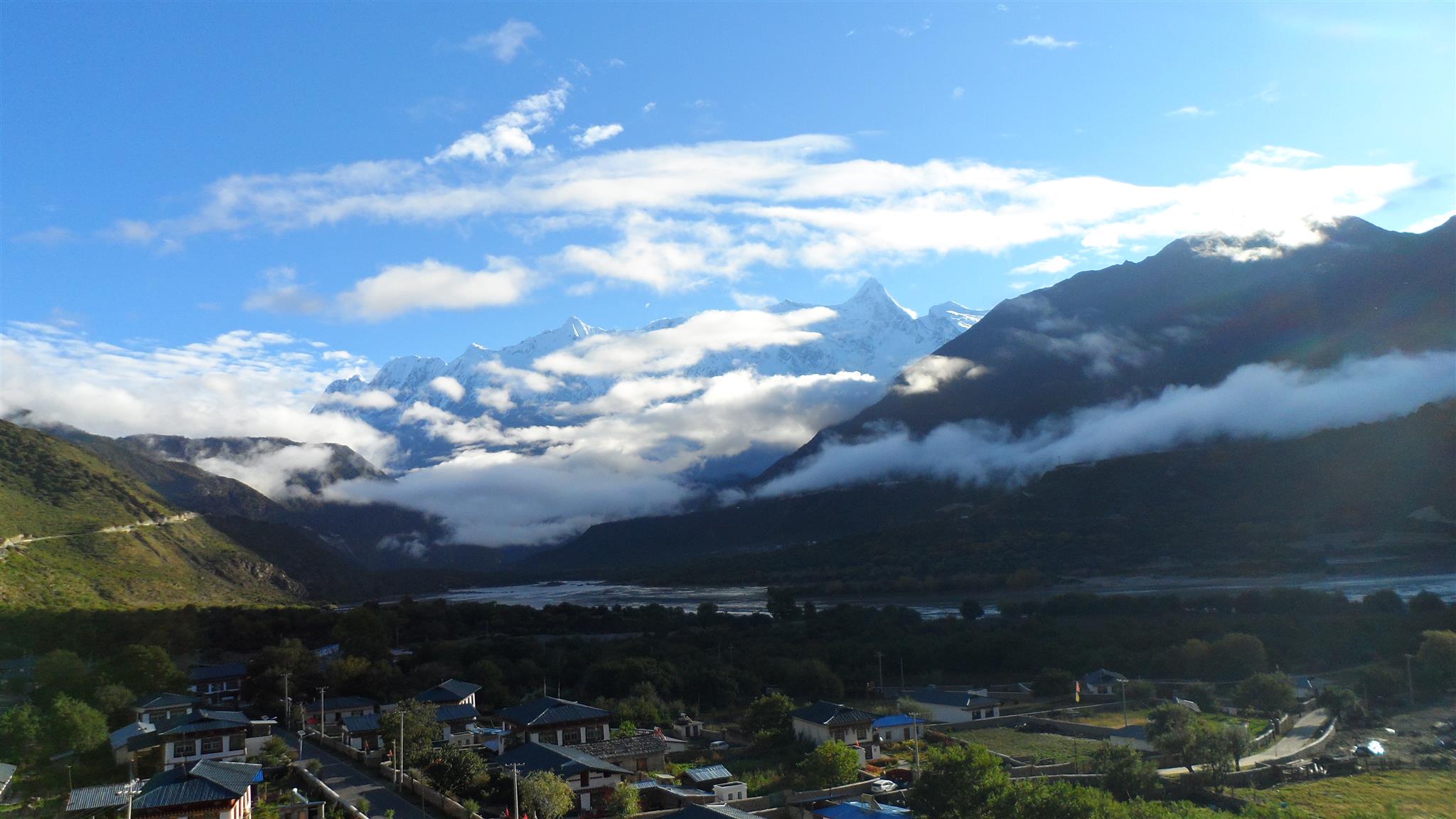
Day 6 — Bomi to Nyingchi over the Tongmai Gorge. The Tongmai Gorge was long the single most dangerous stretch on the route, but it has been rebuilt as a tunnel group — still take it slowly and never pass on blind corners, and watch the 17–18 km stretch, per the November 2026 roundup. You emerge at Lulang, where the forest opens up and stone-pot chicken is the local specialty — CNY 300–500 per pot, feeding three to four. Climb Sejila Pass for the Namcha Barwa view if the sky cooperates, then drop into Bayi, Nyingchi's new town.
Days 7–10: Nyingchi to Lhasa, with room to breathe
Day 7 — Nyingchi to Lhasa. Follow the Lhasa–Nyingchi expressway into the holy city; the expressway has cut this leg's driving time by about 40%, per a November 2026 Chinese self-drive guide. Three new service areas have opened on the Bomi–Nyingchi section, and the Lhasa airport expressway is now a six-lane road, per the same roundup.
Days 8–10 — Lhasa and buffer. Keep two or three days in Lhasa: the Potala Palace (CNY 100, book 7 days ahead, per the November 2026 roundup), the Jokhang Temple and Barkhor Street, and a slow morning in an old teahouse with butter tea and sweet tea. The buffer days are not padding — they are what lets a landslide delay, a closed pass or a cloudy Namcha Barwa morning cost you a view instead of a flight home. If you plan to continue toward Everest or Nepal, check the border first: Gyirong Port was severely damaged by a mudslide on 26 August 2026 and cannot currently be planned as a normal tourist exit, according to China Road Trip.
When should you go — and when should you not?
May to October is the main window, and within it the choice matters more than most travellers expect. Late May and October are the sweet spots: stable weather, clear mountain views and normal room rates, per Joyo Tour. July and August are the classic season on paper — green valleys, full rivers — but they bring the rainy season: landslides, mudslides and hotel prices up to double, and around the Litang horse festival in July, rooms can cost five times the normal rate.
Mid-March to April is the time for Nyingchi's peach blossom, the most charming view of eastern Tibet before the crowds arrive, according to TibetTravel.org. November to March is the low season: cheaper and emptier, but nights are bitterly cold and some high sections can close after heavy snow.
What are the hardest stretches of the road?
The Nujiang 72 Turns. The road's most famous engineering stunt: more than 130 hairpins stacked down a mountainside from Yela Pass (4,658 m) to the Nujiang River, a drop of about 1,500 m in roughly 12 km, according to Trip.com. The name is symbolic rather than literal — nobody counts exactly 72 — but the driving advice is concrete: do it in daylight only, honk before blind corners (local drivers often do not), and if you arrive late, sleep at the top and descend the next morning.
A new glass viewing platform opened in the canyon in September 2024, 130 m above the river, with the best light between 15:00 and 17:00; the Dela Mountain Tunnel is under construction nearby, and the old road may become a sightseeing route once it opens.
The Tongmai Gorge. Narrow, landslide-prone and terrifying when you meet a truck — that was the old reputation, and the tunnel rebuild has improved it greatly. It still demands slow, careful driving, and the section around km 17–18 needs extra attention, per the November 2026 roundup.
The speed-limit cards. Once you cross into Tibet at Batang, you collect a card at each county exit and must not reach the next checkpoint before the stated time — effectively capping you at about 42–43 km/h between towns, per Joyo Tour. Missing a checkpoint means a fine at best and being sent back to collect the card at worst, so photograph each checkpoint as evidence if the barrier is unmanned.
What permits do foreign travellers need?
Foreign passport holders, Taiwanese travellers and most overseas Chinese travellers need a Tibet Travel Permit before entering Tibet, arranged through a licensed agency at least 20 working days ahead, according to Joyo Tour. An Aliens' Travel Permit is also needed for the Nyingchi area before Lhasa, per TibetTravel.org, and further permits apply if you extend to Shigatse or Ngari. Foreign journalists and diplomats cannot enter as tourists. Book flights and trains only after the permit is in hand. Our Tibet travel permit guide covers the paperwork in detail, including the 15–20 day lead time and what the permit does and does not cover.
How much does the G318 cost?
| Item | Typical cost (2026) |
|---|---|
| Private car, 10 days, per person | About CNY 10,000 |
| Fuel (4WD) | About CNY 1.2 per km |
| Hotels, peak season (Jul–Aug) | CNY 400–800 per night |
| Guesthouse bed, small towns | CNY 30–60 per night |
| Mugecuo entry + shuttle + boat | CNY 120 + 100 + 70 |
| Lulang stone-pot chicken (feeds 3–4) | CNY 300–500 per pot |
| Potala Palace ticket | CNY 100 (book 7 days ahead) |
| 7-day small-group tour (2026/2027) | From $1,990 per person |
| Budget travel (buses and lifts) | About CNY 3,000 total |
Sources: private-car and budget totals per Joyo Tour (October 2026); fuel, peak hotels and Potala ticket per the November 2026 Chinese road-condition roundup (mzalh.cn); Mugecuo and stone-pot chicken prices per Joyo Tour; group-tour prices per TibetTravel.org 2026/2027 listings. Prices as of November 2026.
One cost that surprises first-timers is how much of the budget is fuel and lodging rather than tickets — most of the great stops (Rawok Lake, the 72 Turns viewpoint, Maoya grasslands, the monasteries) are free. What costs money is the car, the fuel to move it 2,142 km, and a bed each night. Carry enough cash from Chengdu to cover fuel, food and lodging for the whole run: ATMs exist along the line but withdrawals are unreliable, and the small guesthouses that charge CNY 30–60 a bed take cash only, per Joyo Tour.
How do you handle the altitude?
You gain altitude brutally fast — 500 m to 4,100 m in two days on the standard plan — so keep day one short and hydrated. Mild headache, dizziness and insomnia are normal in the first one to two days and fade as you acclimatise, according to Joyo Tour. Avoid alcohol and cigarettes before you go, drink water and eat fruit rather than training hard, and do not reach for the oxygen bottle at the first twinge — you will just become dependent on it. Butter tea genuinely helps once you are suffering, and it is worth forcing down one cup.
The practical trick is the overnight plan: skip Litang (4,014 m) and Bangda (4,300 m) as overnight stops and sleep in Batang (about 2,000 m) or Bamei instead, per Joyo Tour. And pack warm layers: even in summer, nights on the plateau are cold, and a down jacket, sunglasses and sunscreen are non-negotiable, per TibetTravel.org.
What should you eat along the road?
Food gets plainer as you climb, and that is part of the trip. Start with a big Chengdu hotpot on day one — from Kangding onward the cooking simplifies. Ya'an-style noodles and chaoshou (wontons) are the cheap, fast, everywhere meal on the Sichuan half, about CNY 7–15 a bowl. In Litang, try tuo tuo rou (chunks of boiled yak with a salt-and-pepper dip, about CNY 40 per person) and butter tea with tsampa, the roasted barley flour eaten by hand. Batang's zhazha noodles run CNY 7–15, Markam is known for jiajia mian — small bowls of noodles in pipa rou broth, refilled until you stop — and Lulang's stone-pot chicken is the reward after the Tongmai Gorge. Air-dried yak meat, sold in strings in every market from Litang onward, is the single best snack for long driving days. Our Chengdu food tour guide covers the hotpot start, and our 5-day Sichuan itinerary covers the lower-altitude loops if the full G318 is more than you want.
Private car or self-drive — which works better?
Why a private car suits the G318
Most travellers do the Sichuan–Tibet Highway by private car, and the 10-day itinerary above is built around that mode: you stop whenever the light is good, and towns are dense enough that you never have to plan meals and beds more than a few hours ahead, per Joyo Tour.
Self-drive rules for foreign visitors
Self-driving is possible for Chinese licence holders, but foreign visitors cannot legally drive into the Tibet Autonomous Region alone — the Tibet Travel Permit system requires a licensed guide to accompany the vehicle, according to RoamChinaTravel.
For most visitors the practical answer is a private car with a local driver: a four-wheel-drive sport utility vehicle (SUV), a driver who has done the route before and knows which pass is closed and which guesthouse has hot water, and a schedule that bends around weather instead of fighting it. Our drivers communicate with guests via translation apps, so route changes, pickup times and meal stops are easy to agree on the road — no phrasebook required on either side. For costs and how a private car is priced, see our Chengdu private car cost guide.
Bottom line: The G318 is not a drive you tick off — it is a ten-day conversation with altitude, weather and a road that has humbled better drivers than you. Give it the full ten days, go in late May or October, sort the permit three weeks out, and let a local driver handle the hairpins while you watch the mountains do their work.
In summary: 2,142 km, 10 days, roughly CNY 10,000 per person by private car. Go in late May or October for the best balance of weather and prices, sort permits 20 working days ahead for foreign passports, drive the 72 Turns in daylight only, and sleep low in Batang after Litang — keeping two buffer days in Lhasa.
Want the G318 without driving the hairpins yourself?
Western China Private Car Tours runs the Chengdu to Lhasa overland route with experienced local drivers and 4WD vehicles: the full 10-day G318, the shorter 7-day version, or a custom cut — Chengdu to Kangding and Xinduqiao only, or onward to Yading. The driver communicates with guests via translation apps, so route changes and extra photo stops are easy to agree on the road.
Pair this with our Tibet travel permit guide and our 5-day Sichuan itinerary to plan the trip around the G318.
Get a Private Car Quote on WhatsAppFrequently Asked Questions About the Sichuan-Tibet Highway G318
How long does the G318 drive from Chengdu to Lhasa take?
The southern route of the G318 from Chengdu to Lhasa is 2,142 km. A 4WD can cover it in 3–4 days of hard driving, but 10 days is the pace that lets you actually see it — roughly 6–7 hours of driving a day with time for passes, lakes and towns. Seven-day group tours exist, but they leave almost no buffer for weather or altitude.
Do foreign travellers need a permit to drive the G318 to Lhasa?
Yes. Foreign passport holders, Taiwanese travellers and most overseas Chinese travellers need a Tibet Travel Permit to enter the Tibet Autonomous Region, arranged through a licensed agency at least 20 working days before travel. An Aliens' Travel Permit is also needed for the Nyingchi area before Lhasa. Chinese nationals need no permit for the route itself.
What is the best month to drive the Sichuan-Tibet Highway?
May to October is the main window. Late May and October are the sweet spots: stable weather, clear mountain views and normal room rates. July and August bring the rainy season — landslides and mudslides are common — and hotel prices can double. Mid-March to April is best for Nyingchi peach blossom; November to March risks snow closures on the high passes.
How much does a Chengdu to Lhasa private car trip cost?
As of October 2026, a private-car trip runs roughly CNY 10,000 a head for 10 days, covering car, fuel, food and lodging. Fuel alone works out near CNY 1.2 per km for a 4WD, and peak-season hotels run CNY 400–800 a night. Small-group 7-day tours for 2026/2027 are listed from $1,990 per person. Budget travellers using buses and lifts spend closer to CNY 3,000 but lose control of the schedule.
Is the G318 dangerous to drive?
Most of the southern route is now smooth asphalt, and the old Tongmai Gorge danger spot has been rebuilt as a tunnel group. The real risks are the Nujiang 72 Turns — more than 130 blind hairpins dropping about 1,500 m in 12 km — landslides in the July–August rainy season, and altitude: 14 passes sit above 4,000 m. Go with a driver who has done the route before, drive the 72 Turns only in daylight, and never rush a blind corner.
Sources: Joyo Tour — Sichuan–Tibet Highway Travel Guide: Chengdu to Lhasa in 10 Days (updated 10 Oct 2026; 2,142 km, CNY 10,000 per person, 10-day pace, passes and altitudes, speed-limit cards 42–43 km/h, permit 20 working days, Mugecuo and food prices, altitude advice, traveller quotations) / TibetTravel.org — Chengdu to Lhasa Overland Tours via Sichuan-Tibet Highway (updated 11 Feb 2026; south route 2,146 km, north route 2,412 km, May–October window, Nyingchi peach blossom mid-Mar–Apr, Aliens' Travel Permit, 7/10/15-day tour prices $1,990–$2,770) / mzalh.cn — Chengdu self-drive to Tibet full guide (published 9 Nov 2026; Chengdu–Kangding 466 km/5–6 h, expressway 60 km/h limits, fuel CNY 1.2/km, peak hotels CNY 400–800, Potala CNY 100 book 7 days ahead, Batang–Litang tunnel saves 8 km, Bomi–Nyingchi service areas, Tongmai tunnel group) / Trip.com — Nujiang 72 Bends (12 km, 130+ turns, Yela Pass 4,658 m, about 1,500 m drop, viewing platform best light 15:00–17:00, Dela Mountain Tunnel under construction) / China Road Trip — Tibet Self-Drive for Singaporeans: Chengdu to Lhasa G318 (Gyirong Port damaged by 26 Aug 2026 mudslide, foreign drivers need licensed guide in Tibet) / RoamChinaTravel — China Motorcycle Road Trip Guide 2026 (14 passes above 4,000 m, foreigners cannot drive alone in Tibet). Images: Rawok Lake, Zheduo Pass and Namcha Barwa photos via Wikimedia Commons.