Mount Siguniang Travel Guide (2026): Three Valleys, Ticket Prices & 3-Day Plan from Chengdu
TL;DR: Mount Siguniang — four snow peaks, three separately ticketed valleys, 220 km and 4–4.5 hours from Chengdu. Shuangqiao (¥150) is the easy bus valley, Changping (¥90) the real hike to a close-up of Yaomei Peak, Haizi (¥60) the wild one. Base in Rilong Town and do Shuangqiao first.
Note the winter change: from 1 December 2026, low-season prices and shorter hours apply, and climbing, camping and trekking inside the reserve pause until 1 March 2027.
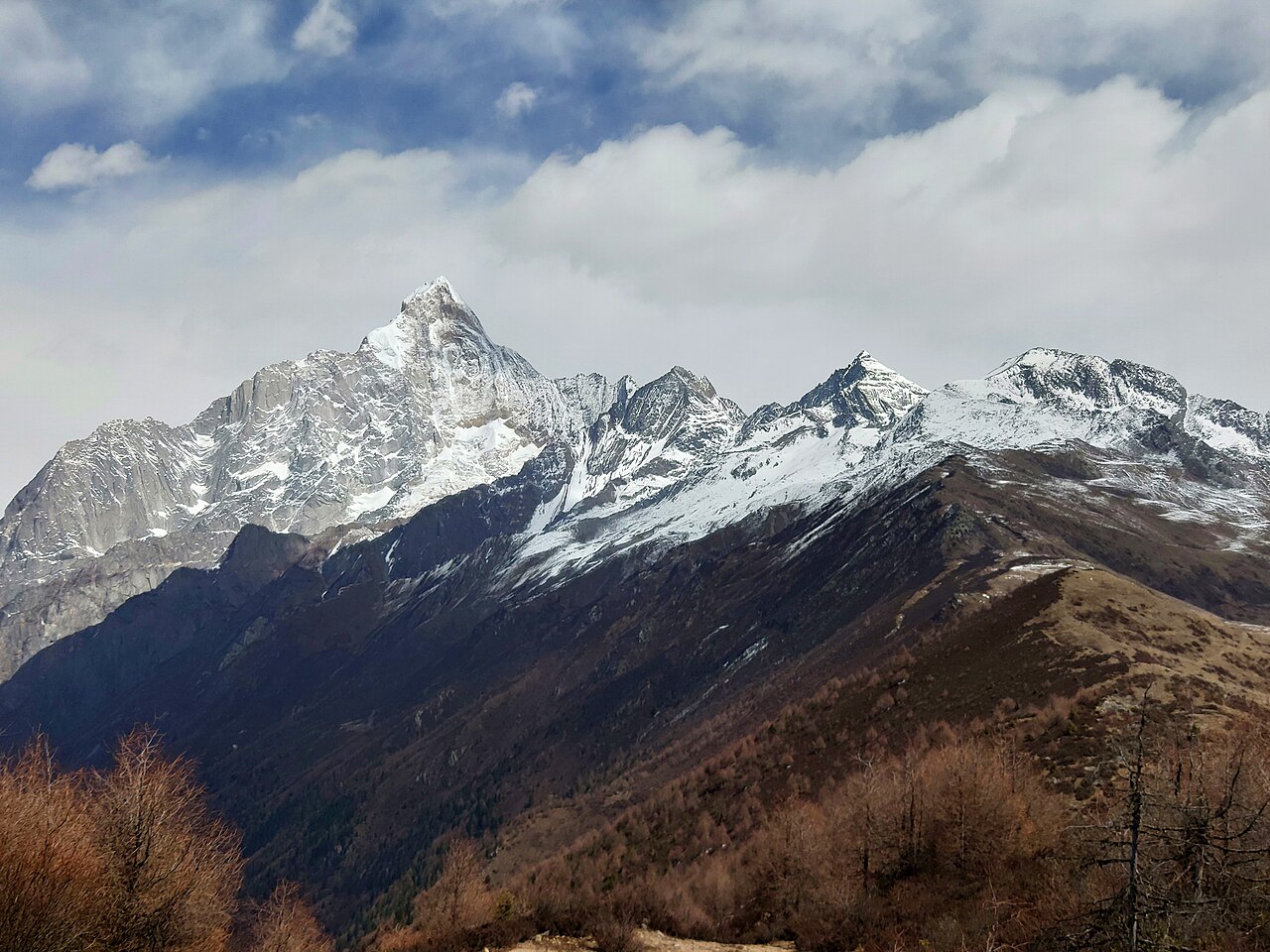
Short answer: Mount Siguniang, the "Four Sisters Mountain" in Xiaojin County, is western Sichuan's answer to the Alps — four snow-capped peaks (Yaomei Feng, 6,250 m, is Sichuan's second-highest) split across three valleys that each need their own ticket and deliver a genuinely different trip.
Shuangqiao Valley is a 34 km shuttle-bus road you can see in 3–4 hours with almost no walking; Changping Valley is a real day hike to a meadow framed by three of the four peaks; Haizi Valley is the wildest, with no bus at all and high alpine lakes at the far end.
Three days from Chengdu is the sweet spot: day 1 to drive in and rest in Rilong Town at 3,200 m, day 2 for Shuangqiao, day 3 for Changping, then back to Chengdu. Peak-season tickets run ¥150 / ¥90 / ¥60 per valley, booked by real-name reservation on the Aba Tourism WeChat mini-program. All prices below are as of November 2026.
One timing note matters right now: peak season ends 30 November 2026. From 1 December, low-season prices start, entry closes earlier, and the reserve suspends climbing, camping, rock climbing and trekking until 1 March 2027 — so a winter visit is a sightseeing trip, not a trekking one.
In short: If you only have a weekend, this is the closest serious mountain to Chengdu — closer than Jiuzhaigou, higher than Emei, and far less crowded than either in the weeks after Golden Week. If you have five days, pair it with Danba and Xinduqiao on our western Sichuan 5-day loop instead.
Key takeaways for Mount Siguniang
- Three valleys, three tickets, three different trips. Shuangqiao ¥150 (entry + bus, 3–4 h, almost no walking), Changping ¥90 (entry + bus to Lama Temple, then 2.5–9 h on foot), Haizi ¥60 (entry only, 2.5–10 h on foot), per Travel China With Me's 2026 guide and Sina News (November 2026).
- Order matters: Shuangqiao first, Changping second, Haizi last. Shuangqiao is a bus tour that costs almost no effort and doubles as gentle acclimatisation; Changping is a genuine trekking day that needs fresh legs; Haizi is best saved until you are already acclimatised.
- Peak season ends 30 November 2026. From 1 December to 31 March 2027, low-season prices apply (Shuangqiao ¥120 including the bus), entry runs 08:30–15:00 for Shuangqiao and 08:30–14:30 for Changping and Haizi, and outdoor activities inside the reserve are suspended until 1 March 2027, per the Siguniangshan scenic area administration (20 November 2026) and Sohu (16 November 2026).
- Best months: late September to mid-October. Peak autumn foliage, the clearest air of the year and the best odds of unobstructed peak views; the golden autumn window on the western Sichuan loop runs only about 20 days, mid-October to early November, per Sohu (23 October 2026). May–June is wildflower season; July–August is rainy.
- Altitude decides the trip, not fitness. Rilong Town sits at about 3,200 m, the valleys climb to 3,670–3,800 m, and the drive from Chengdu's 500 m gains that height in a single afternoon. Rest on day one and hike on day two or three.
What is Mount Siguniang?
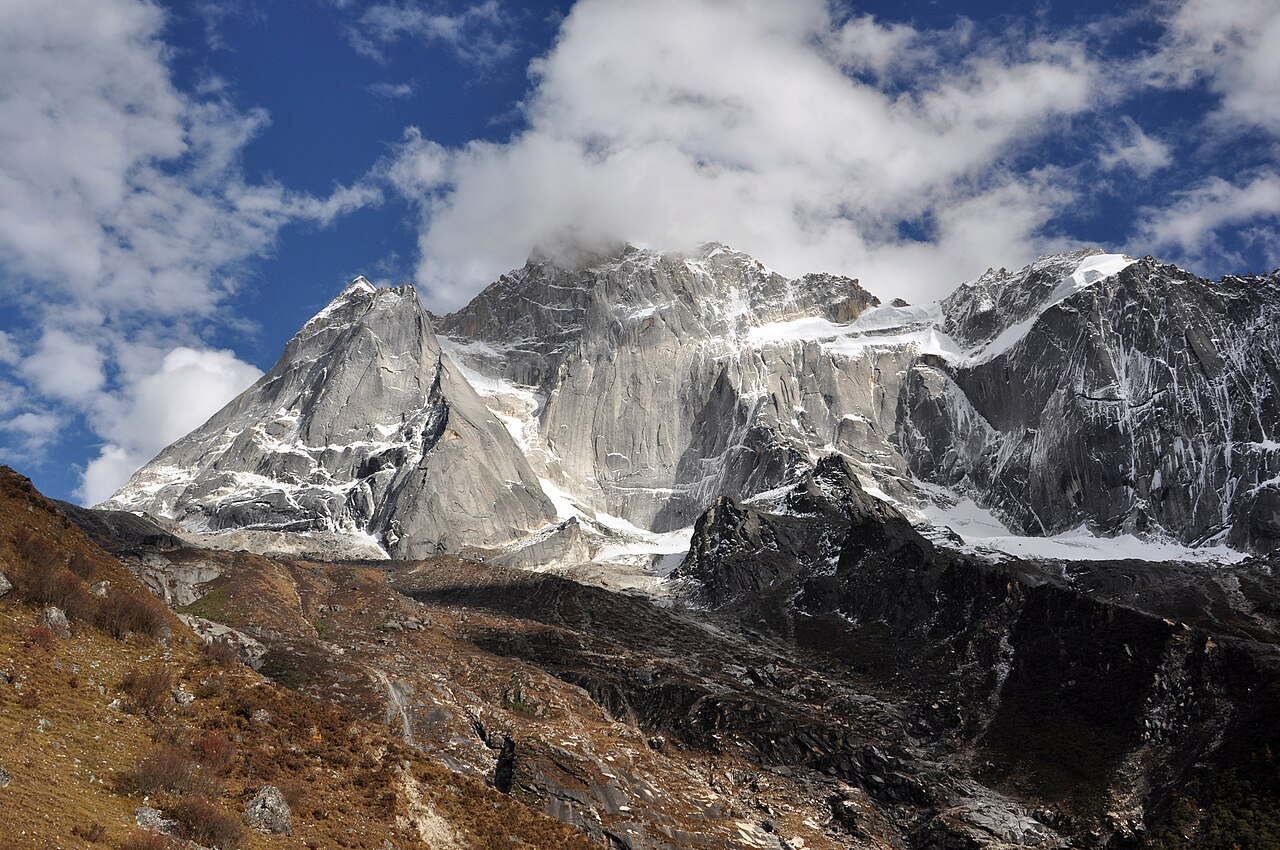
Mount Siguniang is a mountain massif in Xiaojin County, in the Ngawa (Aba) Tibetan and Qiang Autonomous Prefecture, about 220 km northwest of Chengdu on the eastern edge of the Tibetan Plateau, according to Travel China With Me (2026 guide). The name comes from a local legend of four sisters turned into mountains. The tallest, Yaomei Peak at 6,250 m, is Sichuan's second-highest peak after Gongga Shan and is technical, glaciated terrain for expedition climbers only.
The other three peaks — Dafeng (5,025 m), Erfeng (5,276 m) and Sanfeng (5,355 m) — are low enough in technical difficulty that Dafeng and Erfeng have become the standard "first 5,000 m summit" for beginner mountaineers across China.
The area carries serious credentials: it has held China's top scenic-area rating as a National 5A Tourist Attraction since 2024, was formally recognised as a United Nations Educational, Scientific and Cultural Organization (UNESCO) Global Geopark in 2026, and sits inside the wider Sichuan Giant Panda Sanctuaries UNESCO World Heritage Site. The protected area covers roughly 450 square kilometres. The park also sells a joint ticket with Wolong's Shenshuping panda base, about 100 km down the same access road — a natural break on the drive in.
"Four snow-capped peaks split across three separately ticketed valleys, a 4–4.5 hour drive from Chengdu." — Travel China With Me, Mount Siguniang Travel Guide 2026
How much are Mount Siguniang tickets, and how do you book them?
Each valley is entered and ticketed separately, and the shuttle bus is charged separately from entry at Shuangqiao and Changping. The table below shows peak-season prices (1 April–30 November 2026), per Travel China With Me and Sina News (20 November 2026).
| Valley | Entry | Shuttle bus | Total (adult) | Entry closes |
|---|---|---|---|---|
| Shuangqiao Valley | ¥80 | ¥70 | ¥150 | 15:00 |
| Changping Valley | ¥70 | ¥20 | ¥90 | 14:30 |
| Haizi Valley | ¥60 | No bus | ¥60 | 14:30 |
Sources: ticket and entry-time table per Travel China With Me (2026 guide) and Sina News (20 November 2026). Prices as of November 2026.
Discounts: students and youths aged 7–18 pay about ¥110 at Shuangqiao, ¥55 at Changping and ¥30 at Haizi; visitors aged 60 and over pay the bus fare only at Shuangqiao (¥70) and Changping (¥20) and enter Haizi free; children under 6 or under 1.2 m enter free everywhere, per Travel China With Me.
Combo tickets save money on multi-valley trips
Under the park's 2026 notice (31 January 2026, valid 1 February–31 December 2026 except statutory holidays), a two-valley combo costs ¥110 for entry and a three-valley combo ¥150 for entry, with shuttle buses charged separately. Bought as a full package including buses, the three-valley combo is ¥240 and the Shuangqiao + Changping combo ¥200, each valley entered once, valid 2–3 days, per Travel China With Me and ChinaPie (November 2026). Combo pricing is suspended during national holidays, and there is no partial refund on an unused portion.
How to book
Book only through the official channel: the "阿坝旅游" (Aba Tourism) WeChat mini-program or the Aba Tourism WeChat official account, with real-name registration for every ticket — passport details for foreign visitors. The booking window opens up to 14 days ahead, and walk-up tickets cannot be counted on in peak season. Passport holders exchange the online booking for a physical ticket at the counter on arrival, so bring the passport and expect a short queue. Unused tickets can be cancelled within 7 days of the visit date for a full refund, per Travel China With Me.
Winter hours and low-season prices from 1 December 2026
The scenic area administration announced on 20 November 2026 that from 1 December 2026 to 31 March 2027, entry runs 08:30–15:00 for Shuangqiao and 08:30–14:30 for Changping and Haizi, per Sohu / Aba News (20 November 2026). Low-season prices apply at the same time: Shuangqiao drops to ¥50 entry + ¥70 bus (¥120 total), Changping to ¥50 entry and Haizi to ¥40, per Sina News and Sohu. Separately, the reserve's outdoor-activity centre announced on 16 November 2026 that from 1 December 2026 to 1 March 2027, climbing, camping, rock climbing and trekking inside the nature reserve are suspended for the forest-fire prevention season — so Dafeng and Erfeng summit attempts and overnight treks pause until spring, while the valleys themselves stay open for sightseeing, per Sohu (17 November 2026).
Which valley should you visit?
The three valleys are not three versions of the same thing. Pick by effort and time, not by name.
Shuangqiao Valley — the easy sightseeing valley
A 34 km road fully served by park shuttle buses, so anyone from a 70-year-old to a toddler in a stroller can see snow peaks, alpine lakes and open meadow in 3–4 hours without any real walking, according to the 2026 guide. Ride to the top first — Red Sequoia Forest at 3,800 m — then work back down, stopping at Potala Peak (snow peaks, a white stupa and meadow in one frame), Siguna Lake (the valley's most photogenic lake, with snow-peak reflections on calm days) and Nianyu Dam, where a gentle 4.5 km river stretch opens for bamboo rafting in summer (¥90 per person).
One stop most visitors miss: Zhugana Lake, a 5-minute boardwalk walk across from the Potala Peak stop, usually empty and arguably the best photo spot in the valley. You will not see the four peaks from this valley — it sits on the opposite side of the range.
Changping Valley — the real hiking valley
The shuttle bus only runs the first 7 km to Lama Temple; past that, everything is on foot or horseback, through forest, snowmelt streams and the Red Stone Formation. The short route to Kushu Beach is about 8 km round trip in 2.5–3 hours on flat boardwalk — calcified driftwood in shallow water with a snow-peak reflection.
The long route to Muluozi is about 22 km round trip in 6–7 hours, ending in a wide alpine meadow ringed 360° by Yaomei Peak and the second and third peaks — the only valley where a casual hiker gets a clean, close-up view of Yaomei Peak itself, according to the 2026 guide. Renting a horse to Muluozi runs about ¥660 round trip; agree the price with the handler before setting off. Entry closes at 14:30 and the last shuttle down leaves at 17:30 — start heading back by 15:00 at the latest.
Haizi Valley — the wild valley
No shuttle bus at all, and the scenery shifts from meadow to alpine lake to glaciated peak over a 3–9 hour walk. The short route to Chaoshan Ping is about 7 km round trip in 2.5–3.5 hours — white stupas, prayer flags, open meadow and Yaomei Peak's full face behind you, the valley's best photo spot for the effort.
The long route to Da Haizi and Hua Haizi runs 20–28 km in 8–10 hours, with a muddy stretch past Dajianbao, the only supply stop. Horses run about ¥260 round trip to Chaoshan Ping and ¥600 to Da Haizi through the official counter. This is also the access route for Dafeng and Erfeng summit attempts (climbing permit ¥300, separate from the outdoor activity ticket of ¥150 for 3 days), according to the 2026 guide — but note the winter suspension above: no climbing or overnight treks from 1 December 2026 to 1 March 2027.
When is the best time to visit Mount Siguniang?
| Months | What you get | Watch out for |
|---|---|---|
| May–June | Wildflowers; azaleas peak late May at 3,000–3,500 m | May Day holiday crowds |
| July–August | Green valleys, high glacial streams | 40–50% daily rain chance; afternoon thunderstorms |
| Late Sept–mid-Oct | Peak foliage, clearest air, best peak views | National Day week (1–7 Oct) is several times busier |
| Nov–April | Snow peaks, photography season | -10°C to 5°C; trails ice over; climbing paused 1 Dec–1 Mar |
Season summary per Travel China With Me (2026 guide) and Sohu (23 October 2026).
Late September to mid-October is the strongest all-round window and the one most guides recommend first. Late September through mid-October brings peak foliage — the red sequoia forest in Shuangqiao turns gold — alongside the clearest air of the year, giving the best odds of unobstructed peak views, according to the 2026 guide. On the wider western Sichuan loop, the golden autumn window runs only about 20 days, mid-October to early November, and by late October the crowds have thinned and lodging prices have fallen 30–40% from the National Day peak, per Sohu (23 October 2026).
May–June brings wildflower season. Alpine meadows bloom and azaleas peak in the second half of May between 3,000–3,500 m, daytime temperatures are comfortable and crowds are moderate outside the May Day holiday window, per Travel China With Me.
July–August is full summer green, with glacial streams running high through Shuangqiao — but it is also rainy season, with a 40–50% daily chance of rain and afternoon thunderstorms that build with little warning, so plan trekking days around morning departures and carry proper rain gear.
November–April is snow season, with temperatures dropping to -10°C to 5°C and sections of trail icing over; Changping Valley may close entirely depending on conditions. This is a photography-only season for most visitors, since trekking and climbing effectively pause until spring — and from 1 December 2026 the pause is official, not just weather-dependent.
How to get to Mount Siguniang from Chengdu
- Leave Chengdu by 07:00. The drive is 4–4.5 hours in normal traffic, and Shuangqiao stops entry at 15:00 — a late start wastes the day.
- Drive via Dujiangyan and Wolong, crossing the 3,850 m Balang Mountain tunnel; in summer, heavy traffic on the Balang section can stretch the drive to 6–7 hours.
- Stop at Maobiliang Observation Deck, 16 km before Rilong Town — the only place on the route where all four peaks line up in a single frame.
- Base in Rilong Town and rest on arrival day before any hiking; the town sits at 3,200 m, and the altitude gain from Chengdu's 500 m in one afternoon catches many visitors off guard.
The mountain sits about 220 km northwest of Chengdu — a 4–4.5 hour drive via Dujiangyan and Wolong, crossing a 3,850 m tunnel on Balang Mountain, according to the 2026 guide. A private car is the practical way in: the road is a mountain road, the early entry cutoffs (15:00 for Shuangqiao, 14:30 for the other valleys) punish a late start, and the one viewpoint where all four peaks line up is a roadside stop, not a bus stop. See our Chengdu private car cost guide for what a charter typically costs.
By public bus, services run from Chengdu's Chadianzi Bus Station to Rilong Town, taking 5–6 hours and costing about ¥120 one-way; the early departure around 07:00 is the better choice, and return tickets should be bought the evening before rather than same-day. There is no train or flight option serving this part of Xiaojin County, per Travel China With Me.
Many multi-day itineraries break the drive at Wolong's Shenshuping panda base, about 2.5 hours in — two shorter legs instead of one long push, with pandas along the way, and a joint ticket with the mountain is available.
| Day | Plan | Notes |
|---|---|---|
| Day 1 | Chengdu → Wolong (Shenshuping panda base) → Rilong Town | ~220 km, 4–4.5 h driving; rest in town, no hiking on arrival day |
| Day 2 | Shuangqiao Valley by shuttle bus | 3–4 h, top-down from Red Sequoia Forest; ticket ¥150 |
| Day 3 | Changping Valley trek (Kushu Beach or Muluozi), return to Chengdu | 2.5–7 h on foot; ticket ¥90; leave Rilong by mid-afternoon |
Three-day plan structure per Travel China With Me (2026 guide). Add a fourth day for Haizi Valley (Chaoshan Ping, half-day) before departing.
Where to stay: Rilong Town
Base yourself in Rilong Town, the Tibetan town at the foot of the mountain at about 3,200 m. It has full infrastructure — restaurants, shops, even a fast-food restaurant — and walking access to both the Changping and Haizi Valley entrances, while Shuangqiao is 6–8 km away by taxi or shared car (about ¥15 per person). Rooms run about ¥200–800 a night depending on season, per Travel China With Me; in the autumn golden window, town rooms run about ¥200–350 and book a week ahead on weekends, per Sohu (23 October 2026). Staying inside Shuangqiao Valley itself is the only alternative — it suits trips centred on that valley, with first-shuttle access and sunset light, but thinner food options and higher prices (about ¥400–1,500).
For food, yak hotpot in Rilong Town runs about ¥50–100 per person. In late October, roadside stalls along the loop sell Danba apples and pomegranates, cheap and sweet, per Sohu.
Practical tips for Mount Siguniang
Acclimatise before you hike
Rilong Town already sits inside the altitude-sickness risk zone before any hiking — Chengdu is 500 m, Rilong is 3,200 m, and the valleys climb to 3,670–3,800 m. Rest one full day before any serious hiking: walk Shuangqiao's flat terrain first, then attempt Changping or Haizi on day two or three. Skipping this is the single most common reason visitors turn back partway up a trail, per Travel China With Me. Headache, nausea, breathlessness or disturbed sleep are common on day one and usually resolve with rest and hydration; a fast heart rate at complete rest, confusion, or breathlessness that does not improve are signs to descend immediately. See our altitude sickness guide for the full checklist.
Respect the 15:00 / 14:30 entry cutoffs
Entry closes at 15:00 for Shuangqiao and 14:30 for Changping and Haizi — earlier than many older English guides still list. In winter (1 December 2026–31 March 2027) the gates open later too, at 08:30. Arrive at the gate by mid-morning; in Changping, start heading back by 15:00 so you are not caught on the mountain as it gets cold after dark.
Pack for three seasons in one day
Dress in three layers — quick-dry base, fleece, windproof and waterproof shell — because temperature swings are sharp even in summer. Wear grippy hiking shoes, not sneakers, bring trekking poles, sunscreen, a hat and sunglasses: ultraviolet at altitude is about three times the lowland level, per Sohu (23 October 2026). Bring at least 1.5 litres of water and extra food for Haizi — there is no food or drink past the ticket gate until Dajianbao. Download offline maps: signal gets weak past Chaoshan Ping.
Do not hike alone in Haizi
The valley has black bears and wild boar; do not hike alone, per Travel China With Me. The same applies to the long Changping–Bipeng crossing (3–4 days over the 4,668 m Muluozi Pass), which needs a mandatory licensed guide.
Watch the winter suspension
From 1 December 2026 to 1 March 2027, climbing, camping, rock climbing and trekking inside the nature reserve are suspended, and violators face fines and a place on the scenic area's blacklist, per Sohu (17 November 2026). If your trip is a winter one, plan it as a sightseeing visit — Shuangqiao by bus, the snow peaks from the road — and save the summit attempts for spring.
Bottom line: Mount Siguniang rewards one clear decision — which valley matches your legs. Shuangqiao by bus for scenery without effort, Changping on foot for the close-up of Yaomei Peak, Haizi for the wildest lakes. Three days from Chengdu, Shuangqiao first, and a rest day built in before any real hiking.
In summary: 220 km from Chengdu, 4–4.5 hours by car; Shuangqiao ¥150, Changping ¥90, Haizi ¥60 (peak season, as of November 2026); best months late September to mid-October; Rilong Town at 3,200 m as your base; and from 1 December 2026, low-season prices, 08:30 openings and a suspension on climbing and trekking until 1 March 2027.
Want Mount Siguniang without the logistics?
Western China Private Car Tours runs private car trips from Chengdu to Mount Siguniang: pickup at your Chengdu hotel, the 4–4.5 hour drive over Balang Mountain, a stop at Maobiliang Observation Deck where all four peaks line up, and a flexible 2–3 day plan across the valleys — no bus timetables, no 15:00 entry cutoff panic, and stops whenever the light is good. The driver communicates with guests via translation apps, so plans and pickup times are easy to change on the day.
Short on time? Our western Sichuan 5-day loop guide pairs Siguniangshan with Danba, Tagong and Xinduqiao in one autumn circuit, or see our altitude sickness guide before any high-country trip.
Get a Private Car Quote on WhatsAppFrequently Asked Questions About Mount Siguniang
How many days do you need for Mount Siguniang?
Three days is the best balance for a first visit: day 1 to drive from Chengdu and rest in Rilong Town, day 2 for Shuangqiao Valley by shuttle bus, day 3 for Changping Valley on foot, then drive back to Chengdu. Two days covers one valley; four days covers all three valleys.
Which Mount Siguniang valley should I visit — Shuangqiao, Changping or Haizi?
Shuangqiao is the easy sightseeing valley: a 34 km shuttle-bus road, 3–4 hours, almost no walking, ticket ¥150 including the bus. Changping is the trekking valley: bus to Lama Temple, then 2.5–9 hours on foot to a close-up view of Yaomei Peak, ticket ¥90 including the bus. Haizi is the wildest: no bus, 2.5–10 hours on foot to high alpine lakes, ticket ¥60. Do Shuangqiao first, Changping second, Haizi last.
How much are Mount Siguniang tickets in 2026?
In peak season (1 April–30 November 2026): Shuangqiao ¥150 (entry ¥80 + bus ¥70), Changping ¥90 (entry ¥70 + bus ¥20), Haizi ¥60 (entry only). A three-valley combo ticket costs ¥150 for entry (buses extra) and a two-valley combo ¥110. From 1 December, low-season prices apply: Shuangqiao ¥120, Changping and Haizi cheaper. Book by real-name reservation on the Aba Tourism WeChat mini-program.
When is the best time of year to visit Mount Siguniang?
Late September to mid-October is the strongest all-round window: peak autumn foliage, the clearest air of the year and the best odds of seeing the peaks. May–June brings wildflower season, with azaleas peaking in the second half of May. July–August is green but rainy, with a 40–50% daily chance of rain. From 1 December 2026 to 1 March 2027, climbing, camping, rock climbing and trekking inside the nature reserve are suspended for the forest-fire prevention season.
Is Mount Siguniang hard for altitude?
Yes, plan for it: Rilong Town, where you sleep, already sits at about 3,200 m, and the valleys climb to 3,670–3,800 m. Rest on arrival day, do the easy Shuangqiao bus tour first, and only attempt Changping or Haizi on day two or three. Headache, nausea and poor sleep are common on day one and usually pass with rest and water; descend if symptoms get worse.
Sources: Travel China With Me — Mount Siguniang Travel Guide 2026 (valleys, routes, ticket and combo prices, booking rules, seasons, transport, altitude) / Sina News — Shuangqiao Valley ticket prices (20 November 2026; peak ¥150 / low season ¥120 from 1 December, hours, booking channels) / Sohu / Aba News — Siguniangshan winter entry hours (20 November 2026; 08:30 openings from 1 December 2026 to 31 March 2027) / Sohu — Outdoor activities suspended in the reserve (17 November 2026; climbing, camping, rock climbing and trekking paused 1 December 2026–1 March 2027) / Sohu — Western Sichuan 5-day autumn loop (23 October 2026; ~20-day golden window, lodging ¥200–350, ultraviolet 3× lowland level) / ChinaPie — Mount Siguniang 2026 combo tickets (two-valley ¥110, three-valley ¥150 entry-only). Images: Wikimedia Commons (CC).