Tagong Grassland Guide (2026): Yala & the Golden Pagoda
TL;DR: Tagong (塔公), also called Lhagang, is a 3,730 m grassland town 110 km northwest of Kangding on the G350, where three things stack into a single frame: an open high meadow, the gold-roofed Muya Golden Pagoda, and the 5,820 m Yala Snow Mountain behind it. The grassland is free to walk, Tagong Monastery costs about ¥20, the pagoda about ¥10–20, and the whole circuit takes 3–4 hours on foot — but only if you give it the dawn or dusk light.
Come for the morning or the evening, not for a midday photo stop. At noon the grass photographs pale and Yala often sits inside cloud; at dawn and dusk the peak turns gold and the pagoda catches the same light.
Short answer: Tagong Grassland (塔公草原) covers about 712 sq km of high meadow in Kangding City, Garze Tibetan Autonomous Prefecture, per China Discovery and Wikipedia — a town of stone Tibetan houses on the G350, ringed by grazing land where nomad families still keep yaks in black yak-hair tents.
The name Lhagang means "the place the Bodhisattva loves" in Tibetan, and the town has been a stop on the old Tea-Horse Road for centuries.
The grassland sits at about 3,730 m where the town stands, rising toward 3,900 m at its edges, per China Discovery and Wikipedia. That altitude is the first fact that shapes any visit: it is high enough that most people feel it, so the standard advice is to sleep a night in Kangding (2,560 m) first and drive up to Tagong the next day.
The visit is cheap and simple. The meadow itself is open — several 2026 guides report no entry charge at all, though China Discovery lists a ¥15 maintenance fee and Sina reports about ¥20 at some entrances, so a small fee is possible rather than certain. Tagong Monastery charges about ¥20 and the Muya Golden Pagoda about ¥10–20, per China Dragon Tours and Trip.com. Budget half a day for the three sights on foot, or a full day with a horse ride and a sunset viewpoint.
The visa warning
One paperwork warning matters before anything else: China's 240-hour transit visa-free entry does not cover Ganzi. Its Sichuan stay area is a fixed list of eleven cities — Chengdu, Zigong, Luzhou, Deyang, Suining, Neijiang, Leshan, Yibin, Ya'an, Meishan and Ziyang — and Tagong is not among them. A trip that includes Tagong has to be built on an ordinary tourist visa or a unilateral visa-free arrangement of up to 30 days. No separate travel permit is needed once you hold the right visa.
In short: If you want one stop that explains the Kham plateau — open grassland, a golden stupa, a working Sakya monastery and a sacred snow peak in one view — Tagong is it, and it fits neatly into the western Sichuan 5-day loop, which runs the same road onward to Xinduqiao and Kangding.
Key takeaways for Tagong Grassland
- The grassland is free; the two buildings charge a little. Walking the meadow costs nothing in most 2026 reports (a ¥15–20 maintenance fee is possible at some entrances). Tagong Monastery is about ¥20 and the pagoda about ¥10–20, per China Dragon Tours, Trip.com and China Discovery.
- Three layers, one frame. Grassland, golden pagoda, Yala Snow Mountain (5,820 m) — the composition that makes Tagong famous only works when the peak is out of cloud, so plan around the weather, not the clock.
- Come at dawn or dusk. The morning light on the pagoda and the evening alpenglow on Yala are the two windows that matter; midday is the worst light and the likeliest time for the peak to hide, per the 2026 Tagong guides.
- Acclimatise in Kangding first. Tagong sits at about 3,730 m — a clear altitude-sickness zone. Sleep a night at Kangding's 2,560 m, move slowly on arrival, and skip alcohol on the first evening.
- Give it half a day, not half an hour. Grassland, pagoda and monastery take about 3–4 hours on foot, and a rushed stop often misses Yala entirely. An overnight stay adds the sunset and a horse ride.
What is Tagong?
Tagong is a small town, not a gated park. The G350 runs straight through its one main street, and the grassland, the pagoda and the monastery all sit at the town's edge, within walking distance of each other. The meadow covers about 712.37 sq km, per China Discovery and Wikipedia, and it is still working pasture: nomad families graze yaks and sheep here and live in black yak-hair tents scattered across the grass, exactly as they have for generations.
The town's Tibetan name is Lhagang, "the place the Bodhisattva loves", and the name is not decoration. Tagong Monastery is one of the three most important Tibetan Buddhist monasteries in Garze — the others are Yaqing Temple and Larung Gar in Seda — and the town has been a pilgrimage and trading stop on the Tea-Horse Road for centuries, per Top China Travel and Tibetpedia.
Tagong is also the most accessible piece of the high plateau on the western Sichuan circuit. It is 110 km from Kangding, 35 km from Xinduqiao and 30 km from Bamei, all on the same G350, which is why almost every Chengdu-to-western-Sichuan loop passes through it.
It is also why Tagong is so often under-visited, treated as a ten-minute photo stop on the way to somewhere else. As that November 2026 route guide puts it, the sights here live in the morning and evening light, and a half-hour stop at noon is likely to miss both.
"The grassland and the pagoda are there whenever you arrive; the snow mountain is a matter of luck. Treat the meadow and the pagoda as the guarantee, and Yala as the bonus." — Tagong route guide, checked November 2026
How much do tickets cost?
Tagong is one of the cheapest stops in western Sichuan, but the prices are reported differently by different sources, so the table below gives the range rather than a single number. All figures are as of November 2026.
| Item | Price | Notes |
|---|---|---|
| Tagong Grassland entry | Free (¥15–20 possible) | Open meadow, no gate in most reports; China Discovery lists a ¥15 maintenance fee, Sina reports about ¥20 at some entrances |
| Tagong Monastery | ~¥20 | Sakya monastery in the town centre |
| Muya Golden Pagoda | ~¥10–20 | China Dragon Tours lists ¥10; Trip.com lists ¥10–15; other 2026 guides report about ¥20 |
| Horse riding | ¥80–200 | Short rides from about ¥80; guided rides about ¥100–200 per hour |
| Parking | ¥5–20 | Main street mostly free or ¥5–10; grassland entrance and pagoda parking about ¥10–20 |
| Tent rental (nomad camp) | ~¥200 | Overnight in a yak-hair tent camp, per Chinatripedia |
Sources: ticket table per China Dragon Tours, Lhagang Grassland guide; Trip.com, Muya Golden Tower Tickets 2026; China Discovery, Kangding Attractions; Chinatripedia, Tagong Grasslands; Sina News, Western Sichuan must-do activities (November 2026). Prices as of November 2026; confirm at the gate, as local fees change without notice.
One rule is worth knowing before you park: the grassland is herders' contracted pasture, not public parkland. Do not drive onto the grass — cars are meant to stay on the main street and the marked parking areas, and damaging the turf can draw a charge from the herder whose land it is, per that route guide.
Walk in from the parking area instead.
The three layers: grassland, pagoda, snow mountain
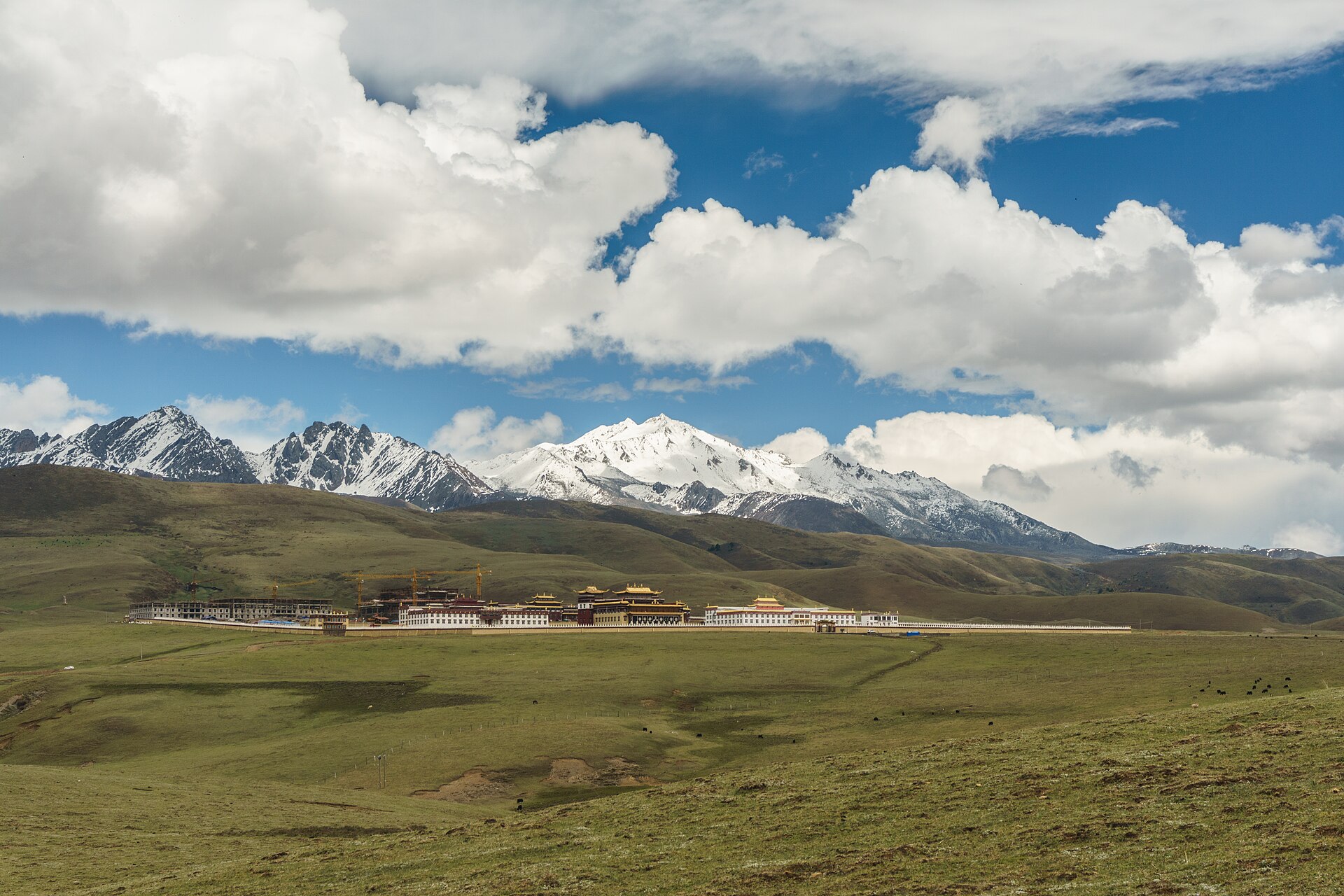
The reason Tagong photographs so well is a simple piece of geography: a flat meadow, a gold-roofed stupa standing on it, and a 5,820 m snow peak rising behind both. Stand between the pagoda and the mountain and the three layers — green grass, gold architecture, white snow — fall into a single frame, the most photographed scene in Kham, per China Dragon Tours.
Yala Snow Mountain (5,820 m)
Yala (雅拉雪山), also called Zhara Lhatse, stands at the junction of Kangding, Daofu and Danba counties and is snow-covered all year round, per Tibetpedia and ChinaWiki. Tibetan tradition counts it among the four sacred mountains of the region, and the old scriptures call it the "Second Shambhala" — a hidden land of the deities, in the Epic of King Gesar. From Tagong it reads as a steep pyramid with snow on three sides, and its summit spends a good part of its time inside cloud, per Travel with TK (October 2026).
That is the honest expectation to set: the mountain is weather-dependent. On a clear morning or evening the snow line is sharp and the sunset turns Yala's western face gold; on a cloudy day the peak can stay hidden all day and only the grassland and the pagoda are on show. The Yunrao Yala Viewing Platform, on the northern edge of the grassland, is the closest road-accessible viewpoint to the peak, per China Dragon Tours — and the Yuzixi viewpoint, a short drive from town, is the sunset spot the 2026 guides recommend, with the best autumn window around 18:00–18:30, per Sina (November 2026).
Muya Golden Pagoda (木雅金塔)
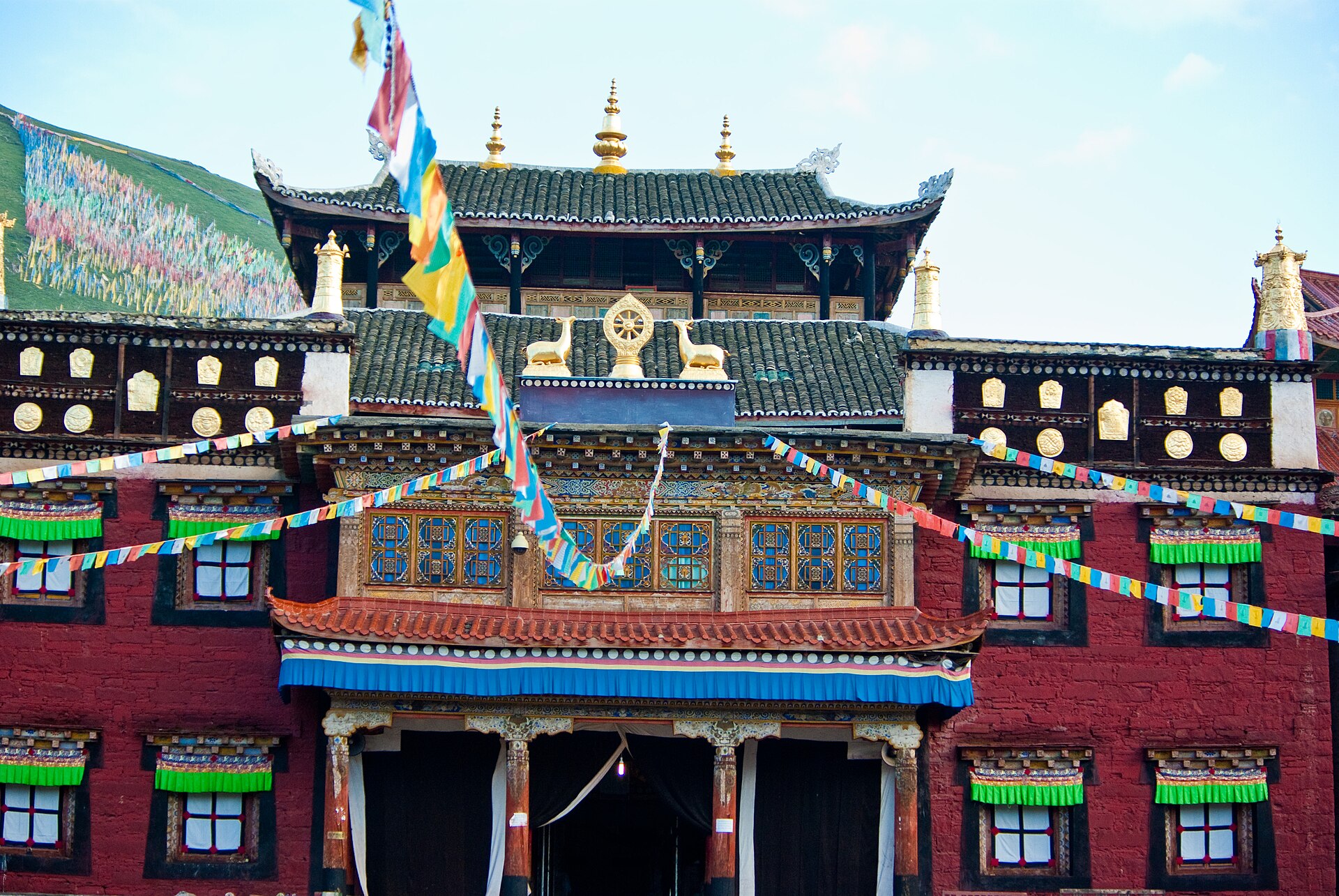
The pagoda is the gold in the famous frame. Built in 1997 and funded by the Nyingma lama Dorje Zaxi to commemorate the teachings of the 10th Panchen Lama here, it is a mandala-style stupa temple whose roof used more than 100 kilograms of gold, per Tibetpedia and China Dragon Tours. Inside, three floors stack the Buddhist world: the ground floor is the exoteric hall with Shakyamuni Buddha and the bodhisattvas, the second floor is the esoteric hall with Padmasambhava and the lineage masters, and the top floor holds the Buddha's relics, per Trip.com.
Climbing to the roof level is the practical payoff — the view opens over the whole grassland, with the Gongga range visible on clear days, per China Dragon Tours. The pagoda stands about 1 km from the grassland entrance, a 10–15 minute walk across the meadow, and about 10 minutes on foot from Tagong Monastery, per the Tagong route guide.
Tagong Monastery (塔公寺)
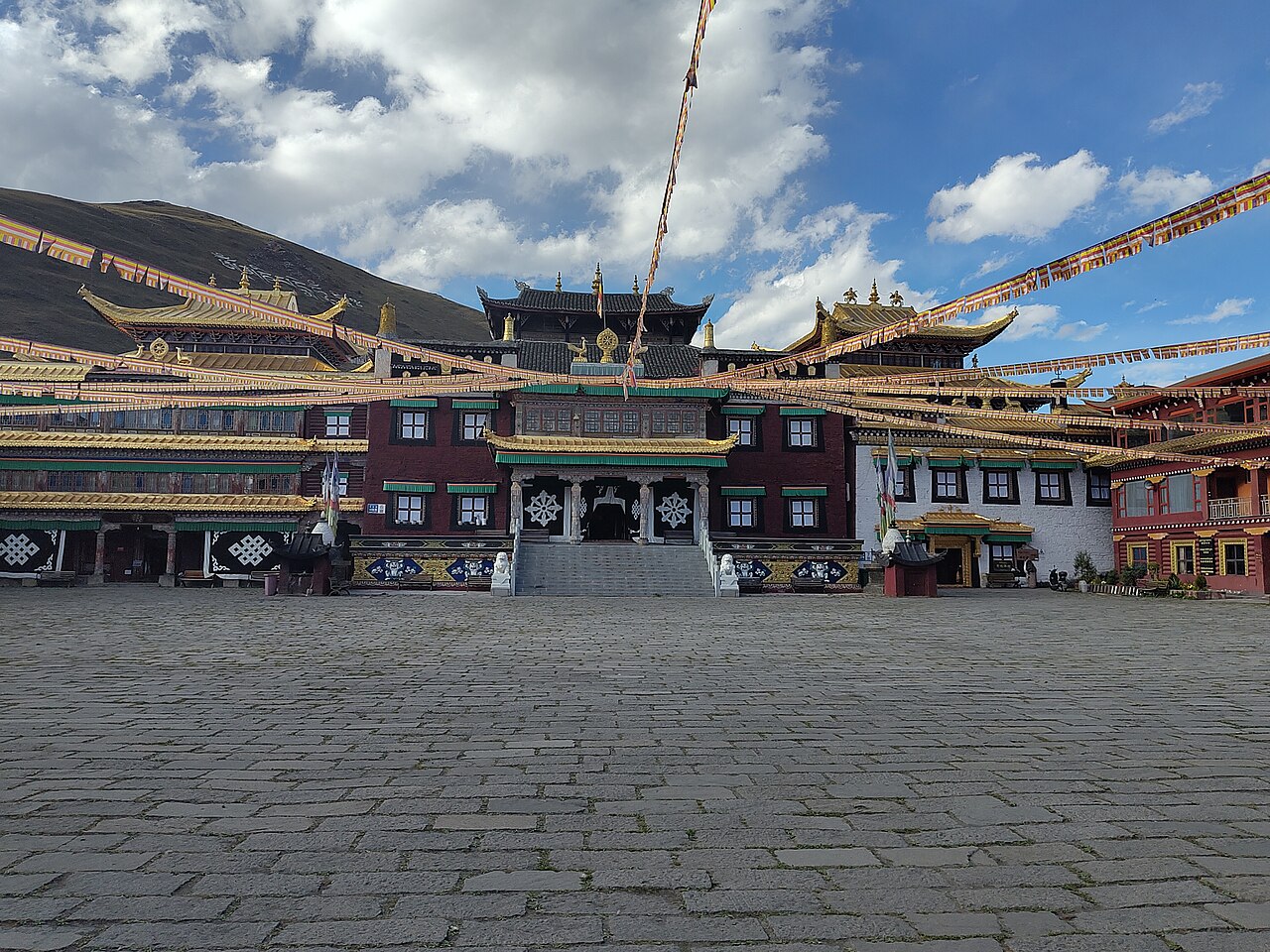
Tagong Monastery, also called Lhagang Monastery, is the town's working heart. It is a Sakya-sect monastery — the "Grey Earth" tradition — and one of the three most important monasteries in Garze, per China Dragon Tours and Top China Travel. Tradition traces it to Princess Wencheng's 7th-century journey to Lhasa, when she paused here on her way to marry King Songtsen Gampo; the present buildings are later, Qing-era work raised to honour that journey, per Tibetpedia. The monastery is nicknamed the "Little Jokhang" for the Sakyamuni Buddha statue it holds, a replica of the one Princess Wencheng is said to have brought in 640 Common Era, per SinoTales.
The draw inside is the Zhituo stupa, whose name means "achieving liberation at first sight", per Chinatripedia. Outside, the kora path runs around the monastery walls, lined with prayer wheels that pilgrims spin as they walk clockwise — join them, walk slowly, and keep the monastery on your right. In the middle to late sixth month of the Tibetan calendar the monastery holds its grand festival, with masked dances to the bodhisattvas, per Top China Travel.
Tagong Monastery, up close
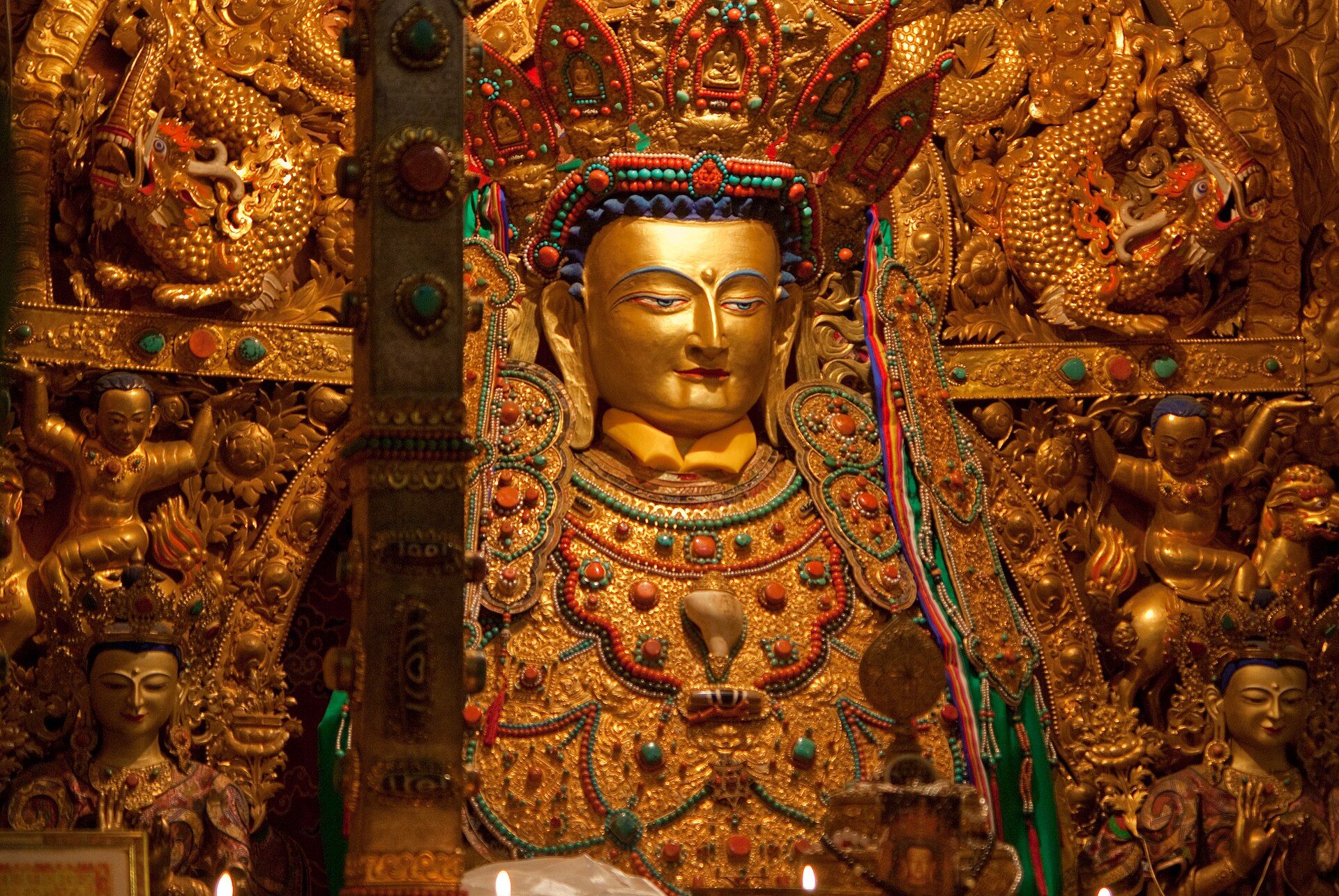
The monastery rewards a slow half hour rather than a photograph from the gate. The red walls, gold roofs and green window hangings are the Kham palette at its most saturated, and the prayer flags strung across the courtyard turn the whole front of the building into a frame. Inside, the gilded statues are set with turquoise and coral, and butter lamps burn at the foot of the main image — the photograph above is the interior of a monastery of this region, and photography rules vary by hall, so ask before raising a camera indoors.
Horses, nomads and the horse festival
Tagong is Khampa country, and the Khampa are Tibet's horse people. Local herders offer rides from the grassland entrance — short rides from about ¥80, guided rides at about ¥100–200 per hour, and full-day treks by arrangement, per Chinatripedia and China Dragon Tours. A short gallop across the flats at 3,730 m, with Yala as the backdrop, is the experience the guides single out; agree the price and the duration before mounting, and ride with a local guide rather than alone.
The deeper version of the same culture is the horse festival. Once or twice a year, in the eighth month of the lunar calendar — usually July to August — herders from across the region gather on the grassland in festival dress for bareback racing, archery and costume competitions, per Tibetpedia and Chinatripedia. It is not staged for tourists; it is a working festival that happens to welcome visitors, and it is the liveliest week of the Tagong year.
With a guide, you can also visit a nomad family's black yak-hair tent. The ritual is butter tea — salty, rich, and served hot on arrival — with tsampa (roasted barley flour kneaded with tea) and thick yak yoghurt, per China Dragon Tours. Accept at least a cup; refusing is impolite. Small gifts travel well — school supplies for children, or photographs of your own home to share.
When is the best time to visit Tagong?
| Months | What you get | Watch out for |
|---|---|---|
| June–August | Green grass, wildflowers, horse festival season, warmest days | Rain builds; Yala hides in cloud more often; festival weeks book out |
| September–October | Golden grass, clearest air, best Yala views, golden poplars on the road to Xinduqiao | Peak photography season; book Tagong rooms ahead |
| November | Quiet grassland, sharp light, first snow on the ridges | Cold wind, possible snow on the G350; check road conditions |
| December–March | Snow-covered meadow, empty town, lowest prices | Extreme cold, short days, some guesthouses closed |
| April–May | Thawing grassland, few visitors, spring light | Windy, changeable weather; snow possible into May |
Season summary per China Dragon Tours, Lhagang Grassland guide; Trip.com, Muya Golden Tower Tickets 2026; and the November 2026 Tagong route guide (checked 7 November 2026).
June to August is the green season, September to October is the photographers' season. Summer brings the lush grass, the wildflowers and the horse festival; autumn brings the gold grass, the clearest air of the year and the best odds of seeing Yala.
Winter is the quiet season — snow on the meadow, an empty town, and temperatures that punish anyone underdressed. In any month, the day itself matters more than the season: plan the pagoda and the viewing platform for the first or last two hours of daylight.
How to get to Tagong from Chengdu
- Chengdu to Kangding: bus from Xinnanmen station, ¥107–127, about 4–6 hours; or private car, about 330 km on expressway.
- Sleep in Kangding (2,560 m) to acclimatise before the higher ground.
- Kangding to Tagong: about 110 km, 2.5–3 hours by car, over the 4,298 m Zheduo Pass; shared taxi about ¥50–80.
- In Tagong: walk — grassland, pagoda and monastery are all within 1–2 km of the main street.
By private car, allow 6–7 hours from Chengdu
The drive is about 350–400 km from Chengdu: expressway through Ya'an and Luding to Kangding, then the climb over Zheduo Mountain at 4,298 m — the "First Pass of Kham" — and down to Tagong on the G350, per JoyoTour and China Dragon Tours. The road is good but it is a mountain road: sharp bends after the pass, few stops in the final stretch, and possible snow from November onward.
A private car is the practical way to do Tagong properly, because the grassland, the pagoda, the Yuzixi sunset viewpoint and the onward road to Xinduqiao are spread out, and there is no ride-hailing in town — arrange any local driving through your guesthouse or your charter driver in advance, per the route guide.
By bus, go via Kangding
Buses run from Chengdu's Xinnanmen station (also Shiyang and Chengbei) to Kangding for ¥107–127, taking about 4–6 hours, per JoyoTour. From Kangding, shared taxis to Tagong cost about ¥50–80 for the 2-hour run, per SinoTales; buses to Tagong itself are infrequent, so check the schedule on arrival rather than assuming a departure. See our Chengdu private car cost guide for what a charter typically costs.
Tagong on the loop
Tagong sits on the G350 between Bamei (30 km east) and Xinduqiao (35 km west), which makes it a natural overnight on the small western Sichuan loop: Chengdu → Siguniangshan → Danba → Moshi Park → Tagong → Xinduqiao → Kangding → Chengdu. Moshi Park, 30 km toward Bamei, charges ¥60 plus a ¥20 sightseeing bus, per SinoTales — an easy half-day add-on. Our western Sichuan 5-day loop guide covers the full circuit, and the Danba Jiaju guide covers the village stop before it.
| Day | Plan | Notes |
|---|---|---|
| Day 1 | Chengdu → Kangding (morning departure), afternoon in Kangding old town, Paoma Mountain; sleep at 2,560 m | ~4–6 h driving; acclimatisation night |
| Day 2 | Kangding → Zheduo Pass (4,298 m) → Tagong by midday; grassland, Muya Golden Pagoda, Tagong Monastery; sunset at Yuzixi viewpoint; sleep in Tagong | ~2.5–3 h driving; dawn and dusk are the photo windows |
| Day 3 | Morning light on the pagoda, horse ride on the grassland, then G350 to Xinduqiao (35 km) or back over Zheduo to Kangding | Leave Tagong by mid-afternoon; winter roads ice after dark |
Three-day plan structure per China Dragon Tours, Lhagang Grassland guide (Day 1 Chengdu–Kangding, Day 2 Kangding–Lhagang, Day 3 Lhagang deep dive, Day 4 Lhagang–Xinduqiao), adapted with 2026 ticket and transport figures from the sources above.
Where to stay and eat in Tagong
Sleeping in Tagong is what makes the dawn and dusk windows possible, and the town's options are simple. Tibetan-style hotels with mountain views run about ¥300–600 a night, grassland tent camps about ¥200–400, and budget guesthouses about ¥60–80, per China Dragon Tours and Trip Moments. Book ahead in the June–August festival season and the September–October photography season; Xinduqiao, 35 km away, has denser lodging and supplies if Tagong is full, per that guide.
For food, the town's Tibetan and Sichuan restaurants serve the plateau staples: butter tea, tsampa, yak meat and yak yoghurt, plus Tibetan noodle soup, per the same route guide. Arrange dinner with your guesthouse host that morning if you want a home-cooked meal — most family places cook to order rather than running a fixed menu.
Practical tips for Tagong Grassland
Acclimatise in Kangding first, not in Tagong
Tagong at 3,730 m is a clear altitude-sickness zone — headaches and poor sleep on the first night are common, per China Dragon Tours. The standard approach is a night in Kangding at 2,560 m, then a slow first day in Tagong: no hard exercise, no alcohol on the first evening, and plenty of water. The road in crosses the 4,298 m Zheduo Pass, so even the drive itself is a high-altitude day. If you are heading on to higher ground afterwards, see our altitude sickness guide.
Sort the visa first, not the bus ticket
Tagong is outside the 240-hour transit visa-free stay area, which covers eleven Sichuan cities and does not include Ganzi. If your plan is built on the transit rule, keep it to those eleven cities and treat Tagong as a separate, visa-normal trip. The unilateral visa-free arrangement, which now covers a long list of countries for stays of up to 30 days with no stay-area geography, is the simpler way in for most nationalities; otherwise an ordinary tourist visa does the same job with more paperwork. See our 240-hour visa-free transit guide for the full city list.
Do not self-drive on a foreign licence
A foreign driving licence on its own does not entitle you to drive in mainland China, and an international driving permit is not accepted. A self-drive trip means arranging a temporary Chinese licence before you leave — if that sounds like more trouble than it is worth, a chartered car covers the same ground, and the driver handles the mountain road and the pass.
Pack for wind, sun and cold in one day
At 3,730 m the sun is fierce and the wind is cold, often within the same hour. Layer up regardless of the forecast: a windproof shell, a warm layer for the early-morning viewpoint, sunscreen and sunglasses, and lip balm. The grassland has almost no shade, so a hat matters more here than at lower-altitude sights. Bring at least ¥200 in cash for the monastery, the pagoda, horse rides and the smaller stalls — card coverage in town is patchy.
Respect the monastery and the pasture
Tagong Monastery is a working monastery, not a museum: keep voices down inside, do not photograph monks or worshippers without asking, and walk the kora clockwise with the monastery on your right. On the grassland, stay on the paths and the marked parking areas — the meadow is herders' contracted pasture, and driving onto it damages the turf and draws a charge. Ask before photographing herders and their families at close range; offering to share the photo afterwards goes a long way.
Bottom line: Tagong earns its place on the western Sichuan loop honestly — a free high meadow, a gold-roofed pagoda built with more than 100 kg of gold, a working Sakya monastery, and a 5,820 m sacred peak that shows itself only when the weather allows. Half a day on foot, a night in town, and the dawn and dusk light are the whole trip.
In summary: About 350–400 km and 6–7 hours by car from Chengdu (bus to Kangding ¥107–127, then shared taxi ¥50–80, 2.5–3 hours over the 4,298 m Zheduo Pass); grassland free to walk (¥15–20 maintenance fee possible), Tagong Monastery about ¥20, Muya Golden Pagoda about ¥10–20; best June–August for green grass and the horse festival, September–October for gold grass and the clearest Yala views; sleep in Kangding first at 2,560 m, then a night in Tagong for the dawn and dusk light; and Tagong needs a proper visa — the 240-hour transit arrangement does not cover Ganzi.
Want Tagong without the logistics?
Western China Private Car Tours runs private car trips from Chengdu to Tagong Grassland: pickup at your Chengdu hotel, the expressway to Kangding, an acclimatisation night, the climb over Zheduo Pass, a full afternoon on the grassland, the pagoda at golden hour, the monastery kora, and a horse ride if you want one — then on to Xinduqiao or back to Kangding. The driver communicates with guests via translation apps, so plans and pickup times are easy to change on the day.
Short on time? Our western Sichuan 5-day loop guide folds Tagong into a five-day circuit with Siguniangshan, Danba, Moshi Park and Kangding, or see our altitude sickness guide before any high-country trip.
Get a Private Car Quote on WhatsAppFrequently Asked Questions About Tagong Grassland
How much does Tagong Grassland cost in 2026?
As of November 2026, walking the grassland itself is free — several 2026 guides report no entry charge, though China Discovery lists a ¥15 maintenance fee and Sina reports about ¥20 at some entrances, so treat a small fee as possible. Tagong Monastery charges about ¥20 and the pagoda about ¥10–20. Horse riding runs about ¥80–200, and parking at the grassland entrance is about ¥10–20.
How do I get from Chengdu to Tagong Grassland?
By private car it is about 350–400 km and 6–7 hours from Chengdu: expressway to Kangding, then over the 4,298 m Zheduo Pass and 110 km on to Tagong, about 2.5–3 hours from Kangding. By bus, Chengdu Xinnanmen to Kangding costs ¥107–127 and takes about 4–6 hours; from Kangding a shared taxi to Tagong costs about ¥50–80. Tagong is also 35 km from Xinduqiao and 30 km from Bamei on the G350.
When is the best time to visit Tagong Grassland?
June to August, when the grass is green, wildflowers are out and the horse festival season runs, and September to October, when the grass turns gold and the air is clearest for Yala Snow Mountain views. December to March is snow-covered and very cold. Whatever the month, come at dawn or dusk: the morning light and the evening alpenglow on Yala are the two windows that matter, and at midday the grass photographs pale and the peak often hides in cloud.
Can foreign visitors travel to Tagong without a permit?
No travel permit is needed for Tagong — foreign passport holders travel freely in Garze Prefecture with a valid visa. What does not work is arriving on China's 240-hour transit visa-free entry: its Sichuan stay area is a fixed list of eleven cities and Ganzi is not among them. Enter on an ordinary tourist visa or a unilateral visa-free arrangement (up to 30 days) instead.
Is Tagong Grassland worth a full day, or is it a quick stop?
Give it half a day at least, and a full day if you can. The grassland, the Muya Golden Pagoda and Tagong Monastery together take about 3–4 hours on foot, and the mountain only shows itself when the clouds allow — a rushed 30-minute stop often misses Yala entirely. An overnight stay adds the sunset alpenglow, the morning light on the pagoda, and time for a horse ride or the Yuzixi viewpoint at dusk.
Sources: China Dragon Tours — Lhagang Grassland in Kangding City (3,730 m, 712 sq km meadow, Yala 5,820 m, Muya Golden Pagoda 100+ kg gold, ¥10 stupa / ¥20 monastery, horse ¥100–200/hour, hotels ¥300–600, tent camps ¥200–400, best June–August & September–October) / China Discovery — Kangding Attractions (Tagong Grassland 712.37 sq km, ~3,900 m, ¥15 maintenance fee, 110 km from Kangding, open all day) / Trip.com — Muya Golden Tower Tickets 2026 (built 1997 by Nyingma Lama Dorje Zaxi for the 10th Panchen Lama, ¥10–15, three floors, best June–August & September–October) / Tibetpedia — Lhagang (Tagong) (Tagong Monastery Qing-era buildings honouring Princess Wencheng's journey, Muya Golden Pagoda 1997 with 100 kg gold roof, horse festival in the 8th lunar month, Yala 5,820 m) / Chinatripedia — Tagong Grasslands (113 km from Kangding, free entry, horse riding ¥80–200, tent rental ~¥200, open 24 hours) / Top China Travel — Tagong Town in Kangding (Tagong Monastery one of three most important in Garze, Sakya sect, festival in the 6th Tibetan month, Yala one of the four sacred mountains) / JoyoTour — Kangding Travel Guide 2026 (updated 10 October 2026; Chengdu–Kangding bus ¥107–127, Kangding 2,560 m, Zheduo Pass 4,298 m, Tagong 110 km from Kangding, Mugecuo ¥220/¥290, Paoma Shan ¥80) / Da Huanxian — Tagong Grassland route guide (checked 7 November 2026; town 3,730 m, stupa ~3,800 m, monastery ~3,750 m, G350, Bamei 30 km, Xinduqiao 35 km, Kangding 115 km / 2.5–3 h, grassland free, pagoda ~¥20, monastery ~¥20–30, parking ¥5–20, no ride-hailing in town) / Sina News — Western Sichuan must-do activities (November 2026; Tagong Grassland ticket ~¥20, Yuzixi sunset ~18:00–18:30 in autumn, Muya Golden Pagoda + Yala same frame) / SinoTales — First-Time Travel to China: 2026 Sichuan Guide (Tagong Monastery ¥20 entry, replica Sakyamuni statue from Princess Wencheng 640 Common Era, shared taxi Kangding–Tagong ¥50–80, Moshi Park ¥60, horse ~¥200/day). Images: Wikimedia Commons (Jinlong Gompa & Zhara Lhatse massif by Honza Jerman, Creative Commons Attribution-ShareAlike 4.0; Tagong Monastery by Valerian Guillot, Creative Commons Attribution 2.0; Lhagang Gönba courtyard, Creative Commons Attribution-ShareAlike 4.0).