Western Sichuan 5-Day Loop (2026): Siguniang, Danba, Tagong, Xinduqiao & Kangding
Short answer: The Western Sichuan small loop is the best five-day road trip out of Chengdu: about 900 to 1,000 km through Mount Siguniang's valleys, Danba's Tibetan villages and stone watchtowers, the black-stone hills of Moshi Park, Tagong grassland under Yala Snow Mountain, Xinduqiao's golden poplars and the old trading town of Kangding — then back to Chengdu on the expressway.
The loop works because the altitude climbs gradually instead of jumping: Chengdu at 500 m, Siguniang town at about 3,200 m, a drop to Danba at 1,800 m, then Xinduqiao at about 3,300 m. The two high passes — Balang at 4,523 m and Zheduo at 4,298 m — are crossed in daylight, never slept on. Budget roughly ¥1,800 to ¥2,600 per person for five days self-driving, per Sohu's October 2026 costing.
Go between May and October; September and October bring the golden poplars at Xinduqiao, and the autumn colour window in the valleys lasts roughly twenty days, from mid-October into early November. All prices below are as of November 2026.
TL;DR: Day 1 Chengdu to Siguniang town over the 4,523 m Balang Pass (226 km, per GoWesternChina); Day 2 Shuangqiao Valley in the morning, then Danba's Jiaju village; Day 3 Jiaju morning mist, Moshi Park, Tagong grassland and monastery, sleep in Xinduqiao; Day 4 Xinduqiao dawn shoot, Zheduo Pass (4,298 m), Kangding and the Luding Bridge; Day 5 expressway back to Chengdu. About 900–1,000 km total. Tickets: Shuangqiaogou about ¥150, Moshi Park about ¥80, Jiaju ¥50, Tagong Temple about ¥20, Xinduqiao free. Best months May–October, golden poplars September–October.
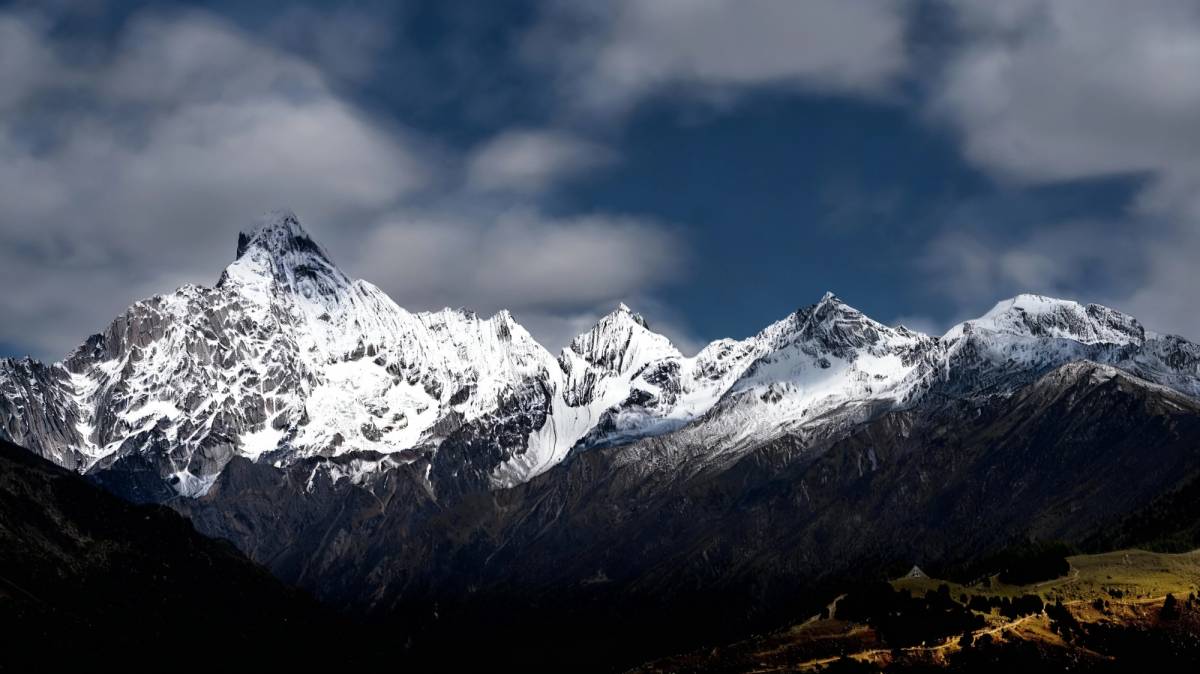
Key takeaways for the Western Sichuan 5-day loop
- Five days is the classic length. Three to four days only reaches the nearer stops, while five to seven days is ideal for a first trip covering the classic sights, per China Highlights (updated 13 November 2026). Five days fits Siguniang, Danba, Tagong, Xinduqiao and Kangding without a single brutal driving day.
- The altitude ladder is the route's secret. Chengdu at 500 m, Siguniang town at about 3,200 m, Danba down at 1,800 m, Xinduqiao at about 3,300 m — the climbs are gradual, so altitude sickness is far less likely than on a flight straight to high ground, per Sohu (23 October 2026). Sleep low, cross the passes by day.
- Autumn is short and worth timing. The golden window runs roughly mid-October to early November — about twenty days when Xinduqiao's poplars turn gold and the valley forests grade from white snow to gold to green, per Sohu. September and October are the best months for the poplar light, per JoyoTour.
- Tickets are cheap; the car is the cost. The main scenic tickets add up to roughly ¥300 per person — Shuangqiaogou about ¥150, Moshi Park about ¥80, Jiaju ¥50, Tagong Temple about ¥20 — while Xinduqiao's roadside views are free, per Sohu. Guesthouses run ¥150–¥400 a night and five people sharing one car pay about ¥600 each for fuel and tolls, per Sohu.
- Two passes decide the driving. Balang Pass at 4,523 m and Zheduo Pass at 4,298 m can carry ice or snow from October to April, so check conditions and carry chains, per GoWesternChina. The Ya'an–Kangding Expressway makes the return leg fast and comfortable.
- One stop is off-limits to foreign visitors. Seda is not open to foreign travellers, per China Highlights — skip it and take the monastery and village experience from Tagong and Danba instead.
The route at a glance
| Day | Route | Distance | Sleeping altitude |
|---|---|---|---|
| Day 1 | Chengdu → Dujiangyan → Wolong → Balang Pass → Siguniang town (Rilong) | 226 km | About 3,200 m |
| Day 2 | Shuangqiao Valley → Balang Pass → Danba (Jiaju village) | 112 km | About 1,800 m |
| Day 3 | Jiaju → Bamei → Moshi Park → Tagong → Xinduqiao | About 160 km | About 3,300 m |
| Day 4 | Xinduqiao → Zheduo Pass → Kangding → Luding | About 150 km | About 1,300 m |
| Day 5 | Luding → Ya'an–Kangding Expressway → Chengdu | About 320 km | Chengdu, 500 m |
Sources: leg distances per GoWesternChina, 5-day loop (1,038 km total); total loop about 900–1,000 km per Sohu, 23 October 2026; altitudes per Sohu and JoyoTour Kangding guide (updated 10 October 2026).
Day 1: Chengdu to Mount Siguniang over the Balang Pass
Leave Chengdu early and head west on the G350 through Dujiangyan and the Wolong Panda Reserve. The road climbs steadily to the Balang Pass at 4,523 m — the highest point of the whole loop — then drops to Rilong, the small town at the foot of Mount Siguniang, about 226 km from Chengdu, per GoWesternChina.
Mount Siguniang — the "Four Sisters Mountain", called the Alps of the East — is the closest snow mountain to Chengdu, and its four peaks dominate the skyline above Rilong. The town sits at about 3,200 m, so take the first evening slowly: a short walk, an early dinner, no alcohol, and no bath on the first night, per Sohu's altitude advice. Guesthouse rooms in Siguniang town run about ¥200–¥350 a night, per Sohu.
Why start here and not drive straight to Kangding? Because the loop's altitude ladder works in your favour — one night at 3,200 m, then a drop to Danba at 1,800 m, gives your body a rest before the higher grassland days. The direct Chengdu–Kangding drive is about 280 km and 4.5 to 5 hours by car, per China Discovery, but it skips the valleys that make this loop worth doing.
Day 2: Shuangqiao Valley in the morning, Danba's Jiaju village by evening
Of Siguniang's three valleys, Shuangqiao is the most accessible: a sightseeing bus runs the full valley with walking trails between stops, so you see snow peaks, alpine meadows and pristine forest without a hard hike, per China Highlights. In mid to late October the valley grades from white snow on the ridges to gold in the middle slopes and green on the valley floor, per Sohu.
Take the first bus to the far end of the valley and work back down against the crowds — the light is softest in the morning, per Sohu. Entry plus sightseeing bus is about ¥150, per Sohu.
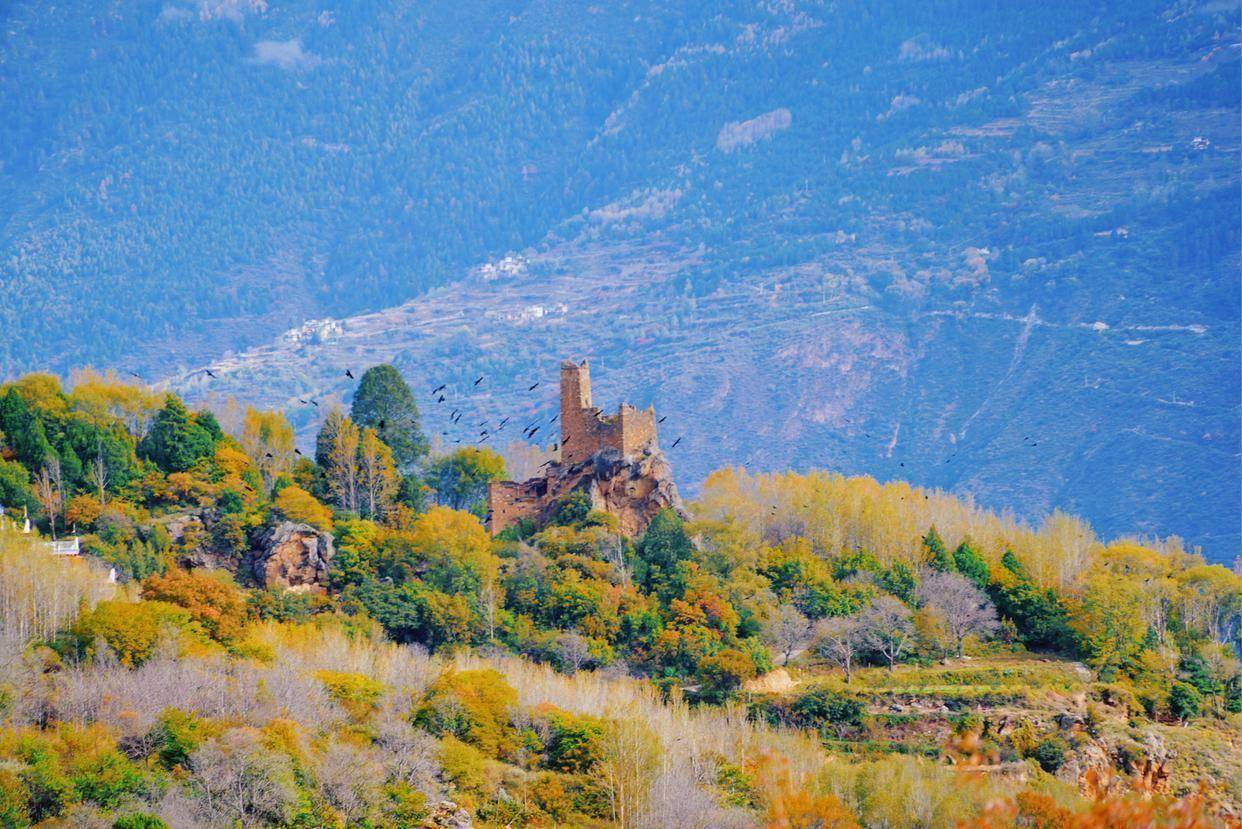
After lunch, cross back over the Balang Pass and drop into the Dadu River valley to Danba, about 112 km, per GoWesternChina. Danba is famous for its Tibetan villages and ancient stone watchtowers — and for Jiaju, whose name means "one hundred households" in Tibetan and which Chinese National Geography has named one of China's most beautiful villages, per Sohu. The red-and-white Tibetan houses sit scattered across the hillside like pieces on a board.
Sleep in a Jiaju village homestay (about ¥250–¥400 a night, breakfast often included, per Sohu) and set an alarm: the morning mist rising from the valley with cooking smoke climbing straight up is the shot the village is known for, and the viewing platforms along the road are best in the hour after sunrise, per Sohu.
Day 3: Jiaju mist, Moshi Park, Tagong grassland and Xinduqiao
Day 3 is the day the loop turns properly Tibetan. From Jiaju, drive north through the Dadu River valley to Bamei, then west to Moshi Park — a field of black stone pinnacles that looks like a forest turned to rock. Entry is about ¥60 plus ¥20 for the sightseeing bus, per Sohu.
From there the road opens onto Tagong grassland, a wide high meadow ringed by snow peaks, with nomad tents, grazing yaks and horse festivals in season. Tagong means "the place the Buddha loves", per JoyoTour, and its monastery — one of the most important Sakya sect temples in the region, per GoWesternChina — sits at the centre of the grassland with Yala Snow Mountain (about 5,820 m) behind it. Temple entry is about ¥20, per Sohu; the grassland itself is free to roam, per JoyoTour.
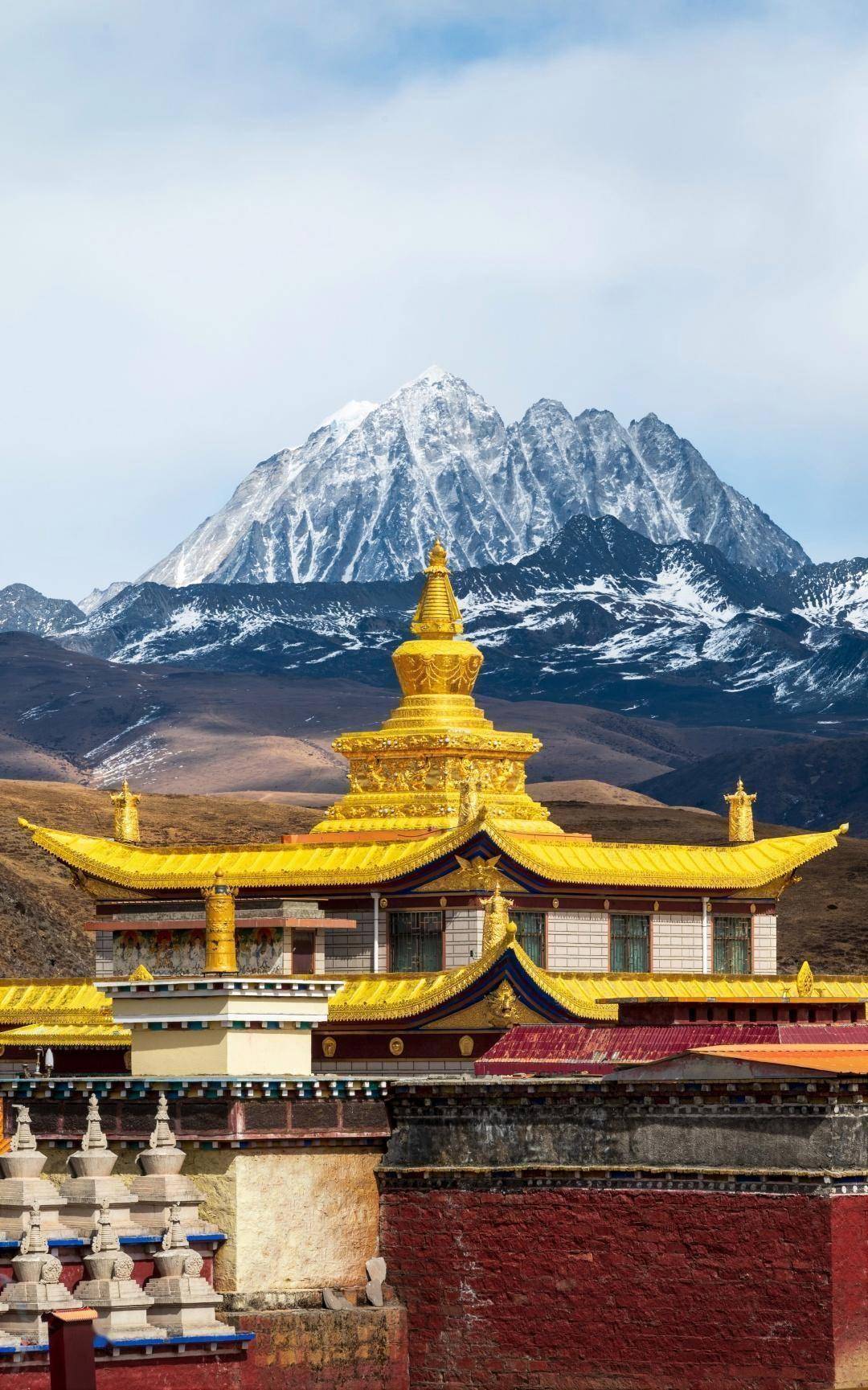
Come in the morning if you can: nomad tents smoking, herders milking, and the sound of singing drifting back from the herds — by afternoon it is just a field, per JoyoTour. In the evening, drive on to Xinduqiao, the small town on the G318 that photographers call the paradise of photographers. Stay the night there (about ¥150–¥300 a night, per Sohu) and be ready for dawn.
Day 4: Xinduqiao at dawn, Zheduo Pass, Kangding and Luding
Xinduqiao is not one sight but about ten kilometres of road: golden poplars, a shallow stream beside the highway, Tibetan farmhouses and yaks on painted grassland, per JoyoTour. The light is what matters — shoot in the two hours after sunrise and the two before sunset, because midday light here is flat, per JoyoTour. The local trick is to turn off the main road toward the small lanes around Shade and Jiagenba, where the poplars stand in rows and the morning fog sits on the ground, per Sohu. The open roadside areas cost nothing, per Sohu.
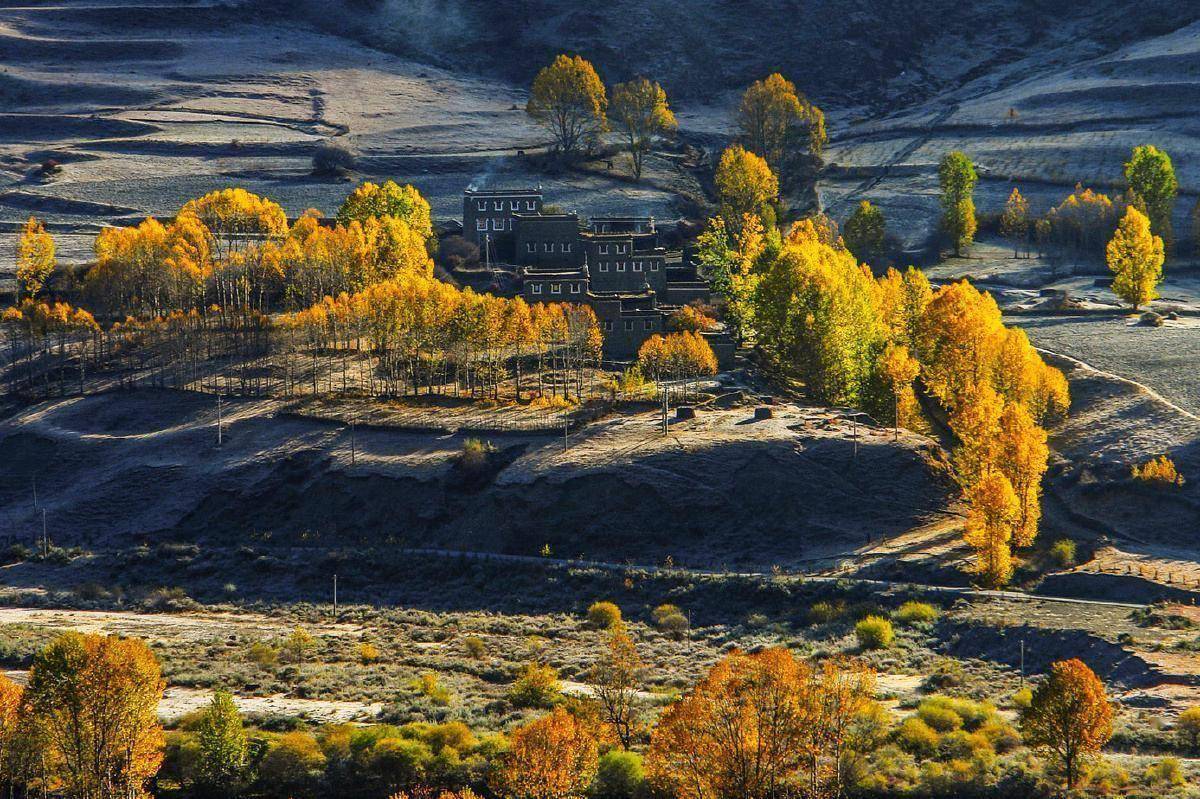
"Photographers have been coming here for decades and calling it heaven; September and October are when the poplars deliver."
— JoyoTour, Kangding Travel Guide 2026
Then cross the Zheduo Pass at 4,298 m — within half an hour of leaving Kangding the trees get shorter, the sky gets bigger and prayer flags appear on every ridge, per JoyoTour — and drop into Kangding itself. Kangding is the historic Tibetan trading town at 2,560 m, 260 km and about six hours by bus from Chengdu, per JoyoTour, and the gateway to the whole plateau.
Walk the old town, ride the cable car up Paoma Shan (¥80 including the cable car, per JoyoTour) for the view down the river gorge, and eat a bowl of Kangding liangfen — cold mung-bean noodles in red oil — at a street stall.
"I had not expected that a place this close to Chengdu could feel so far away. The moment the bus came over the Zheduo Pass and I saw the first string of prayer flags strung across the valley, I knew I was in a different country — not China, not Tibet, but somewhere in between."
— Beiliuchi, quoted in JoyoTour, Kangding Travel Guide 2026
Mugecuo Lake or the Luding Bridge?
If you have the morning to spare, Mugecuo Lake is 17 km out of town: an alpine lake at 3,700 m at the head of an 8 km waterfall gorge, ringed by forest and smaller lakes, at ¥220 including the shuttle bus or ¥290 with the boat cruise, open 07:30–16:30, per JoyoTour. In the afternoon, continue down the Dadu River to Luding and its iron-chain bridge — the first landmark of the old Tea-Horse Road — and sleep there, ready for the fast road home.
Day 5: Luding to Chengdu on the expressway
The last day is the easy one. From Luding, join the Ya'an–Kangding Expressway and drive back to Chengdu through the Erlang Mountain Tunnel — about 322 km from Kangding to Chengdu, per GoWesternChina, on excellent expressway. Stop in Ya'an for lunch if you like; otherwise you are back in Chengdu by the afternoon, with the loop closed and the car full of memory cards.
If five days felt short, the natural extension is west, not back: from Xinduqiao the G318 continues to Litang and Daocheng Yading — China Highlights' five-day Yading variant runs Chengdu to Xinduqiao on day 1, Haizi Mountain and Litang on day 2, two days in Yading, and back to Chengdu on day 5, with Yading's golden autumn in late October to early November. See our Daocheng Yading travel guide for tickets and hiking routes, and our G318 Chengdu to Lhasa guide if the road west keeps calling.
What does the 5-day loop cost?
| Item | Cost (per person, 2026) | Notes |
|---|---|---|
| Guesthouses, 4 nights | ¥600–¥1,400 | Siguniang town ¥200–350, Jiaju homestay ¥250–400, Xinduqiao ¥150–300 |
| Scenic tickets | About ¥300 | Shuangqiaogou ~¥150, Moshi Park ~¥80, Jiaju ¥50, Tagong Temple ~¥20, Xinduqiao free |
| Fuel and tolls (shared) | About ¥600 | Five people sharing one car, per Sohu |
| Food | ¥400–¥600 | Yak hotpot, Kangding liangfen, Danba apples in season |
| Total, 5 days | ¥1,800–¥2,600 | Self-drive basis, per Sohu, October 2026 |
Sources: hotel and ticket prices and the ¥1,800–¥2,600 total per Sohu, 23 October 2026; Mugecuo and Paoma Shan prices per JoyoTour, updated 10 October 2026. All prices are as of November 2026 and are subject to the scenic area's same-day notice.
Tickets at a glance
| Sight | Ticket (2026) | Booking rule |
|---|---|---|
| Shuangqiao Valley, Mount Siguniang | About ¥150 (entry + bus) | Take the first bus to the valley end, walk back down |
| Moshi Park, Bamei | About ¥60 + ¥20 bus | On the Day 3 route between Danba and Tagong |
| Jiaju Tibetan Village | About ¥50 | Sleep in the village for the morning mist |
| Tagong Monastery | About ¥20 | Grassland free; monastery at the centre |
| Xinduqiao | Free | Roadside views; dawn and dusk light |
| Mugecuo Lake (optional, Day 4) | ¥220 incl. shuttle; ¥290 with boat | 07:30–16:30; 17 km from Kangding |
| Paoma Shan cable car (optional) | ¥80 incl. cable car | Sunset from the top beats midday |
| Hailuogou Glacier (extension) | ¥85 + ¥70 shuttle + ¥150 cable car | Glacier at the foot of Gongga, 7,556 m |
Sources: Shuangqiaogou, Moshi Park, Jiaju, Tagong and Xinduqiao prices per Sohu, 23 October 2026; Mugecuo, Paoma Shan and Hailuogou prices per JoyoTour, updated 10 October 2026.
When to go, and what to pack
Which months are best for the loop?
May to October is the window, when the mountain passes are clear, per GoWesternChina. June to August brings wildflowers and green meadows; September and October bring the golden poplars and the autumn colour that the loop is famous for, per JoyoTour. The twenty-day autumn window from mid-October to early November is the peak — and the busiest — so book the Jiaju homestays and the Tagong-area rooms one to two weeks ahead, per Sohu. From October to April the Balang and Zheduo passes can carry ice or snow, so check conditions and carry chains, per GoWesternChina.
| Months | What to expect |
|---|---|
| May–June | Wildflowers and green valleys; passes clear |
| July–August | Green meadows and the warmest days; afternoon rain possible |
| September–October | Golden poplars at Xinduqiao; the best light |
| Mid-October–early November | Autumn colour peak, about twenty days |
| November–April | Quiet roads; passes may carry ice or snow |
Sources: seasons per GoWesternChina and JoyoTour; autumn window per Sohu, 23 October 2026.
What should I pack for five days on the plateau?
Pack for a big day-to-night temperature swing and for passes where the wind is cold even in summer:
- Three layers: quick-dry base, fleece middle, windproof shell — plus sunglasses and SPF50+ sunscreen, because plateau ultraviolet light is about three times stronger than on the plains, per Sohu
- A portable oxygen canister and a blood-oxygen meter, plus cold and stomach medicine, per Sohu
- About ¥500 in cash in the glove box — some stops deep in the grassland only take cash, per Sohu
- Snow chains from late September onward: the passes can have black ice in the early morning, per Sohu
- Offline maps downloaded before you leave: parts of the Balang and Zheduo passes have no signal, per Sohu
What about altitude sickness on this loop?
The loop is gentler than a flight to Lhasa because it climbs in steps — see our altitude sickness guide for the full plan. The rules that matter here: no bath and no alcohol for the first two days, no running or jumping at the passes, and if symptoms get serious, descend — Danba at 1,800 m is the escape valve, per Sohu. Electric-car drivers should note that cold plus climbing cuts real-world range by 30 to 40 percent, per Sohu, so charge below 30 percent and confirm the next charging point each morning.
Bottom line: Five days and about 1,000 km from Chengdu buys the whole western Sichuan postcard set — Siguniang's snow peaks, Danba's watchtowers and village mist, Moshi Park's black stones, Tagong grassland under Yala, Xinduqiao's golden poplars and Kangding's old town. The altitude climbs in steps, the tickets add up to about ¥300, and the whole trip runs roughly ¥1,800 to ¥2,600 per person self-driving. Go in September or October for the poplars, or in the twenty-day autumn window.
In summary: Day 1 Chengdu to Siguniang town over the 4,523 m Balang Pass; Day 2 Shuangqiao Valley then Danba's Jiaju village; Day 3 Moshi Park, Tagong grassland and monastery, sleep in Xinduqiao; Day 4 Xinduqiao dawn shoot, Zheduo Pass (4,298 m), Kangding and Luding; Day 5 expressway home. Tickets about ¥300 total, guesthouses ¥150–¥400 a night, five days about ¥1,800–¥2,600 per person. Seda is closed to foreign visitors — Tagong and Danba cover that ground instead.
Want this 5-day loop as a private car trip?
Western China Private Car Tours runs the small loop from Chengdu with a private car and driver — Siguniang, Danba, Tagong, Xinduqiao and Kangding, with the overnight stops and the dawn starts built in.
Our drivers communicate with guests via translation apps, so pickup times, photo stops and extra acclimatisation days are easy to agree on the road, and our vehicles carry portable oxygen for the high passes. Tell us your dates and whether you want the Yading extension, and we will plan the loop around the passes and the light, not against them.
Start with our Daocheng Yading travel guide and our altitude sickness guide, or our G318 Chengdu to Lhasa guide if you would rather keep driving west.
Get a Private Car Quote on WhatsAppFrequently Asked Questions About the Western Sichuan 5-Day Loop
How long does the Western Sichuan small loop take?
Five days is the classic length for the small loop from Chengdu: Mount Siguniang, Danba, Tagong, Xinduqiao and Kangding, about 900 to 1,000 km of driving. Three to four days only covers the nearer stops such as Siguniang and Danba, while five to seven days lets you add Kangding, Litang or Daocheng Yading. The loop is a driving route, so a private car is the practical way to do it — there is no direct bus or flight to Xinduqiao or Tagong.
When is the best time to drive the Western Sichuan loop?
May to October, when the mountain passes are clear. September and October are the best months for the golden poplars at Xinduqiao, and the autumn colour window in the valleys runs roughly from mid-October to early November — about twenty days. From October to April the Balang Pass (4,523 m) and Zheduo Pass (4,298 m) can carry ice or snow, so check conditions and carry chains.
How much does a 5-day Western Sichuan loop cost?
About ¥1,800 to ¥2,600 per person for five days on a self-drive basis, per Sohu's October 2026 costing: guesthouses run ¥150 to ¥400 a night, the main scenic tickets add up to roughly ¥300, and fuel plus tolls work out at about ¥600 per person when five people share one car. A private car with driver costs more but removes the mountain driving, the pass conditions and the parking.
Is altitude sickness a problem on the Western Sichuan loop?
Less than on a flight straight to Lhasa, because the loop climbs gradually: Chengdu at 500 m, Siguniang town at about 3,200 m, then down to Danba at 1,800 m before Xinduqiao at about 3,300 m. The two passes are the high points — Balang at 4,523 m and Zheduo at 4,298 m. Take the first two days easy, skip alcohol and baths on arrival, and if symptoms get serious, descend to Danba at 1,800 m. See our altitude sickness guide for the full plan.
Can foreign visitors drive the whole Western Sichuan loop?
Yes for the classic small loop — Siguniang, Danba, Tagong, Xinduqiao and Kangding are all open to foreign visitors. One exception to know: Seda is not open to foreign travellers, per China Highlights, so keep it off the route and use the Tagong and Danba stops for the monastery and village experience instead.
Sources: Sohu — Western Sichuan small loop 5-day self-drive (23 Oct 2026; about 900–1,000 km; day-by-day route; Shuangqiaogou about ¥150, Moshi Park ¥60 + ¥20 bus, Jiaju ¥50, Tagong Temple about ¥20, Xinduqiao free; hotels ¥150–400; 5-day total ¥1,800–2,600 per person; autumn window mid-October to early November; altitude ladder and packing advice) / GoWesternChina — Mount Siguniang and Gongga Self-Drive, 5-Day Sichuan Loop (1,038 km; leg distances; Balang Pass 4,523 m; Zheduo Pass 4,298 m; Yala Snow Mountain about 5,820 m; Gongga 7,556 m; May–October best months) / China Highlights — Western Sichuan Itinerary in 3, 4, 5, 6, 9 or more Days (updated 13 Nov 2026; 5–7 days ideal for a first trip; Seda not open to foreign travellers; 5-day Yading variant) / JoyoTour — Kangding Travel Guide 2026 (updated 10 Oct 2026; Kangding 2,560 m, 260 km from Chengdu; Mugecuo ¥220/¥290, Paoma Shan ¥80, Hailuogou ¥85 + ¥70 + ¥150; Xinduqiao free, best September–October; Tagong 110 km from Kangding) / China Discovery — Chengdu to Kangding (280 km, 4.5–5 hours by car; Xinduqiao 340 km, 5.5 hours; Tagong 360 km, 6–6.5 hours). Images: Mount Siguniang peaks photo via GoWesternChina; Danba watchtower, Tagong Monastery with Yala Snow Mountain and Xinduqiao golden poplars photos via Sohu.