Xining & Ta'er Monastery Guide (2026): Kumbum, the Mosque Quarter & Two Days on the Plateau
TL;DR: Xining, the capital of Qinghai at 2,261 metres, is the gentlest doorway onto the Tibetan Plateau — a city where a Gelug monastery, a great Hui mosque and two museums sit within a few kilometres of each other. The headline sight is Ta'er Monastery (Kumbum), 26 km southwest of the city: entry is ¥70 in peak season and ¥40 in low season as of November 2026, the drive takes about 30 minutes by car, and three hours inside covers the golden halls, the butter-sculpture gallery and the monks' debate courtyard. Two days is the right amount of time — one for the city, one for the monastery — and this winter Qinghai is running its biggest off-season discount campaign yet.
Short answer: Xining is worth two days, and Ta'er Monastery is the reason to go. The monastery — Kumbum in Tibetan — stands on the slope of Lianhua Mountain in Huangzhong district, about 26 km southwest of central Xining. A stupa was raised here in 1379 on the birthplace of Tsongkhapa, founder of the Gelug school, and the monastery that grew around it from 1560 became the largest Tibetan Buddhist complex in Qinghai and one of the six great Gelug monasteries. Its three celebrated arts are butter sculpture, mineral-pigment murals and appliqué embroidery, and its Great Golden Hall, rebuilt in 1711, wears a gilded copper roof that is the monastery's signature silhouette.
An adult ticket costs ¥70 from 1 April to 31 October and ¥40 from 1 November to 31 March, with half-price tickets at ¥35 and ¥20, per the Qinghai price notice still in force as of November 2026. The monastery opens at 07:30 in peak season and 08:00 in low season, closing at 18:00 and 17:30 respectively, with last entry an hour before closing. Children under 1.2 metres and visitors over 70 enter free.
The cheapest way there is bus 909 from the east square of Xining Railway Station — ¥4, 60 to 90 minutes — or the express shuttle from Xinning Road, ¥5.50 for about 40 minutes. A taxi takes roughly 30 minutes and costs about ¥60–80 one way. In the city itself, Dongguan Great Mosque is free to visit from outside, the Qinghai Provincial Museum is free, and the Qinghai Tibetan Culture Museum holds a thangka reported to measure about 618 metres long. All prices below are as of November 2026.
Winter 2026–27: the discount season
On 26 November 2026 Qinghai province announced its winter-spring tourism campaign, running from November 2026 to April 2027: the first ticket is free at 115 A-level scenic areas across the province, including Chaka Salt Lake, Emerald Lake and the water Yardang, while other open A-level sites — Ta'er Monastery among them — run off-season discounts, half-price tickets and combination packages, backed by ¥10 million in consumption vouchers. November is already the quietest month at the monastery, with the low-season ticket in force and the courtyards mostly shared with pilgrims rather than tour groups, so a winter visit trades warm weather for space and price.
In short: If you want the plateau without the altitude shock of Lhasa — a working monastery of gold roofs and butter flowers, a Hui mosque quarter that smells of lamb noodles, and a city that sits at 2,261 metres rather than 3,650 — Xining is it, and it fits neatly at the start of the Qinghai Lake loop or before the Qinghai–Gansu grand loop.
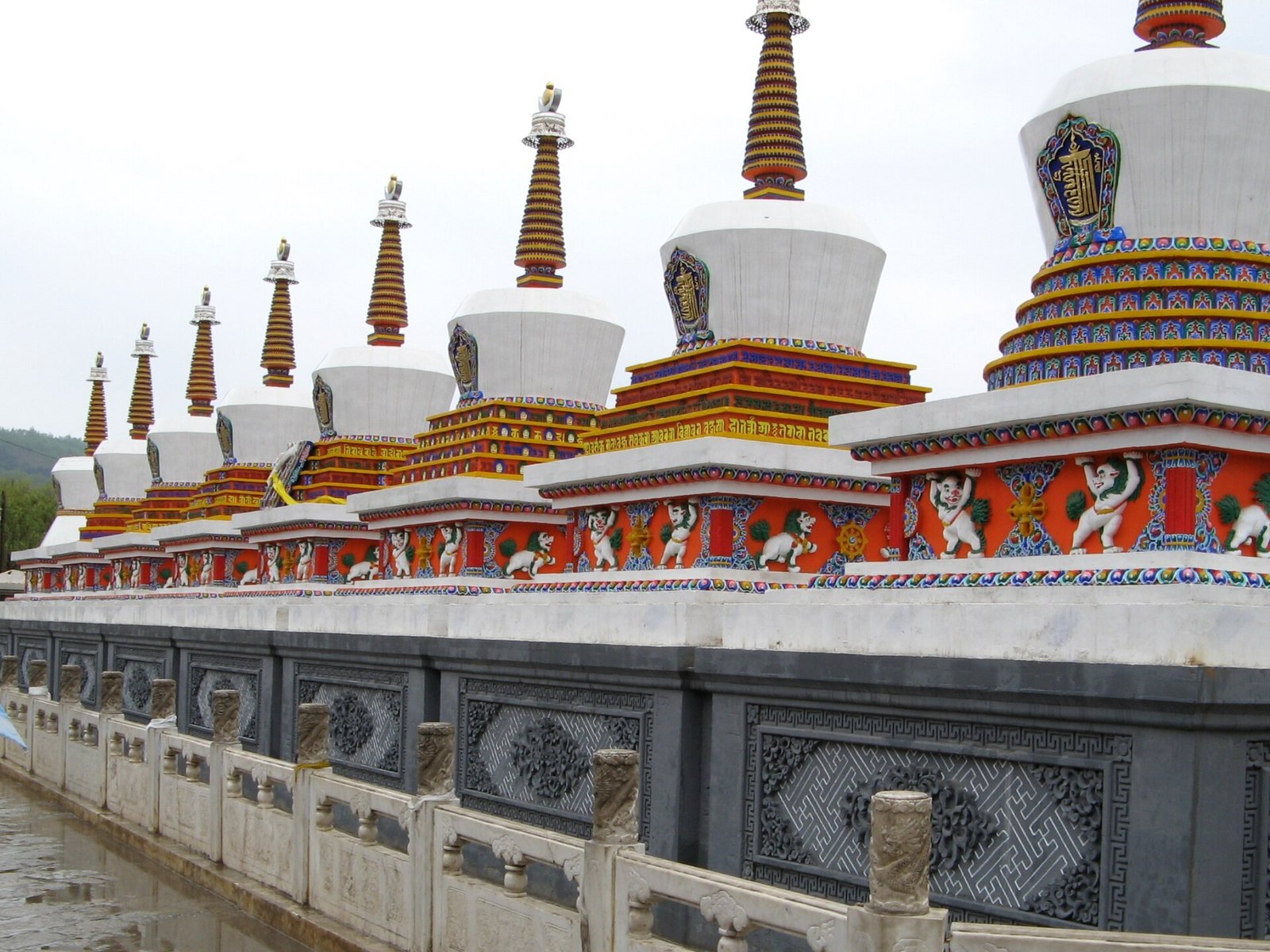
Key takeaways for Xining and Ta'er Monastery
- Budget ¥40–70 for the monastery, and not much else for tickets. Ta'er Monastery is ¥70 in peak season (1 April–31 October) and ¥40 in low season (1 November–31 March); half price for students and seniors, free for children under 1.2 m and visitors over 70. The provincial museum and the mosque are free.
- Give the monastery three hours, not ninety minutes. Two hours covers the four main courtyards and the butter-sculpture gallery; the third hour is for the monks' debate courtyard and the rooftop view over the Huangzhong valley.
- Go early, and walk clockwise. Tour buses from Xining arrive around 10:00. Leave the city by 08:00 and you have the main halls before the crowds; circle every hall clockwise, as pilgrims do, and never photograph inside a hall.
- November is the quiet month. Visitor numbers drop sharply after October, the low-season ticket applies, and the light stays low and warm all day — but winter at 2,600 metres is genuinely cold, so dress in layers.
- Two days is enough for the city. Day one: mosque, museums and food streets. Day two: the monastery in the morning, back in Xining for the night market. Xining is also the railhead for Qinghai Lake, Chaka Salt Lake and the Qinghai–Tibet railway to Lhasa — for which a Tibet permit is required.
What is Ta'er Monastery?
Ta'er Monastery is a Gelug Tibetan Buddhist monastery founded in 1379 at the birthplace of Tsongkhapa. Its Tibetan name, Kumbum, means "one hundred thousand images", and the complex now covers about 0.45 square kilometres on the slope of Lianhua Mountain, holding roughly 9,300 halls and monk cells, per Jusha's November 2026 guide. It is one of the six great Gelug monasteries, and the only one within a half-day of a Chinese rail hub — which is why it draws both pilgrims and first-time visitors to the plateau.
From one stupa to a monastery city
The story starts before the monastery itself. Tsongkhapa was born here in 1357; in 1379, twelve years later, a stupa was built over the house where he was born — "Kumbum" honours the miracles said to have marked the spot. A meditation cell followed in 1560, then the Maitreya Hall in 1577, then colleges for exoteric philosophy, tantra, medicine and the Kalachakra calendar. By 1711 the roofs were gilded with 1,300 taels of gold, and the result is a hillside town of red walls and gold eaves laid along a ravine. Around 800 monks still study, debate and chant here, so this is a working monastery, not a museum.
The three arts: butter, murals and appliqué
The monastery is celebrated for its "three arts": butter sculpture, murals and appliqué embroidery. Monks shape yak butter into flowers, deities and whole narrative scenes, working in unheated rooms with their fingers chilled in iced water so the butter holds; a single piece can take three months, and the Upper and Lower Butter Flower Courts compete each year, only seeing each other's work on the night it goes on display. The murals use mineral colours — malachite green, cinnabar red, ground gold — that hold their tone because the pigment is stone, not dye. Appliqué is silk cut and padded into three-dimensional figures, then stitched onto banners; ask a guide to point out the Sixteen Arhats banner in the Great Assembly Hall.
"Give Kumbum three hours rather than ninety minutes and it opens up: the silver reliquary inside the Great Golden Hall, the chilled butter-sculpture gallery, the courtyard where young monks slap their palms in debate." — Jusha, Kumbum Monastery guide, November 2026
The public showing of the butter sculptures falls on the fifteenth day of the first lunar month, during the Monlam Great Prayer Festival — usually in February — when the town turns out after dark. It is the most atmospheric day of the year at the monastery and also the most crowded, so arrive at opening if you go then.
How much do Ta'er Monastery tickets cost?
Tickets are simple: one price, two seasons. All figures below are per the Qinghai price commission notice still in force as of November 2026, confirmed on the provincial government's public reply page on 10 May 2025, per Jusha.
| Ticket | Peak season (1 Apr–31 Oct) | Low season (1 Nov–31 Mar) | Notes |
|---|---|---|---|
| Adult | ¥70 | ¥40 | Hours 07:30–18:00 peak, 08:00–17:30 low season; last entry one hour before closing |
| Students / seniors | ¥35 | ¥20 | Half price per provincial pricing rules; bring identification or a student card |
| Children under 1.2 m / visitors over 70 | Free | Free | — |
| Official guide | About ¥160 | About ¥160 | For five people or fewer; unofficial guides outside quote less and often route you through shops |
| In-park shuttle | ¥35 each way | ¥35 each way | Car park sits below the gate; walking up takes about 15 minutes |
Sources: ticket and hours table per Jusha, Kumbum Monastery guide (November 2026; Qinghai price commission notice, confirmed on the provincial government reply page 10 May 2025; official guide about ¥160; in-park shuttle ¥35 each way) and Nihaovisit, Kumbum Monastery visitor guide (17 November 2026; ¥70 peak / ¥40 off-peak; half a day; founded 1379, monastery from 1560). Prices as of November 2026; confirm at the gate, as the monastery changes arrangements by notice.
Buy your ticket at the entrance or at the self-service machines, and keep it — it is checked again at several halls. One warning from both recent guides: self-styled "monk guides" near the gate offer blessings for fees, and stalls outside the walls sell overpriced "opened" amulets and prayer beads. The monastery sells its own tickets, and if you want a guide, hire the official one inside.
What the winter campaign changes
Qinghai's winter-spring 2026–27 campaign, announced 26 November 2026 and running to April 2027, makes the first ticket free at 115 A-level scenic areas in the province. Ta'er Monastery is not on the free list — it is in the second group, which runs off-season discounts, half-price tickets and combination packages instead — and ¥10 million in consumption vouchers is being released in batches through UnionPay, Ctrip, Meituan and Tongcheng, covering tickets, hotels, car rental and food. Some travel listings advertise promotional fares lower than the standard ¥40 low-season ticket; treat those as platform offers, not the gate price, and confirm the price at the ticket window before you travel.
Getting to Ta'er Monastery from Xining
The monastery is about 26 km southwest of central Xining, in Huangzhong district. Public transport is cheap and straightforward; a private car is faster and solves the return, because the last buses back to the city thin out in the late afternoon.
| Method | Cost | Time | Notes |
|---|---|---|---|
| Bus 909 | ¥4 | 60–90 min | From the east square of Xining Railway Station; get off at the East Gate stop |
| Express shuttle | ¥5.50 | About 40 min | From Xinning Road, every 5–10 minutes |
| Shared taxi | ¥10–15 | 20–30 min | Fills with four passengers |
| Taxi / DiDi | ¥60–80 | About 30 min | One way; agree the fare first, or insist on the meter |
| From Caojiabao Airport | ¥120–180 | 50–60 min | About 40 km, direct |
Sources: transport table per Jusha (November 2026; bus 909 ¥4, 60–90 min; shuttle ¥5.50, 40 min; shared taxi ¥10–15; taxi ¥60–80; airport ¥120–180) and Nihaovisit (17 November 2026; 26 km; buses 40–60 minutes; taxi about 40 minutes).
Step by step from Xining station
- Take bus 909 from the east square of Xining Railway Station, or the express shuttle from Xinning Road.
- Get off at the East Gate stop and walk uphill past the souvenir arcade to the ticket office.
- Buy your ticket and keep it — it is checked again at several halls.
- Walk clockwise around the Eight Stupas before entering the main courtyard.
- Climb to the Great Golden Hall first, then work downhill through the remaining halls — the complex climbs a ravine, and backtracking costs a steep walk.
Why a private car helps
With a private car, the monastery is a half-day out and back: leave Xining by 08:00, see the halls before the tour buses arrive around 10:00, and be back in the city for lunch. A driver for the day also covers the return, which is the weak point of the bus — the last services back to Xining are not published, and finding a car at the gate in the late afternoon can take a while.
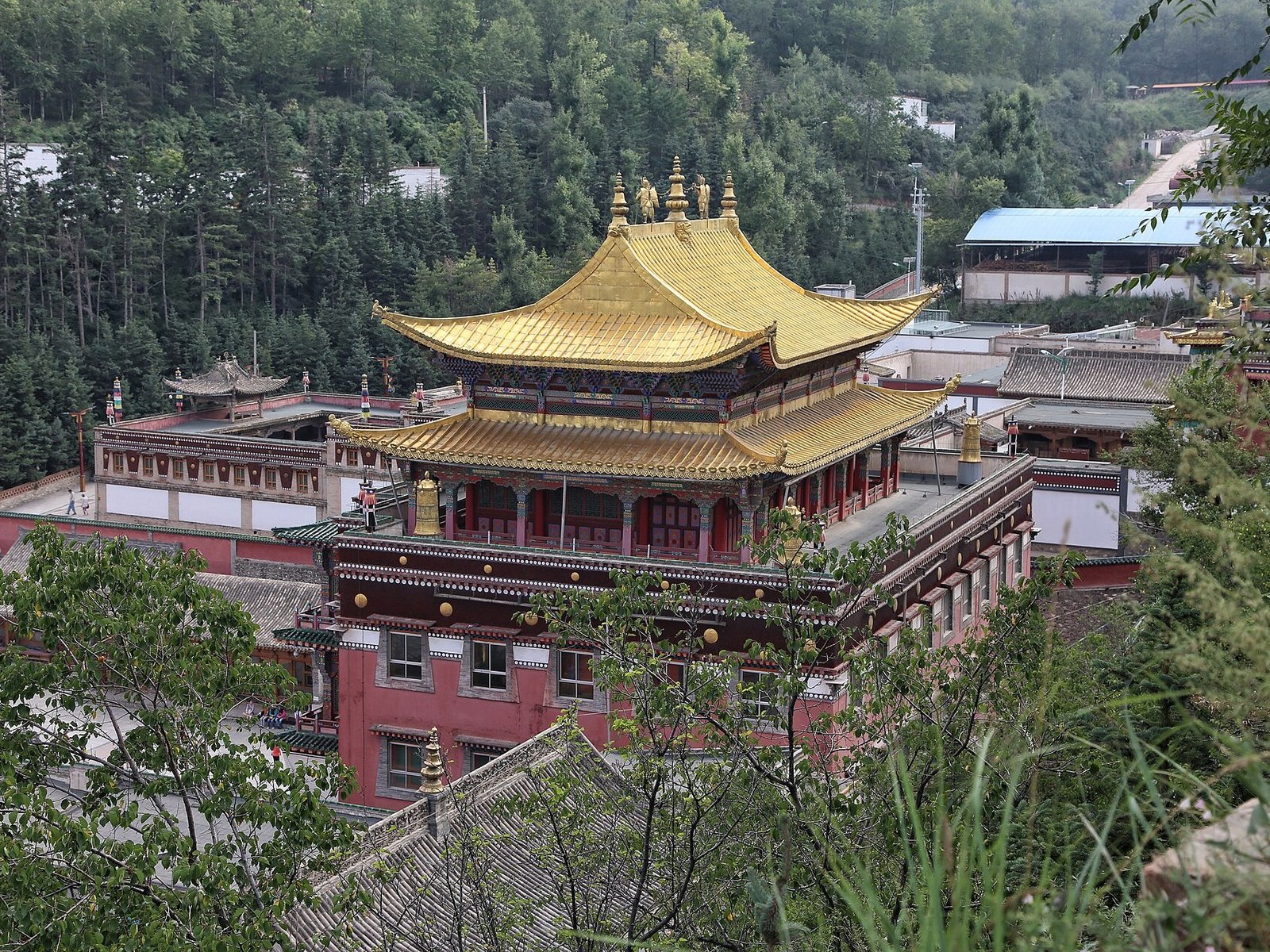
Which halls should you actually see?
Five halls carry most of the meaning here, and seeing them in this order saves steps, because the complex climbs a ravine. The monastery sits at about 2,600 metres, so walk slowly — the altitude is not extreme, but the stairs are.
| Hall | What to look for | Time |
|---|---|---|
| Great Golden Hall | Silver reliquary about 11 m tall, gilded copper roof; rebuilt 1711 under the Kangxi Emperor | 30 min |
| Great Assembly Hall | 154 pillars, 6,000 monk seats; Sixteen Arhats appliqué banner | 25 min |
| Butter Sculpture Gallery | Refrigerated sculptures behind glass; no photos | 20 min |
| Small Golden Hall | Protector deities, animal specimens | 15 min |
| Eight Stupas | Built 1776, 6.4 m each; one for each of eight events in the Buddha's life | 15 min |
Sources: halls table per Jusha (November 2026; 154 pillars and 6,000 seats; Eight Stupas 1776, 6.4 m; silver stupa about 11 m per Xinhua, 20 February 2016) and Nihaovisit (17 November 2026; Da Jinwa Hall rebuilt 1711).
The Great Golden Hall sits at the centre. Xinhua's profile of the monastery, published 20 February 2016, records a silver stupa about 11 metres tall rising through the gloom inside, set with coral and turquoise and holding Tsongkhapa's relics. The rooftop view over the Huangzhong valley, the smell of juniper smoke from the burners, and the low murmur of sutra recitation are the part of the visit that photographs cannot carry — give them time.
Etiquette inside the monastery
Dress modestly, keep voices low and never photograph the interiors of halls — free aprons are lent at the gate to anyone in shorts or sleeveless tops. Walk clockwise around stupas and prayer wheels, remove your hat before entering a hall, and step over thresholds rather than on them. Do not touch statues, thangkas or ritual instruments. To photograph monks or pilgrims, ask first — a nod is usually enough. Offerings are part of the visit: a jar of yak butter from a stall outside costs a few yuan and can be added to the lamps in the Great Golden Hall; nobody expects it from foreigners, and it is received warmly. And a practical note: bring cash for butter and tea, because card readers fail on the hill.
Xining itself: a day in the city
Xining is often called China's "Summer Capital", and it earns the name: at 2,261 metres the summers are cool, the air is dry and clear, and the city sits where Han, Tibetan and Hui cultures meet. For international visitors it is more than a stop on the way to Qinghai Lake — the city has museums, a mosque quarter, historic streets and viewpoints that are worth a day of their own, per Here We Come China's November 2026 guide.
Dongguan Great Mosque and the Hui quarter
Dongguan Great Mosque is the centre of Xining's large Hui community and one of the biggest mosques in northwest China, blending Chinese temple roofs with Arabic elements. Founded in 1380, its prayer hall covers 1,102 square metres and fills with up to 30,000 worshippers for Friday prayers. It is an active place of worship: entry for visitors is generally free during public hours, but access can change around prayer times, especially Friday midday, so dress modestly, remove shoes where asked, and stay out of areas marked for worshippers. Note that guidebooks describing the mosque's green domes predate the 2021 renovation, which removed the domes and changed visitor access — treat the building as an exterior sight first and ask locally before entering.
The lanes around the mosque are the city's food heart. Mojia Street is the best-known food and shopping area; nearby Daxin Street, Xiaoxin Street and Xia Nan Guan Street offer more of the same. Try hand-pulled beef or lamb noodles (¥18–30), yoghurt in a ceramic bowl, and flatbreads. Most food in the Muslim quarter is halal; pork is not served. The Daxin Street night market runs roughly 17:30 to midnight.
Two museums, two different stories
Do not confuse the two museums: they are different institutions with different collections. The Qinghai Provincial Museum is the province's largest general museum, holding more than 100,000 artefacts — Neolithic painted pottery, Silk Road gold, Tibetan Buddhist art, a Ming gilt-bronze Guanyin — and entry is free with a passport. It is usually closed on Mondays; allow about two hours. Reports indicate a pilot of no-reservation entry with an identity-document scan is running through April 2027, but museums change policies often, so confirm on the museum's official channel and never pay a third party for a slot.
The Qinghai Tibetan Culture Museum focuses on Tibetan culture, history, medicine, art and traditional knowledge. Its best-known exhibit is a large thangka reported to measure about 618 metres long, painted by some 400 artists — one of the longest hand-embroidered thangkas in the world — beside a serious museum of Tibetan medicine and its teaching charts.
Viewpoints and a slower afternoon
Nanshan Park, on the hill south of the city, is the place for a wider view of Xining, with the Phoenix Pavilion as the recognisable viewpoint — best in the late afternoon, when the light changes over the city. Beishan Temple, a 1,900-year-old cliff sanctuary carved into a red sandstone bluff by the Huangshui River, is free to enter and reached by stairs cut into the rock. For a gentler break, Beichuan River Wetland Park offers open space and riverside scenery away from the busiest commercial streets. All three involve steps or a climb, and at 2,261 metres a route that looks short on a map can feel more demanding than expected — take your time and bring water.
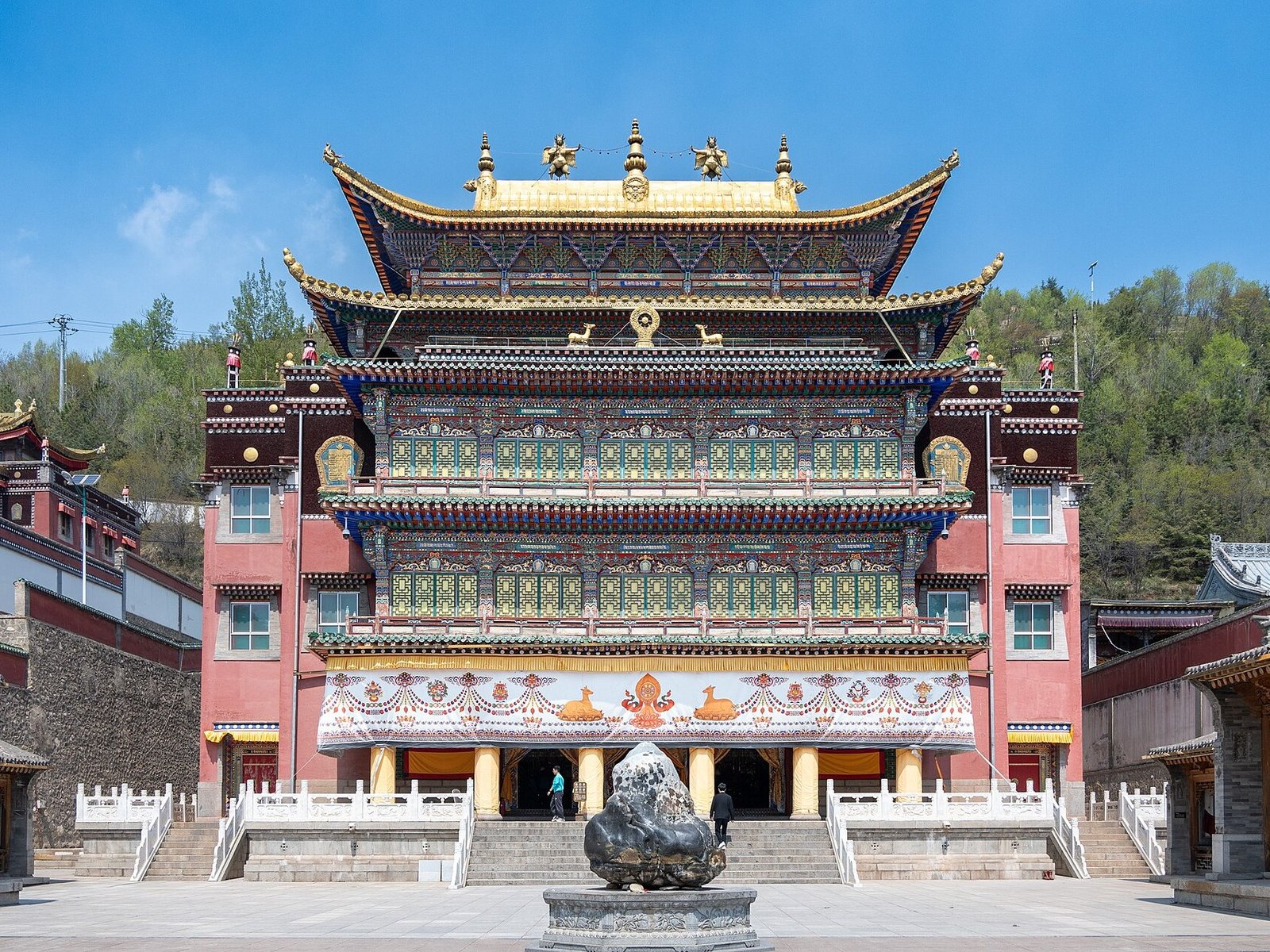
A practical 2-day Xining plan
Two days is enough: one for the city, one for the monastery. The plan below groups sights by area and leaves room for the slower pace that altitude asks for. A rough budget for three days in Xining runs about ¥800–1,300 per person, per a November 2026 Trip.com itinerary — transport about ¥300, accommodation about ¥300, tickets ¥70, food about ¥500 — while a day in the city alone runs about ¥280 on a budget, ¥550 for a classic day and ¥1,100 if you splurge, per Swearby's October 2026 guide.
Day 1 — the city. Morning: Dongguan Great Mosque, then the lanes around Mojia Street for lunch — hand-pulled noodles and yoghurt. Afternoon: Qinghai Provincial Museum, then the Qinghai Tibetan Culture Museum and its 618-metre thangka. Late afternoon: Nanshan Park and the Phoenix Pavilion for the view over the city. Evening: Daxin Street night market — lamb hotpot, hand-pulled lamb and sweet barley wine.
Day 2 — Ta'er Monastery. Leave the city by 08:00 and reach the monastery before the tour buses. Three hours inside: the Eight Stupas, the Great Golden Hall, the Great Assembly Hall, the butter-sculpture gallery and the debate courtyard. Back in Xining by early afternoon; spend the rest of the day at Beishan Temple or Beichuan River Wetland Park, and the evening revisiting a favourite food street or preparing for the onward journey — the high-speed station is on the Lanzhou–Xinjiang line, and Xining is also the start of the Qinghai–Tibet railway to Lhasa, for which a Tibet travel permit is required.
Where to stay
Stay around Dongguan Mosque (East Gate) or near Xining station. The mosque quarter puts you on foot from the food streets and the evening markets; the station area is practical for early departures. Haihu New Area, west of the centre, has the modern hotels — Sofitel Xining and Wanda Vista Xining are in that broader area — if you value hotel facilities and do not mind using taxis or ride-hailing to reach the older city sights. Whichever you choose, confirm the hotel accepts foreign guests; most do, but some small guesthouses cannot register foreign passports.
Altitude, weather and money
Xining sits at about 2,261 metres, and the monastery at about 2,600 metres. Some visitors notice breathlessness, headaches, fatigue or difficulty sleeping, particularly during the first day or two. Take it easy when you arrive, avoid strenuous exercise immediately, drink enough water and give yourself time to adjust before planning a demanding excursion; if symptoms get worse, seek medical advice rather than assuming they are part of acclimatisation. The high-altitude sun feels strong even when the air is cool, so bring sunscreen, sunglasses and a hat, and carry a warm layer — temperatures can change considerably between day and night, and winter is genuinely cold. Mobile payment is widely used; link an overseas card to Alipay or WeChat Pay before you travel, bring a physical card as a backup, and keep some cash for the monastery hill and small stalls. Save the Chinese names of your hotel and sights on your phone — 塔尔寺 for the monastery, 东关清真大寺 for the mosque — to show drivers, who communicate with guests via translation apps.
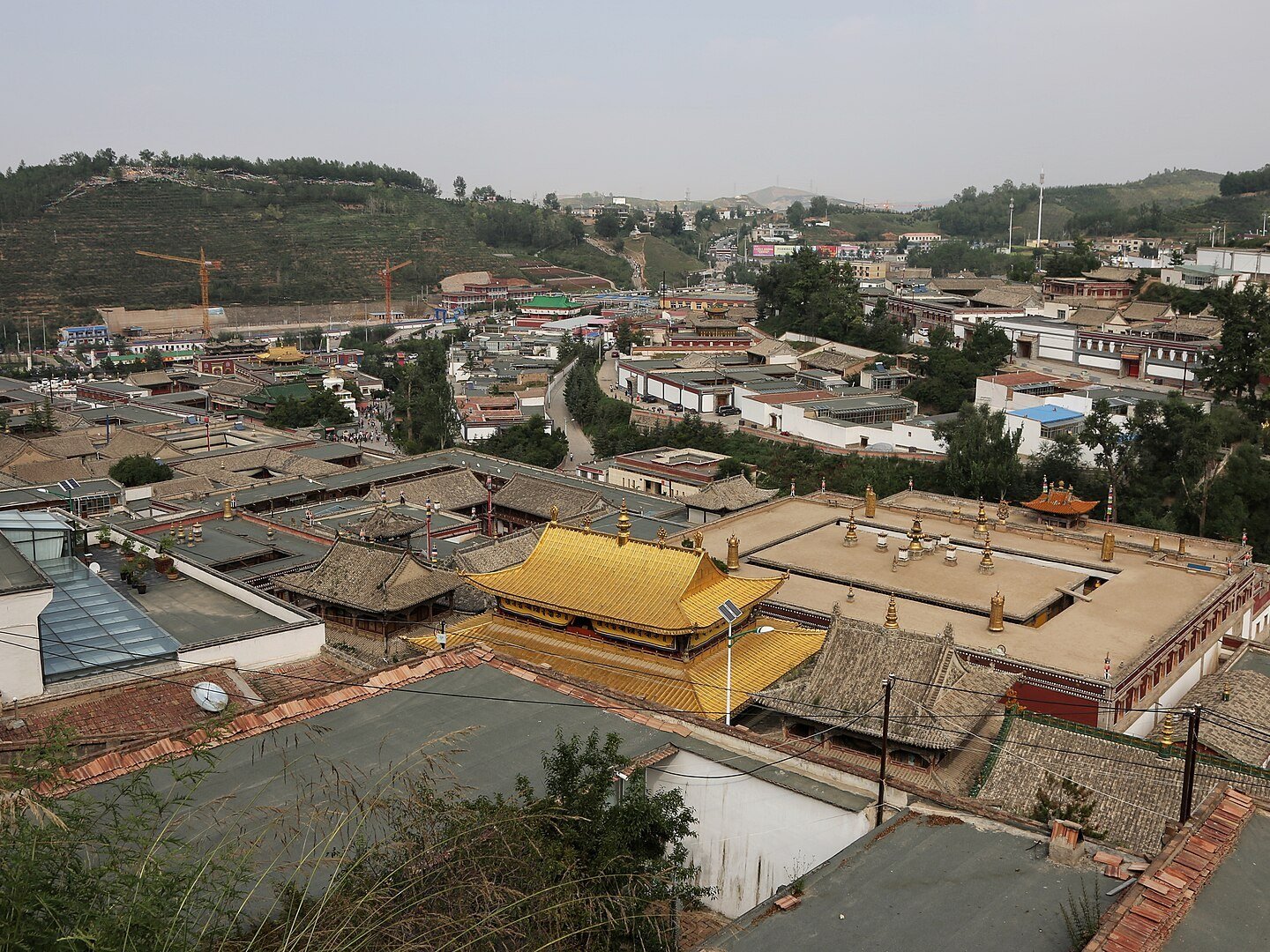
When to go, and what else the season offers
Late spring to early autumn is the easiest window: mild weather, clear skies and the longest days. July and August bring the crowds — the May Day holiday alone drew nearly 50,000 visitors to the monastery in its first four days in 2025, per Huangzhong's own count — and July is also when the rapeseed blooms gold across Menyuan, about 100,000 acres under the Qilian snowline, and the Tour of Qinghai Lake cycle race circles the lake. The butter-sculpture festival falls on the fifteenth day of the lunar new year, usually in February. Winter is cold and quiet, and this winter it is also the cheapest: the low-season ticket, the provincial campaign discounts and empty courtyards, at the cost of short days and the chance that a few halls are shut.
Xining as a gateway
Xining is a gateway, not a dead end. From here the road runs west to Qinghai Lake — about 151 km to the Erlangjian shore park — and on to Chaka Salt Lake, and south to the Qinghai–Tibet railway. Our Qinghai Lake 3-day loop and our Chaka Salt Lake guide cover the next stops, and our Tibet permit guide explains what changes when you cross into Tibet proper.
Bottom line: Xining rewards two unhurried days — a working monastery of gold roofs and butter flowers 26 km out of town, a mosque quarter that smells of lamb noodles, and two museums that explain the plateau before you drive into it. Come in November for the quiet courtyards and the low-season ticket, or in February for the butter sculptures at Monlam; either way, leave the city by 08:00 and give the monastery three hours, not ninety minutes.
In summary: Xining, Qinghai's capital at 2,261 metres, is the gentlest doorway onto the Tibetan Plateau; Ta'er Monastery (Kumbum), 26 km southwest in Huangzhong district, costs ¥70 in peak season (1 April–31 October) and ¥40 in low season (1 November–31 March), with half-price tickets at ¥35 and ¥20 and free entry for children under 1.2 m and visitors over 70; hours are 07:30–18:00 in peak season and 08:00–17:30 in low season, last entry one hour before closing; bus 909 costs ¥4 and takes 60–90 minutes, the Xinning Road shuttle ¥5.50 for about 40 minutes, a taxi about ¥60–80 for 30 minutes; allow three hours inside for the Great Golden Hall, the Great Assembly Hall, the butter-sculpture gallery and the Eight Stupas (1776); in the city, Dongguan Great Mosque is free, the Qinghai Provincial Museum is free with more than 100,000 artefacts, and the Tibetan Culture Museum holds a thangka of about 618 metres; and Qinghai's winter-spring campaign (November 2026–April 2027) makes the first ticket free at 115 A-level scenic areas and discounts Ta'er Monastery further.
Want Xining without the logistics?
Western China Private Car Tours runs private car trips in Xining: pickup at Xining station or Caojiabao Airport, a car and driver for Ta'er Monastery timed to beat the tour buses, plus Qinghai Lake and Chaka Salt Lake on the following days — with the return from the monastery gate already arranged, and no bus timetable to worry about. The driver communicates with guests via translation apps, so plans and pickup times are easy to change on the day.
Continuing west? Our Qinghai Lake 3-day loop covers the next stop, or see the Qinghai–Gansu grand loop for the whole corridor by rail.
- Message us on WhatsApp with your dates, party size and whether you want Qinghai Lake or Chaka Salt Lake after Xining.
- Get a fixed quote for the car and driver, including station or airport pickup and the monastery day.
- Meet your driver at Xining station and ride to the monastery before the crowds — the driver communicates with guests via translation apps, so pickup times are easy to change on the day.
Frequently Asked Questions About Xining and Ta'er Monastery
How much does Ta'er Monastery cost in 2026?
As of November 2026, an adult ticket costs ¥70 in peak season (1 April–31 October) and ¥40 in low season (1 November–31 March), with half-price tickets at ¥35 and ¥20 for students and seniors. Children under 1.2 metres and visitors over 70 enter free. Under Qinghai's winter-spring 2026–27 campaign the monastery also runs off-season discounts and combination tickets, so check the gate price on the day.
How do I get to Ta'er Monastery from Xining?
The monastery is about 26 km southwest of central Xining in Huangzhong district. Bus 909 leaves from the east square of Xining Railway Station and takes 60–90 minutes for ¥4; an express shuttle from Xinning Road takes about 40 minutes for ¥5.50. A shared taxi costs about ¥10–15, a private taxi about ¥60–80 one way for roughly 30 minutes, and a taxi from Caojiabao Airport about ¥120–180 for 50–60 minutes.
How long do I need at Ta'er Monastery?
Allow half a day including the drive from Xining, and about three hours inside the monastery. Two hours covers the four main courtyards and the butter-sculpture gallery; three hours leaves room for the monks' afternoon debate session and the rooftop view over the Huangzhong valley.
What is Ta'er Monastery famous for?
Ta'er Monastery, also called Kumbum, is the birthplace of Tsongkhapa, founder of the Gelug school, and one of its six great monasteries. It is known for its three arts — butter sculpture, mineral-pigment murals and appliqué embroidery — and for the Great Golden Hall, rebuilt in 1711 with a gilded copper roof. The butter sculptures are displayed in public on the fifteenth day of the first lunar month, during the Monlam prayer festival.
Is two days enough for Xining?
Yes. Day one covers the city: Dongguan Great Mosque, the Qinghai Provincial Museum, the Qinghai Tibetan Culture Museum and the Mojia Street food lanes in the evening. Day two is Ta'er Monastery in the morning and early afternoon, back in Xining for the night market. Xining sits at 2,261 metres, so keep the first day gentle and drink plenty of water.
Sources: Jusha — Kumbum Monastery: Tibet's Other Great Pilgrimage Site (9 November 2026; founded 1379 / 1560 / 1711 gold roof / Eight Stupas 1776 / 0.45 km² / ~9,300 halls / ~800 monks / tickets ¥70/¥40 / hours / bus 909 ¥4 / shuttle ¥5.50 / taxi ¥60–80 / airport ¥120–180 / official guide ~¥160 / in-park shuttle ¥35 / May Day 2025 ~50,000 visitors / 154 pillars / 6,000 seats / butter sculpture / Monlam 15th day) / Nihaovisit — Kumbum Monastery (Ta'er Si) visitor guide (17 November 2026; 26 km / ¥70 peak / ¥40 off-peak / half a day / 1379 stupa / 1560 monastery / Da Jinwa Hall rebuilt 1711 / Dongguan Mosque founded 1380 / prayer hall 1,102 m² / Beishan Temple 1,900 years / night market 17:30–24:00 / Provincial Museum 100,000+ artefacts) / Here We Come China — Xining Travel Guide: Best Things to Do in 3 Days (November 2026; 2,261 m / "Summer Capital" / 618 m thangka / Dongguan Mosque / Nanshan Park Phoenix Pavilion / Mojia Street / Beichuan River Wetland Park / 3-day itinerary) / Duanwai — Xining 2-Day Itinerary 2026 (14 November 2026; 2,275 m / Dongguan Mosque / Provincial Museum no-reservation pilot through April 2027 / noodles ¥18–30 / high-speed line / Tibet permit) / Swearby — Things to Do in Xining (updated 29 October 2026; day costs ¥280/¥550/¥1,100 / Monlam butter sculpture festival / 618 m thangka / Dongguan Mosque 2021 renovation / Menyuan rapeseed July) / Sohu (People's Daily) — Qinghai winter-spring 2026–27 tourism campaign (26 November 2026; 115 A-level scenic areas first ticket free, November 2026–April 2027 / Ta'er Monastery off-season discounts, half-price and combo tickets / ¥10 million vouchers) / Trip.com — Xining 3-day itinerary (November 2026; 3-day budget ¥800–1,300 / Ta'er Monastery ¥70 / Daxin Street night market) / China Explorer Tour — Essential Tips for Touring Xining Ta'er Monastery (2026; bus 909 / ¥70 peak / ¥40 off-season / half price ¥35 / under 1.2 m free). Images: Wikimedia Commons photographs via Jusha (Eight Stupas, G41rn8, Creative Commons Attribution-ShareAlike 4.0; Great Golden Hall and hillside rooftops, Charlie fong, Creative Commons Attribution-ShareAlike 4.0; monastery courtyard, xiquinhosilva, Creative Commons Attribution 2.0).